

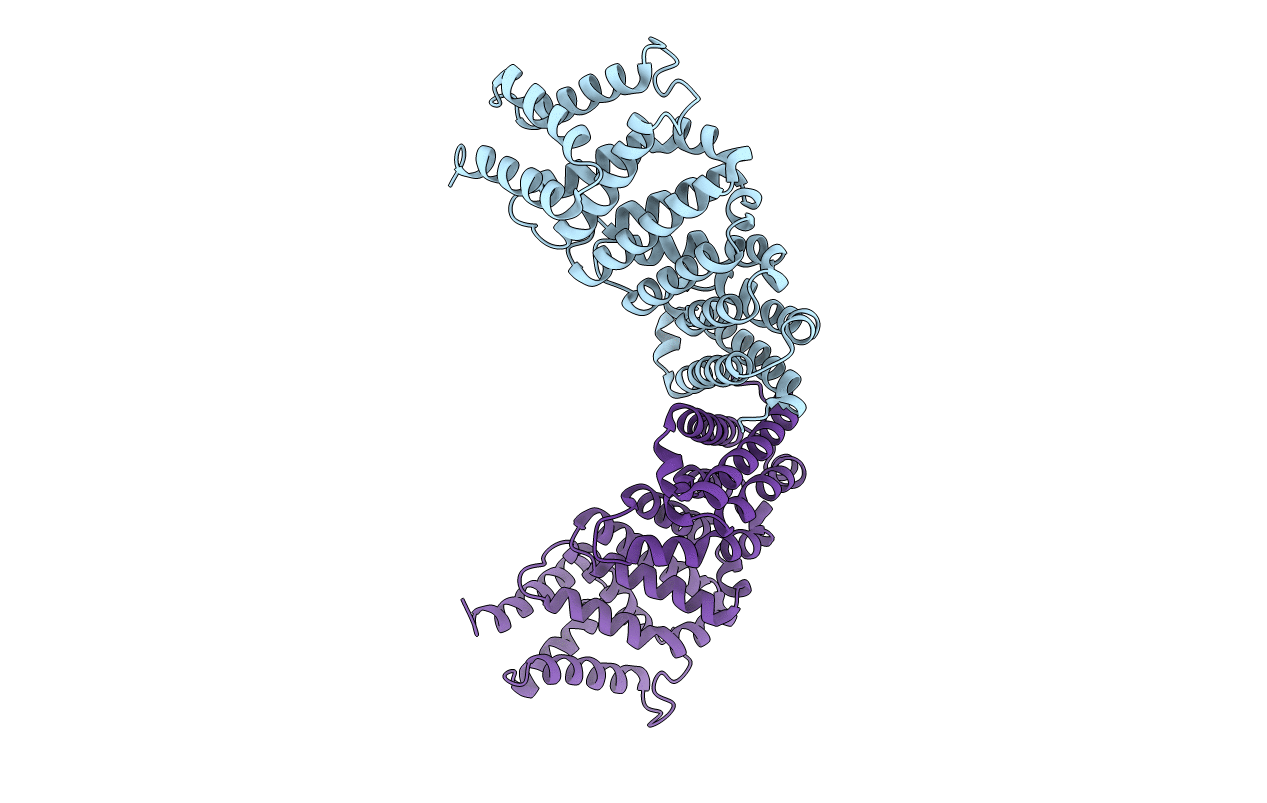
1W9C image
Deposition Date 2004-10-08
Release Date 2004-12-03
Last Version Date 2024-05-08
Entry Detail
PDB ID:
1W9C
Keywords:
Title:
Proteolytic fragment of CRM1 spanning six C-terminal HEAT repeats
Biological Source:
Source Organism(s):
HOMO SAPIENS (Taxon ID: 9606)
Expression System(s):
Method Details:
Experimental Method:
Resolution:
2.30 Å
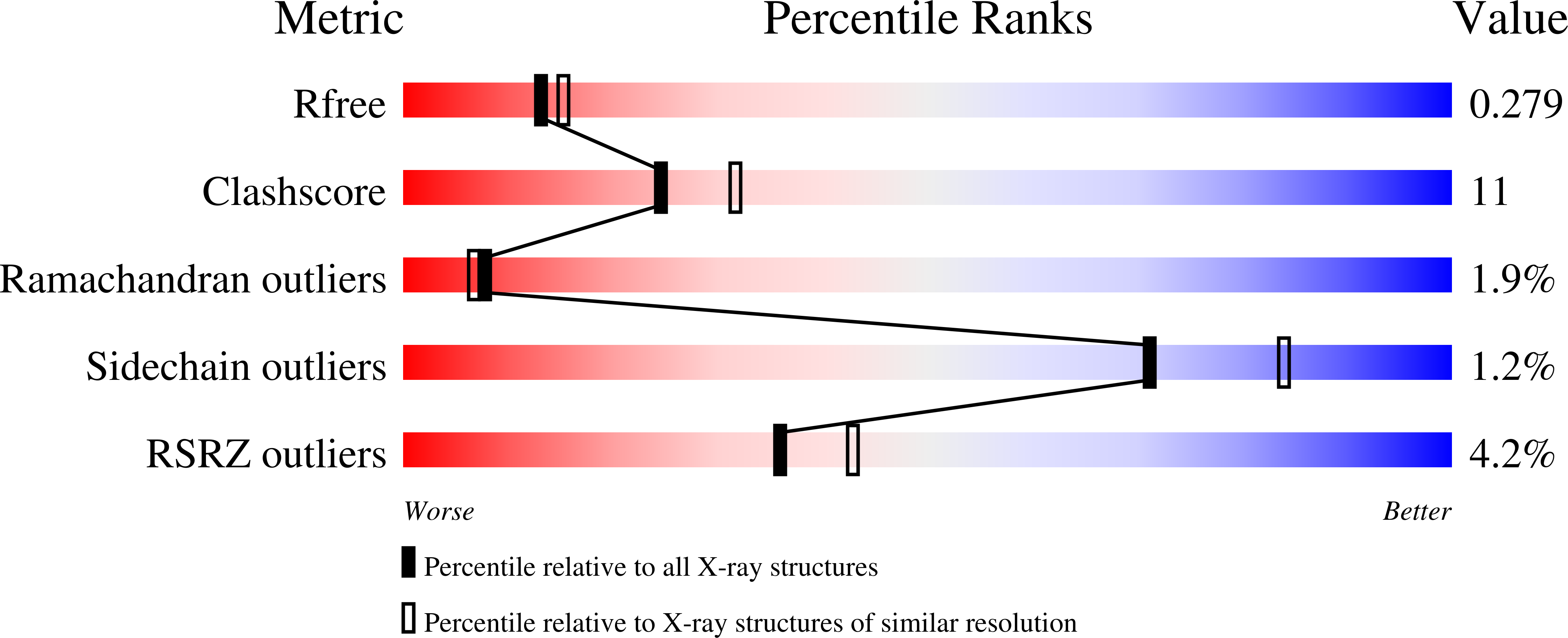
R-Value Free:
0.27
R-Value Work:
0.22
R-Value Observed:
0.22
Space Group:
P 21 21 2
Macromolecular Entities
Structures with similar UniProt ID
Protein Blast
Polymer Type:polypeptide(L)
Molecule:CRM1 PROTEIN
Gene (Uniprot):XPO1
Chain IDs:A, B
Chain Length:321
Number of Molecules:2
Biological Source:HOMO SAPIENS
Primary Citation
Architecture of Crm1-Exportin 1 Suggests How Cooperativity is Achieved During Formation of a Nuclear Export Complex
Mol. Cell 16 761 ? (2004)
PMID: 15574331 DOI: 10.1016/J.MOLCEL.2004.11.018

Abstact

CRM1/Exportin1 mediates the nuclear export of proteins bearing a leucine-rich nuclear export signal (NES) by forming a cooperative ternary complex with the NES-bearing substrate and the small GTPase Ran. We present a structural model of human CRM1 based on a combination of X-ray crystallography, homology modeling, and electron microscopy. The architecture of CRM1 resembles that of the import receptor transportin1, with 19 HEAT repeats and a large loop implicated in Ran binding. Residues critical for NES recognition are identified adjacent to the cysteine residue targeted by leptomycin B (LMB), a specific CRM1 inhibitor. We present evidence that a conformational change of the Ran binding loop accounts for the cooperativity of Ran- and substrate binding and for the selective enhancement of CRM1-mediated export by the cofactor RanBP3. Our findings indicate that a single architectural and mechanistic framework can explain the divergent effects of RanGTP on substrate binding by many import and export receptors.

Legend

Protein

Chemical

Disease

Primary Citation of related structures
Feedback Form
Name
Email
Institute
Feedback