

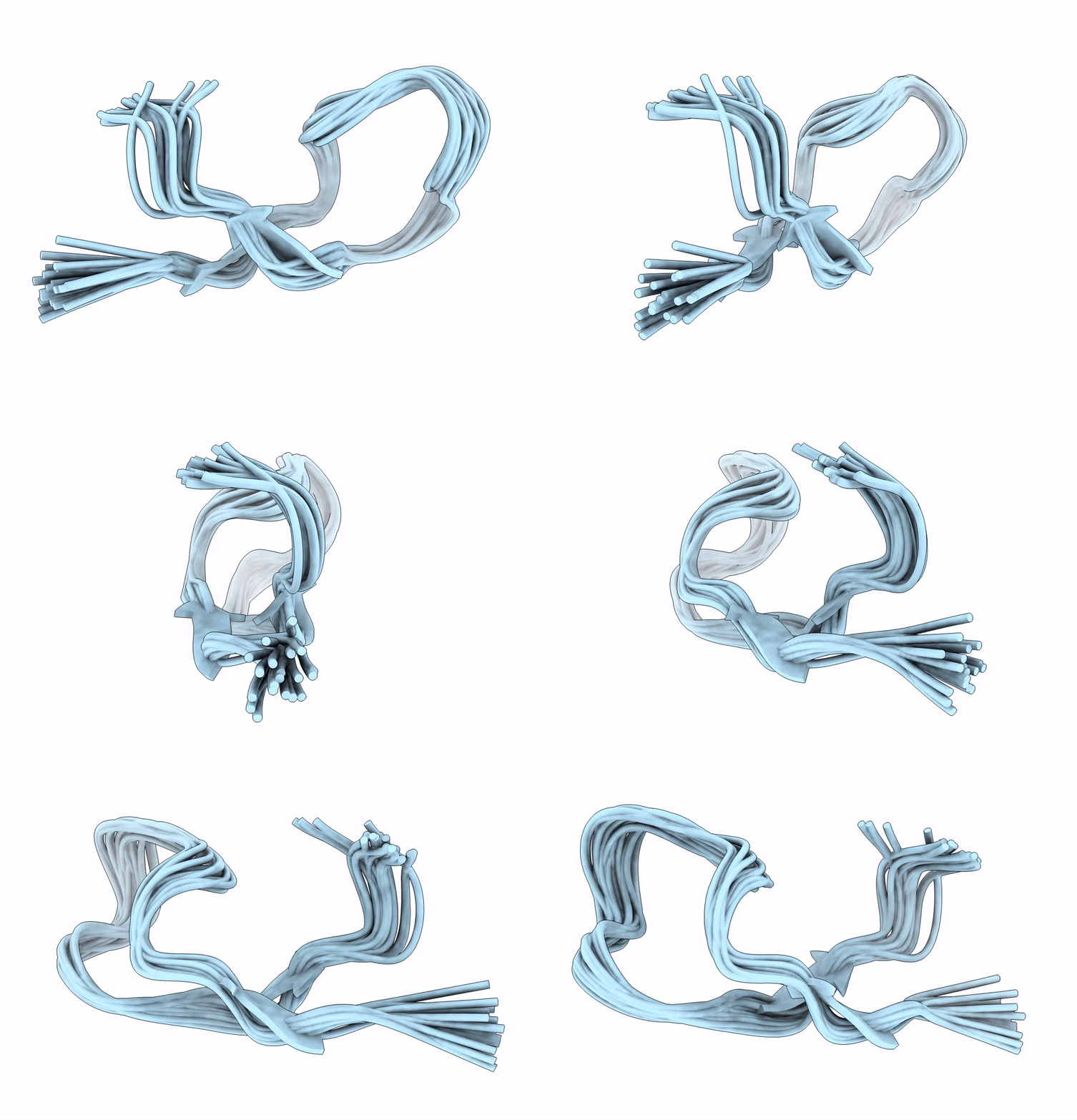
1S6W image
Deposition Date 2004-01-28
Release Date 2004-12-14
Last Version Date 2024-10-09
Entry Detail
PDB ID:
1S6W
Keywords:
Title:
Solution Structure of hybrid white striped bass hepcidin
Method Details:
Experimental Method:
Conformers Calculated:
100
Conformers Submitted:
20
Selection Criteria:
The submitted conformer models are the 20 structures with the lowest energy

Macromolecular Entities
Structures with similar UniProt ID
Protein Blast
Polymer Type:polypeptide(L)
Molecule:Hepcidin
Gene (Uniprot):hamp
Chain IDs:A
Chain Length:21
Number of Molecules:1
Biological Source:
Ligand Molecules
Primary Citation
Bass hepcidin synthesis, solution structure, antimicrobial activities and synergism, and in vivo hepatic response to bacterial infections.
J. Biol. Chem. 280 9272 9282 (2005)
PMID: 15546886 DOI: 10.1074/jbc.M411154200

Abstact

Bass hepcidin was purified from the gill of hybrid striped bass (Morone chrysops x Morone saxatilis) based on antimicrobial activity against Escherichia coli. This 21-amino acid peptide has 8 cysteines engaged in 4 disulfide bonds and is very similar to human hepcidin, an antimicrobial peptide with iron regulatory properties. To gain insight into potential role(s) of bass hepcidin in innate immunity in fish, we synthesized the peptide, characterized its antimicrobial activities in vitro, determined its solution structure by NMR, and quantified hepatic gene expression in vivo following infection of bass with the fish pathogens, Streptococcus iniae or Aeromonas salmonicida. Its structure is very similar to that of human hepcidin, including the presence of an antiparallel beta-sheet, a conserved disulfide-bonding pattern, and a rare vicinal disulfide bond. Synthetic bass hepcidin was active in vitro against Gram-negative pathogens and fungi but showed no activity against key Gram-positive pathogens and a single yeast strain tested. Hepcidin was non-hemolytic at microbicidal concentrations and had lower specific activity than moronecidin, a broad spectrum, amphipathic, alpha-helical, antimicrobial peptide constitutively expressed in bass gill tissue. Good synergism between the bacterial killing activities of hepcidin and moronecidin was observed in vitro. Hepcidin gene expression in bass liver increased significantly within hours of infection with Gram-positive (S. iniae) or Gram-negative (A. salmonicida) pathogens and was 4-5 orders of magnitude above base-line 24-48 h post-infection. Our results suggest that hepcidin plays a key role in the antimicrobial defenses of bass and that its functions are potentially conserved between fish and human.

Legend

Protein

Chemical

Disease

Primary Citation of related structures
Feedback Form
Name
Email
Institute
Feedback