

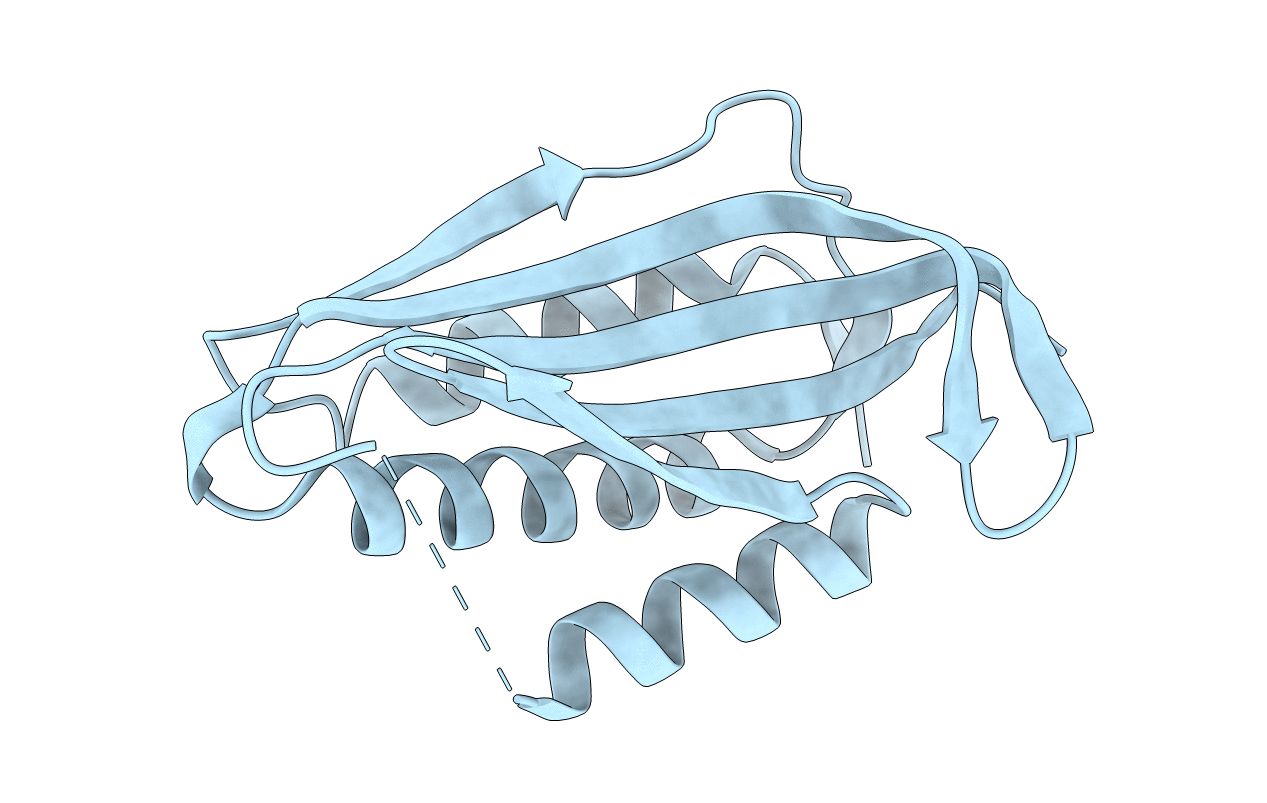
1R62 image
Deposition Date 2003-10-14
Release Date 2004-06-15
Last Version Date 2024-02-14
Entry Detail
PDB ID:
1R62
Keywords:
Title:
Crystal structure of the C-terminal Domain of the Two-Component System Transmitter Protein NRII (NtrB)
Biological Source:
Source Organism(s):
Expression System(s):
Method Details:
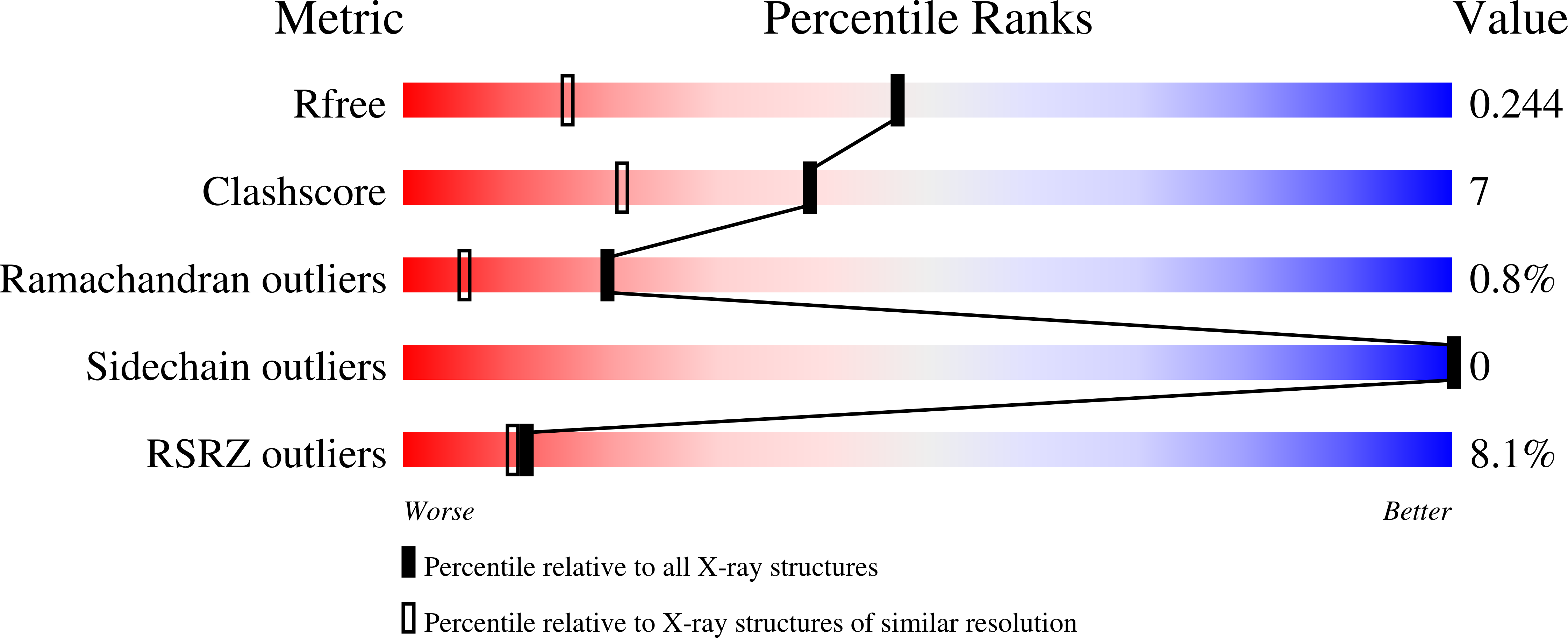
Experimental Method:
Resolution:
1.60 Å
R-Value Free:
0.24
R-Value Work:
0.23
R-Value Observed:
0.23
Space Group:
C 1 2 1
Macromolecular Entities
Structures with similar UniProt ID
Protein Blast
Polymer Type:polypeptide(L)
Molecule:Nitrogen regulation protein N
Chain IDs:A
Chain Length:160
Number of Molecules:1
Biological Source:Escherichia coli
Primary Citation
Crystal Structure of the C-terminal Domain of the Two-Component System Transmitter Protein Nitrogen Regulator II (NRII; NtrB), Regulator of Nitrogen Assimilation in Escherichia coli.
Biochemistry 43 6670 6678 (2004)
PMID: 15157101 DOI: 10.1021/bi049474r

Abstact

The kinase/phosphatase nitrogen regulator II (NRII, NtrB) is a member of the transmitter protein family of conserved two-component signal transduction systems. The kinase activity of NRII brings about the phosphorylation of the transcription factor nitrogen regulator I (NRI, NtrC), causing the activation of Ntr gene transcription. The phosphatase activity of NRII results in the inactivation of NRI-P. The activities of NRII are regulated by the signal transduction protein encoded by glnB, PII protein, which upon binding to NRII inhibits the kinase and activates the phosphatase activity. The C-terminal ATP-binding domain of NRII is required for both the kinase and phosphatase activities and contains the PII binding site. Here, we present the crystal structure of the C-terminal domain of a mutant form of NRII, NRII-Y302N, at 1.6 A resolution and compare this structure to the analogous domains of other two-component system transmitter proteins. While the C-terminal domain of NRII shares the general tertiary structure seen in CheA, PhoQ, and EnvZ transmitter proteins, it contains a distinct beta-hairpin projection that is absent in these related proteins. This projection is near the site of a well-characterized mutation that reduces the binding of PII and near other less-characterized mutations that affect the phosphatase activity of NRII. Sequence alignment suggests that the beta-hairpin projection is present in NRII proteins from various organisms, and absent in other transmitter proteins from Escherichia coliK-12. This unique structural element in the NRII C-terminal domain may play a role in binding PII or in intramolecular signal transduction.

Legend

Protein

Chemical

Disease

Primary Citation of related structures
Feedback Form
Name
Email
Institute
Feedback