

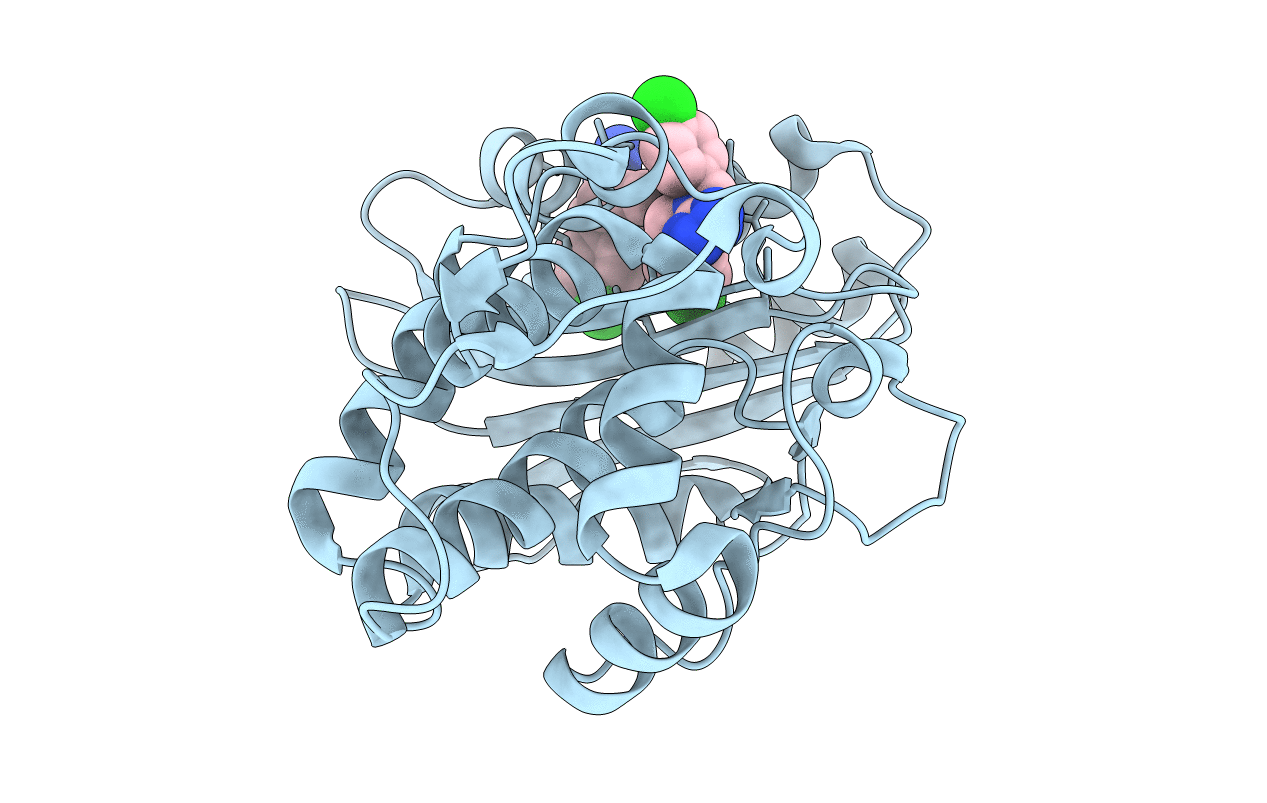
1PZO image
Deposition Date 2003-07-14
Release Date 2004-03-09
Last Version Date 2024-11-20
Entry Detail
PDB ID:
1PZO
Keywords:
Title:
TEM-1 Beta-Lactamase in Complex with a Novel, Core-Disrupting, Allosteric Inhibitor
Biological Source:
Source Organism(s):
Escherichia coli (Taxon ID: 562)
Expression System(s):
Method Details:
Experimental Method:
Resolution:
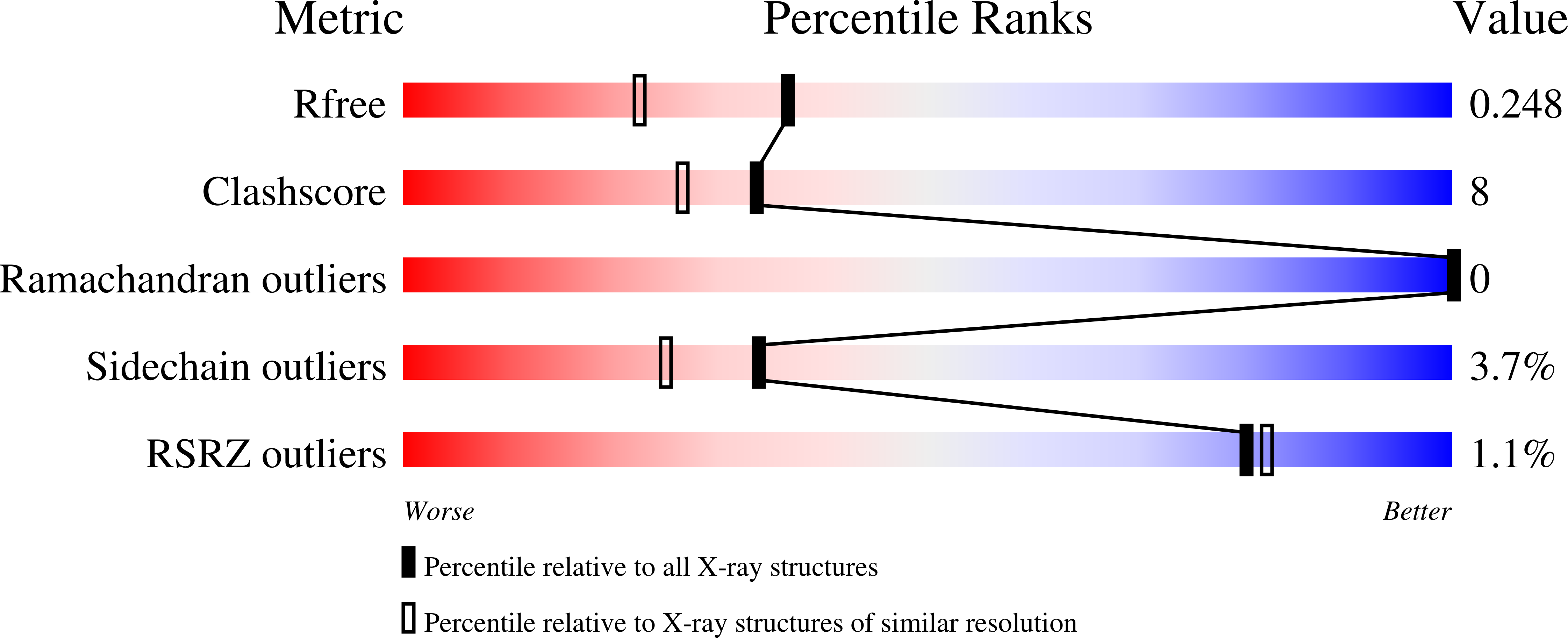
1.90 Å
R-Value Free:
0.24
R-Value Work:
0.19
R-Value Observed:
0.19
Space Group:
P 21 21 21
Macromolecular Entities
Structures with similar UniProt ID
Protein Blast
Polymer Type:polypeptide(L)
Molecule:Beta-lactamase TEM
Gene (Uniprot):bla, blaT-3, blaT-4, blaT-5, blaT-6
Mutagens:M182T
Chain IDs:A
Chain Length:263
Number of Molecules:1
Biological Source:Escherichia coli
Ligand Molecules
Primary Citation
Allosteric inhibition through core disruption.
J. Mol. Biol. 336 1283 1291 (2004)
PMID: 15037085 DOI: 10.1016/j.jmb.2003.12.068

Abstact

Although inhibitors typically bind pre-formed sites on proteins, it is theoretically possible to inhibit by disrupting the folded structure of a protein or, in the limit, to bind preferentially to the unfolded state. Equilibria defining how such molecules act are well understood, but structural models for such binding are unknown. Two novel inhibitors of beta-lactamase were found to destabilize the enzyme at high temperatures, but at lower temperatures showed no preference for destabilized mutant enzymes versus stabilized mutants. X-ray crystal structures showed that both inhibitors bound to a cryptic site in beta-lactamase, which the inhibitors themselves created by forcing apart helixes 11 and 12. This opened up a portion of the hydrophobic core of the protein, into which these two inhibitors bind. Although this binding site is 16 A from the center of the active site, the conformational changes were transmitted through a sequence of linked motions to a key catalytic residue, Arg244, which in the complex adopts conformations very different from those in catalytically competent enzyme conformations. These structures offer a detailed view of what has heretofore been a theoretical construct, and suggest the possibility for further design against this novel site.

Legend

Protein

Chemical

Disease

Primary Citation of related structures
Feedback Form
Name
Email
Institute
Feedback