

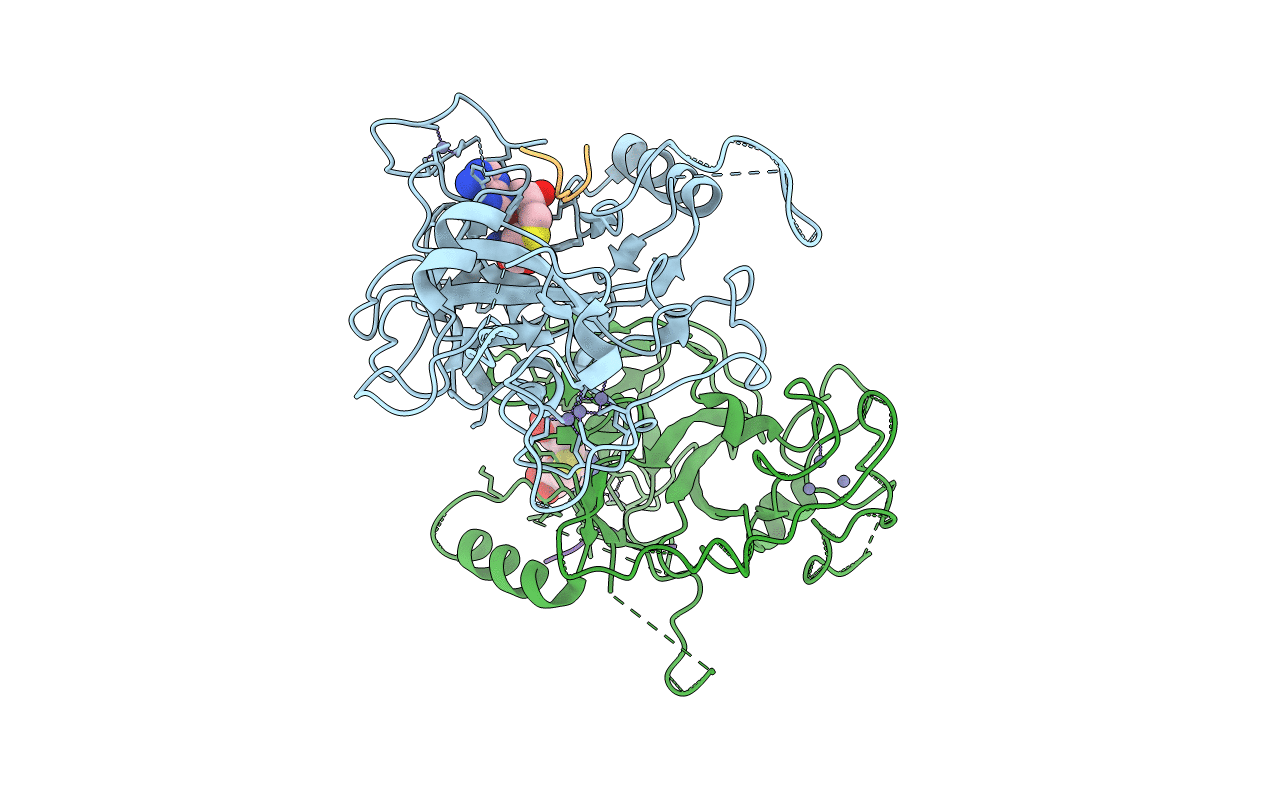
1PEG image
Deposition Date 2003-05-21
Release Date 2003-08-05
Last Version Date 2023-08-16
Entry Detail
PDB ID:
1PEG
Keywords:
Title:
Structural basis for the product specificity of histone lysine methyltransferases
Biological Source:
Source Organism(s):
Expression System(s):
Method Details:
Experimental Method:
Resolution:
2.59 Å
R-Value Free:
0.32
R-Value Work:
0.22
R-Value Observed:
0.22
Space Group:
P 21 21 21

Macromolecular Entities
Structures with similar UniProt ID
Protein Blast
Polymer Type:polypeptide(L)
Molecule:histone H3 methyltransferase
Gene (Uniprot):dim-5
Chain IDs:A, C (auth: B)
Chain Length:302
Number of Molecules:2
Biological Source:Neurospora crassa
Structures with similar UniProt ID
Protein Blast
Polymer Type:polypeptide(L)
Molecule:Histone H3
Chain IDs:B (auth: P), D (auth: Q)
Chain Length:15
Number of Molecules:2
Biological Source:
Primary Citation
Structural basis for the product specificity of histone lysine methyltransferases
Mol. Cell 12 177 185 (2003)
PMID: 12887903 DOI: 10.1016/S1097-2765(03)00224-7

Abstact

DIM-5 is a SUV39-type histone H3 Lys9 methyltransferase that is essential for DNA methylation in N. crassa. We report the structure of a ternary complex including DIM-5, S-adenosyl-L-homocysteine, and a substrate H3 peptide. The histone tail inserts as a parallel strand between two DIM-5 strands, completing a hybrid sheet. Three post-SET cysteines coordinate a zinc atom together with Cys242 from the SET signature motif (NHXCXPN) near the active site. Consequently, a narrow channel is formed to accommodate the target Lys9 side chain. The sulfur atom of S-adenosyl-L-homocysteine, where the transferable methyl group is to be attached in S-adenosyl-L-methionine, lies at the opposite end of the channel, approximately 4 A away from the target Lys9 nitrogen. Structural comparison of the active sites of DIM-5, an H3 Lys9 trimethyltransferase, and SET7/9, an H3 Lys4 monomethyltransferase, allowed us to design substitutions in both enzymes that profoundly alter their product specificities without affecting their catalytic activities.

Legend

Protein

Chemical

Disease

Primary Citation of related structures
Feedback Form
Name
Email
Institute
Feedback