

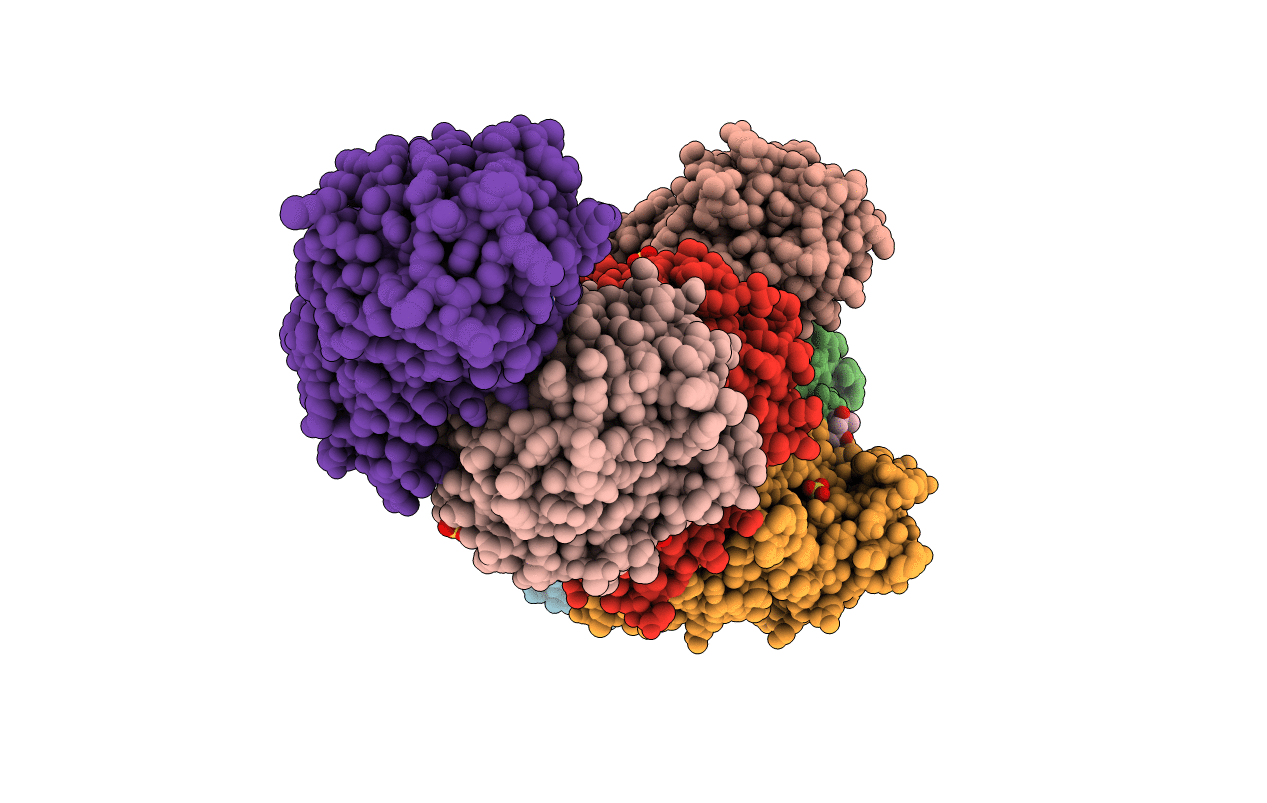
1NVM image
Deposition Date 2003-02-04
Release Date 2003-06-17
Last Version Date 2024-02-14
Entry Detail
PDB ID:
1NVM
Title:
Crystal structure of a bifunctional aldolase-dehydrogenase : sequestering a reactive and volatile intermediate
Biological Source:
Source Organism(s):
Expression System(s):
Method Details:
Experimental Method:
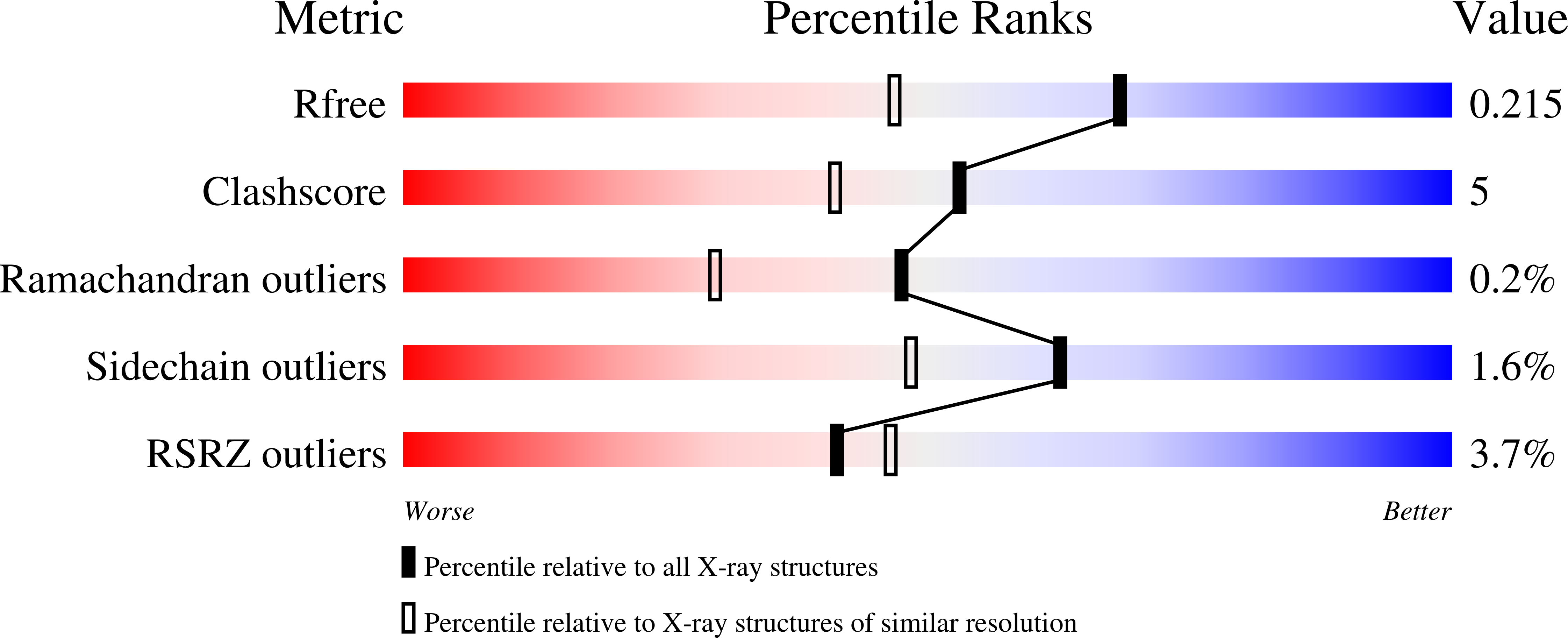
Resolution:
1.70 Å
R-Value Free:
0.23
R-Value Work:
0.18
Space Group:
P 21 21 21
Macromolecular Entities
Structures with similar UniProt ID
Protein Blast
Polymer Type:polypeptide(L)
Molecule:4-hydroxy-2-oxovalerate aldol
Gene (Uniprot):dmpG
Chain IDs:A, C, E, G
Chain Length:345
Number of Molecules:4
Biological Source:Pseudomonas sp.
Structures with similar UniProt ID
Protein Blast
Polymer Type:polypeptide(L)
Molecule:acetaldehyde dehydrogenase (a
Gene (Uniprot):dmpF
Chain IDs:B, D, F, H
Chain Length:312
Number of Molecules:4
Biological Source:Pseudomonas sp.
Primary Citation
Crystal structure of a bifunctional aldolase-dehydrogenase: Sequestering a reactive and volatile intermediate
Proc. Natl. Acad. Sci. U.S.A. 100 6992 6997 (2003)
PMID: 12764229 DOI: 10.1073/pnas.1236794100

Abstact

The crystal structure of the bifunctional enzyme 4-hydroxy-2-ketovalerate aldolase (DmpG)/acylating acetaldehyde dehydrogenase (DmpF), which is involved in the bacterial degradation of toxic aromatic compounds, has been determined by multiwavelength anomalous dispersion (MAD) techniques and refined to 1.7-A resolution. Structures of the two polypeptides represent a previously unrecognized subclass of metal-dependent aldolases, and of a CoA-dependent dehydrogenase. The structure reveals a mixed state of NAD+ binding to the DmpF protomer. Domain movements associated with cofactor binding in the DmpF protomer may be correlated with channeling and activity at the DmpG protomer. In the presence of NAD+ a 29-A-long sequestered tunnel links the two active sites. Two barriers are visible along the tunnel and suggest control points for the movement of the reactive and volatile acetaldehyde intermediate between the two active sites.

Legend

Protein

Chemical

Disease

Primary Citation of related structures
Feedback Form
Name
Email
Institute
Feedback