

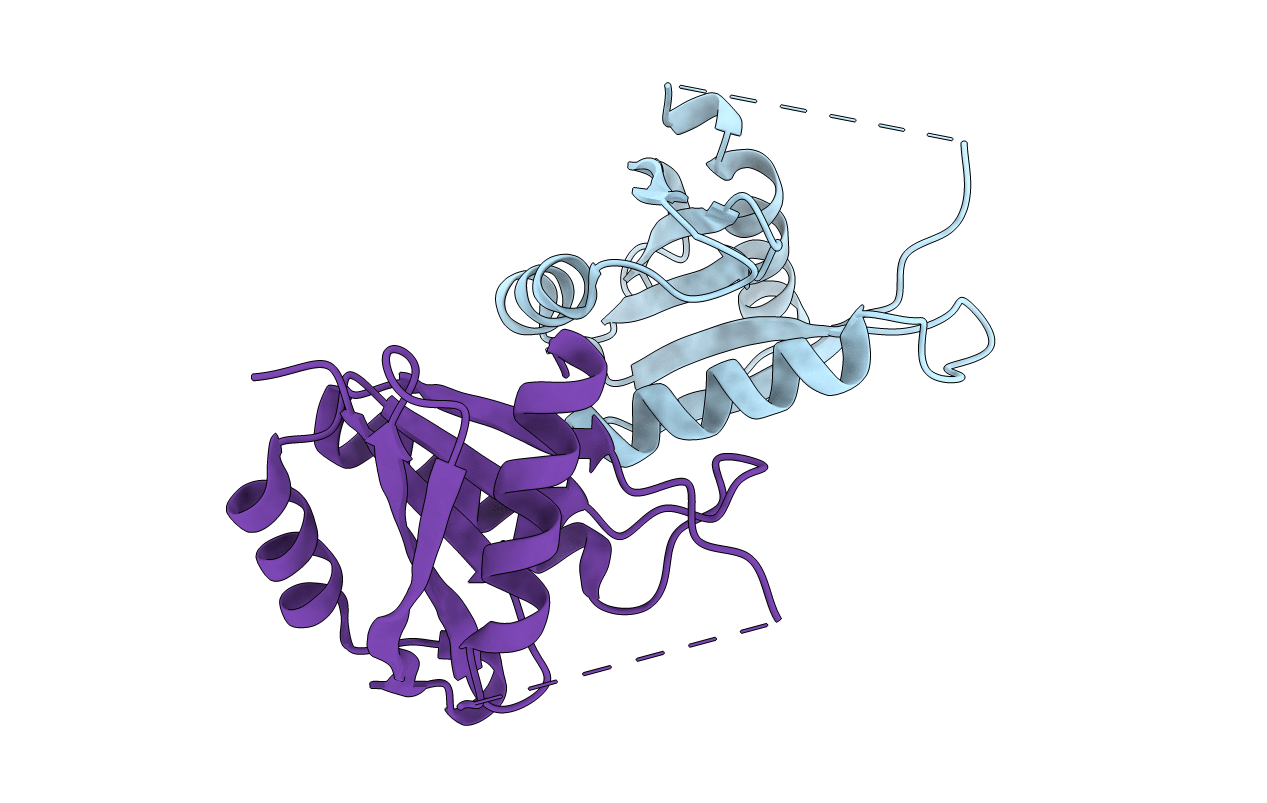
1NMN image
Deposition Date 2003-01-10
Release Date 2004-03-02
Last Version Date 2024-02-14
Entry Detail
PDB ID:
1NMN
Title:
Structure of yqgF from Escherichia coli, a hypothetical protein
Biological Source:
Source Organism(s):
Escherichia coli (Taxon ID: 562)
Expression System(s):
Method Details:
Experimental Method:
Resolution:
2.30 Å
R-Value Free:
0.26
R-Value Work:
0.19
Space Group:
P 21 21 21
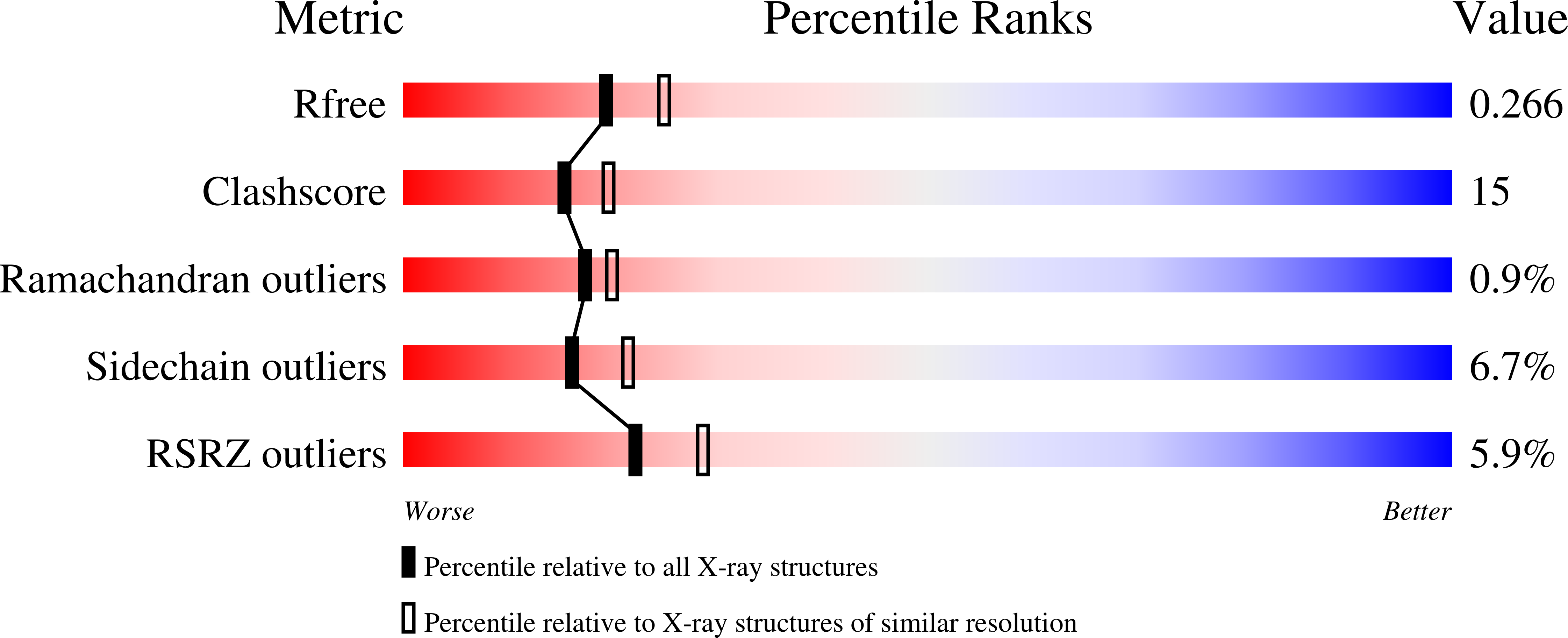
Macromolecular Entities
Structures with similar UniProt ID
Protein Blast
Polymer Type:polypeptide(L)
Molecule:Hypothetical protein yqgF
Gene (Uniprot):yqgF
Chain IDs:A, B
Chain Length:138
Number of Molecules:2
Biological Source:Escherichia coli
Primary Citation
The Crystal Structure and Biochemical Analyses of Escherichia coli YqgF Illuminate Its Diverse Functions.
J. Mol. Biol. 437 169221 169221 (2025)
PMID: 40398672 DOI: 10.1016/j.jmb.2025.169221

Abstact

The Escherichia coli yqgF gene product is essential for bacterial growth and to confer resistance to multiple antimicrobial agents. Furthermore, additional evidence suggests that YqgF, a RuvC family protein, is required for DNA damage repair, yet the mechanism underlying its action remains elusive. To address this knowledge gap, we conducted structural and biochemical investigations on E. coli YqgF (EcYqgF). Here, we reveal that EcYqgF binds preferentially to branched DNA structures compared to single-stranded (ssDNA) and double-stranded DNA (dsDNA), and that the EcYqgF:DNA complexes formed with branched DNA species were more stable and resistant against high salt and excess of competitor DNA than those formed with dsDNA. We show that EcYqgF has a strong preference towards cleavage of branched DNA structures than dsDNA, ssDNA, and dsDNA with 5'- or 3'-ssDNA overhangs. Crucially, we found that EcYqgF has a DNA-independent, Mg2+-dependent ATPase activity that is tightly coupled to DNA cleavage. We have determined the crystal structure of EcYqgF, developed a model of ATP binding using AI-based methods, and rationalized the impact of site-directed mutants on ATP binding. Furthermore, we discovered two unusual ATPase-defective EcYqgF variants, proficient in ATP-binding but not hydrolysis, which display a modest increase in the DNA-binding affinity, yet are devoid of endonucleolytic activity, thus revealing a previously unappreciated property of YqgF endonucleases. Collectively, our results suggest that despite its overall structural similarity to the well-studied resolvase, RuvC, EcYqgF is functionally distinct. Importantly, the EcYqgF dual activity that couples ATP hydrolysis to endonuclease activity is absent in RuvC.

Legend

Protein

Chemical

Disease

Primary Citation of related structures
Feedback Form
Name
Email
Institute
Feedback