

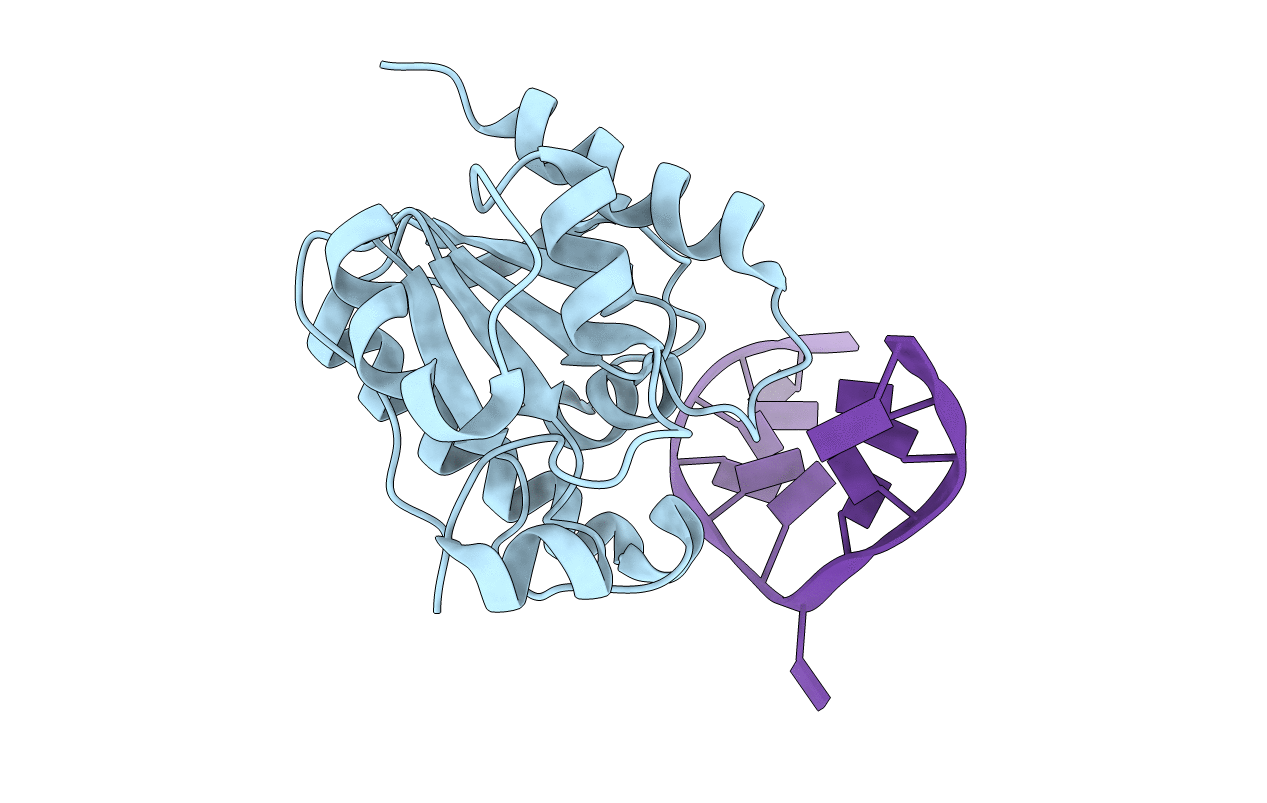
1MWJ image
Deposition Date 2002-09-30
Release Date 2002-10-11
Last Version Date 2026-03-04
Entry Detail
PDB ID:
1MWJ
Keywords:
Title:
Crystal Structure of a MUG-DNA pseudo substrate complex
Biological Source:
Source Organism(s):
Escherichia coli (Taxon ID: 562)
Expression System(s):
Method Details:
Experimental Method:
Resolution:
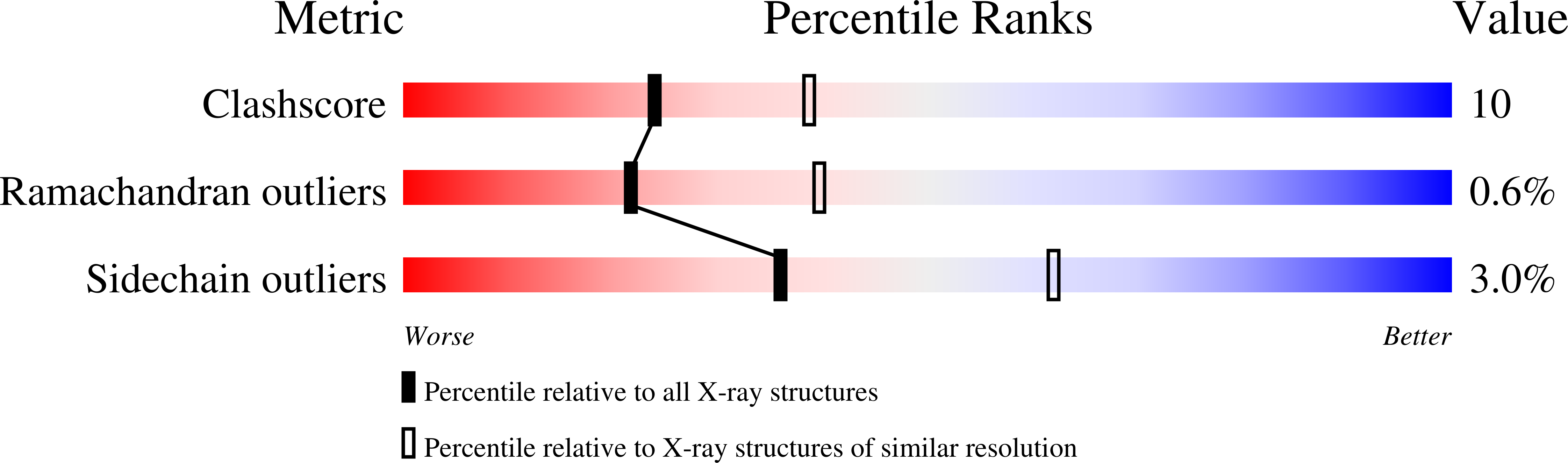
2.85 Å
R-Value Free:
0.25
R-Value Work:
0.19
R-Value Observed:
0.23
Space Group:
P 42 21 2
Macromolecular Entities
Structures with similar UniProt ID
Protein Blast
Polymer Type:polypeptide(L)
Molecule:G/U mismatch-specific DNA gly
Gene (Uniprot):mug
Chain IDs:B (auth: A)
Chain Length:168
Number of Molecules:1
Biological Source:Escherichia coli
Primary Citation
Crystal Structure of a thwarted mismatch glycosylase DNA repair complex
EMBO J. 18 6599 6609 (1999)
PMID: 10581234 DOI: 10.1093/emboj/18.23.6599

Abstact

The bacterial mismatch-specific uracil-DNA glycosylase (MUG) and eukaryotic thymine-DNA glycosylase (TDG) enzymes form a homologous family of DNA glycosylases that initiate base-excision repair of G:U/T mismatches. Despite low sequence homology, the MUG/TDG enzymes are structurally related to the uracil-DNA glycosylase enzymes, but have a very different mechanism for substrate recognition. We have now determined the crystal structure of the Escherichia coli MUG enzyme complexed with an oligonucleotide containing a non-hydrolysable deoxyuridine analogue mismatched with guanine, providing the first structure of an intact substrate-nucleotide productively bound to a hydrolytic DNA glycosylase. The structure of this complex explains the preference for G:U over G:T mispairs, and reveals an essentially non-specific pyrimidine-binding pocket that allows MUG/TDG enzymes to excise the alkylated base, 3, N(4)-ethenocytosine. Together with structures for the free enzyme and for an abasic-DNA product complex, the MUG-substrate analogue complex reveals the conformational changes accompanying the catalytic cycle of substrate binding, base excision and product release.

Legend

Protein

Chemical

Disease

Primary Citation of related structures
Feedback Form
Name
Email
Institute
Feedback