

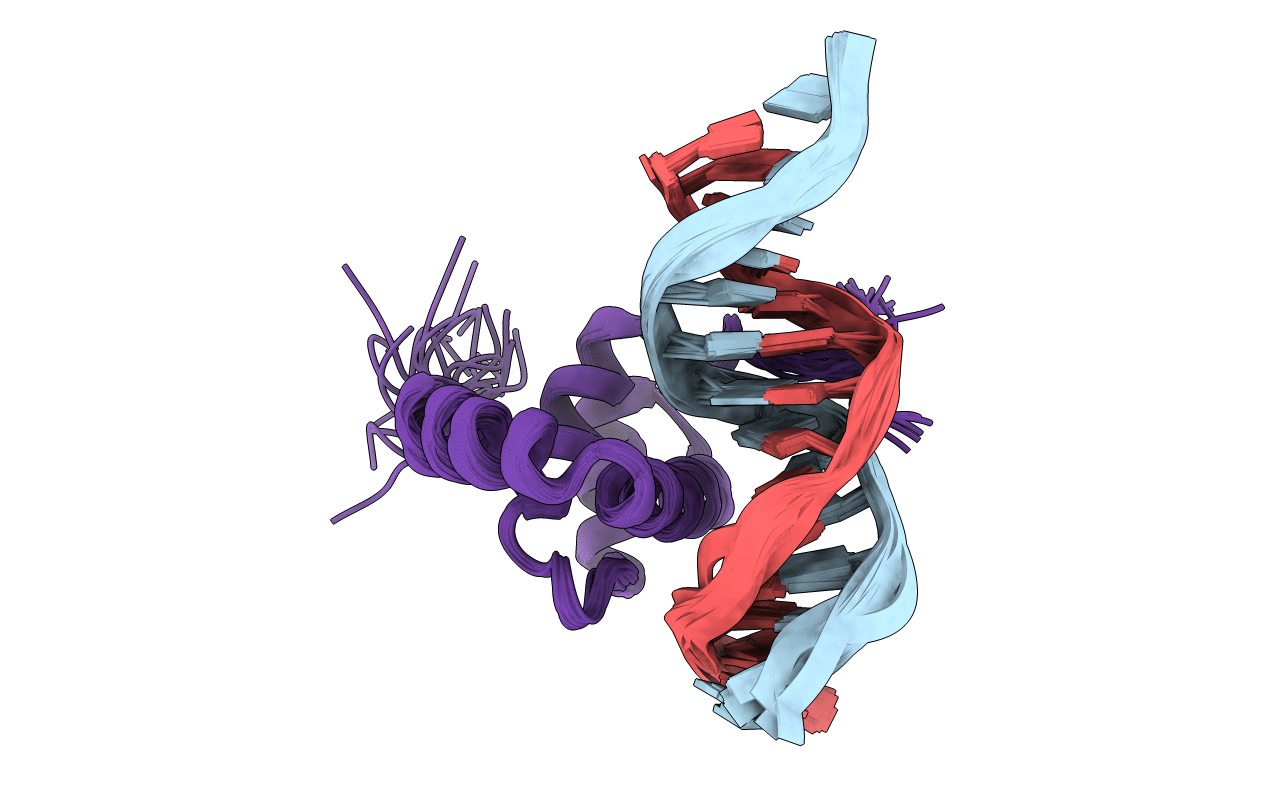
1LFU image
Deposition Date 2002-04-12
Release Date 2003-01-14
Last Version Date 2024-05-22
Entry Detail
PDB ID:
1LFU
Keywords:
Title:
NMR Solution Structure of the Extended PBX Homeodomain Bound to DNA
Biological Source:
Source Organism(s):
Mus musculus (Taxon ID: 10090)
Expression System(s):
Method Details:
Experimental Method:
Conformers Calculated:
100
Conformers Submitted:
20
Selection Criteria:
lowest energy with acceptable geometry

Macromolecular Entities
Structures with similar UniProt ID
Protein Blast
Polymer Type:polypeptide(L)
Molecule:homeobox protein PBX1
Gene (Uniprot):Pbx1
Mutagens:C42S
Chain IDs:C (auth: P)
Chain Length:82
Number of Molecules:1
Biological Source:Mus musculus
Ligand Molecules
Primary Citation
Lock and Key Binding of the HOX YPWM Peptide to the PBX Homeodomain
J. Biol. Chem. 278 1053 1058 (2003)
PMID: 12409300 DOI: 10.1074/jbc.M207504200

Abstact

HOX homeodomain proteins bind short core DNA sequences to control very specific developmental processes. DNA binding affinity and sequence selectivity are increased by the formation of cooperative complexes with the PBX homeodomain protein. A conserved YPWM motif in the HOX protein is necessary for cooperative binding with PBX. We have determined the structure of a PBX homeodomain bound to a 14-mer DNA duplex. A relaxation-optimized procedure was developed to measure DNA residual dipolar couplings at natural abundance in the 20-kDa binary complex. When the PBX homeodomain binds to DNA, a fourth alpha-helix is formed in the homeodomain. This helix rigidifies the DNA recognition helix of PBX and forms a hydrophobic binding site for the HOX YPWM peptide. The HOX peptide itself shows some structure in solution and suggests that the interaction between PBX and HOX is an example of "lock and key" binding. The NMR structure explains the requirement of DNA for the PBX-HOX interaction and the increased affinity of DNA binding.

Legend

Protein

Chemical

Disease

Primary Citation of related structures
Feedback Form
Name
Email
Institute
Feedback