

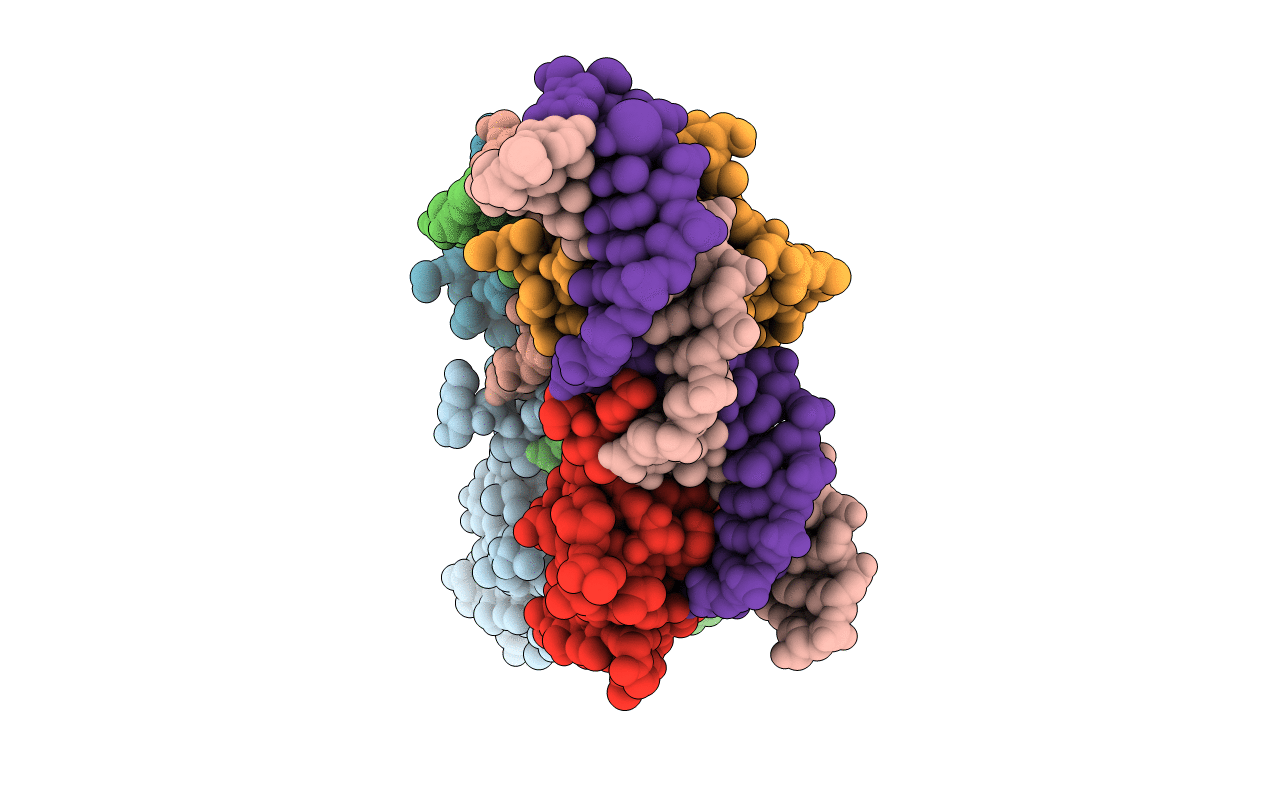
1GA5 image
Deposition Date 2000-11-29
Release Date 2001-11-16
Last Version Date 2023-08-09
Entry Detail
PDB ID:
1GA5
Title:
CRYSTAL STRUCTURE OF THE ORPHAN NUCLEAR RECEPTOR REV-ERB(ALPHA) DNA-BINDING DOMAIN BOUND TO ITS COGNATE RESPONSE ELEMENT
Biological Source:
Source Organism(s):
Homo sapiens (Taxon ID: 9606)
Expression System(s):
Method Details:
Experimental Method:
Resolution:
2.40 Å
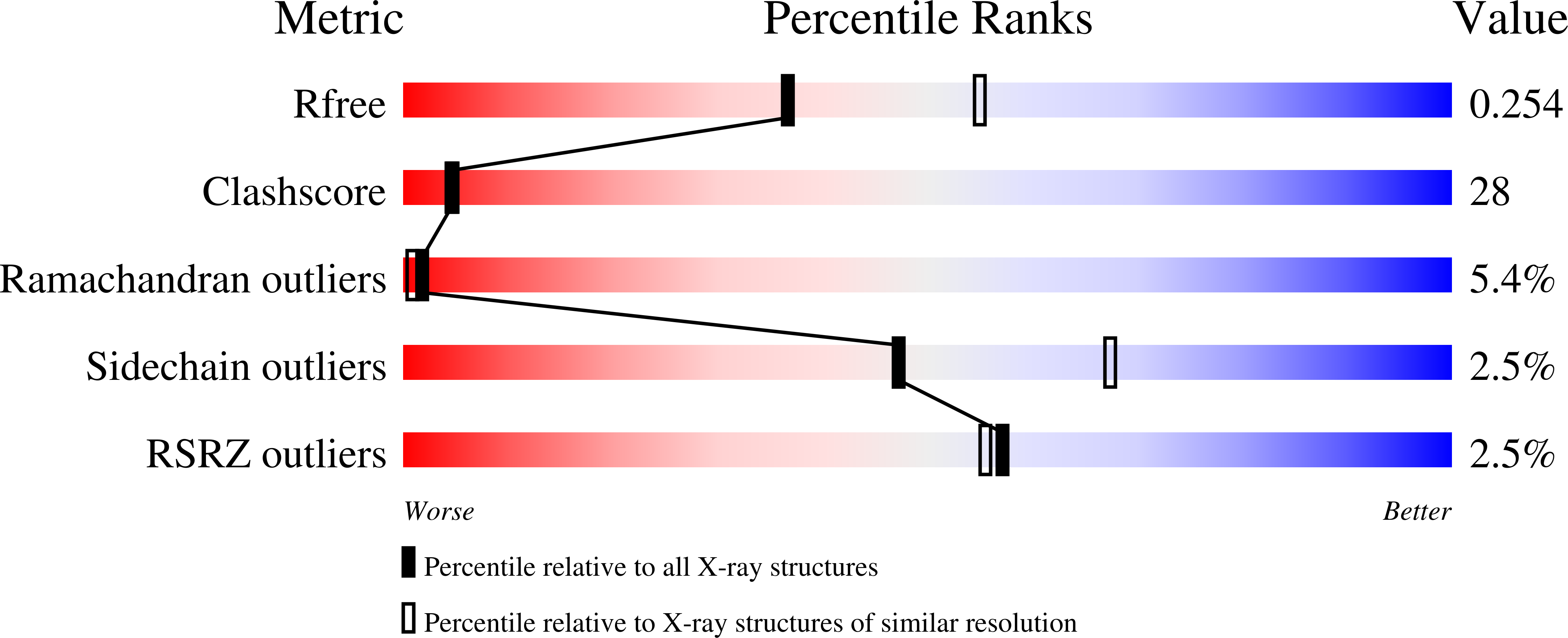
R-Value Free:
0.29
R-Value Work:
0.25
R-Value Observed:
0.23
Space Group:
P 1
Macromolecular Entities
Structures with similar UniProt ID
Protein Blast
Polymer Type:polypeptide(L)
Molecule:ORPHAN NUCLEAR RECEPTOR NR1D1
Gene (Uniprot):NR1D1
Chain IDs:E (auth: A), F (auth: B), G (auth: E), H (auth: F)
Chain Length:94
Number of Molecules:4
Biological Source:Homo sapiens
Polymer Type:polydeoxyribonucleotide
Molecule:5'-D(*CP*AP*AP*CP*TP*AP*GP*GP
Chain IDs:A (auth: C), C (auth: G)
Chain Length:20
Number of Molecules:2
Biological Source:
Polymer Type:polydeoxyribonucleotide
Molecule:5'-D(*CP*TP*GP*AP*CP*CP*TP*AP
Chain IDs:B (auth: D), D (auth: H)
Chain Length:20
Number of Molecules:2
Biological Source:
Modified Residue
Compound ID Chain ID Parent Comp ID Details 2D Image
5IU B DU 5-IODO-2'-DEOXYURIDINE-5'-MONOPHOSPHATE
Ligand Molecules
Primary Citation
DNA Deformability as a Recognition Feature in the RevErb Response Element
Biochemistry 40 12833 12843 (2001)
PMID: 11669620 DOI: 10.1021/bi011086r

Abstact

Most nuclear receptors recognize the same consensus hexameric sequence, AGGTCA. An important question has been how the various members of this transcription factor family distinguish identity features in these closely related DNA sites. We determined structures from several crystal forms of the RevErb-DNA complex and analyzed the patterns of protein-DNA interactions and DNA distortions. We found a significant and consistent DNA distortion at a TA step directly preceding the first consensus 5'-AGGTCA-3' recognition sequence. Importantly, while this base-pair sequence is associated with RevErb's high-affinity sites, there are no sequence-specific contacts formed with the protein. Our study shows that RevErb relies instead on the intrinsic geometry and flexibility of this TA site to make the required fit between the proteins' independent major groove and minor groove binding interactions, which occur on both sides of the TA step. Our findings extend the description of response element discrimination to include a role for sequence-dependent DNA deformations and suggest how other monomeric members of this superfamily, such as NGFI-B, SF-1, and ROR, could also recognize unique geometric features in their DNA targets.

Legend

Protein

Chemical

Disease

Primary Citation of related structures
Feedback Form
Name
Email
Institute
Feedback