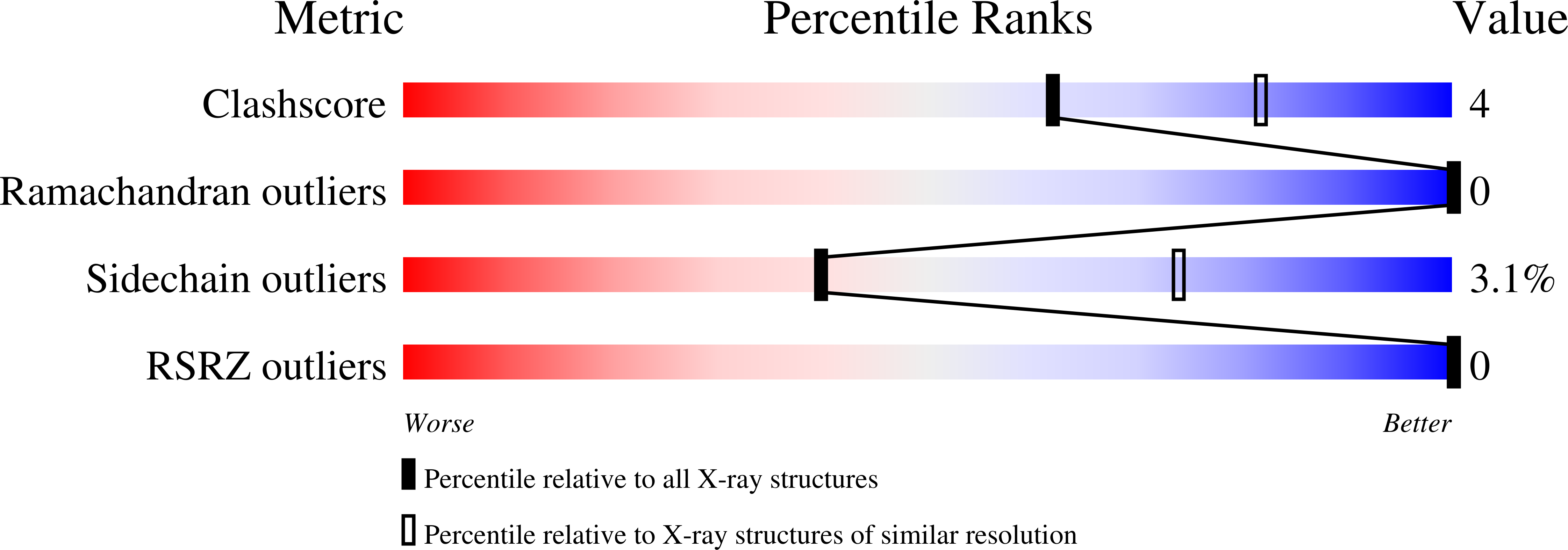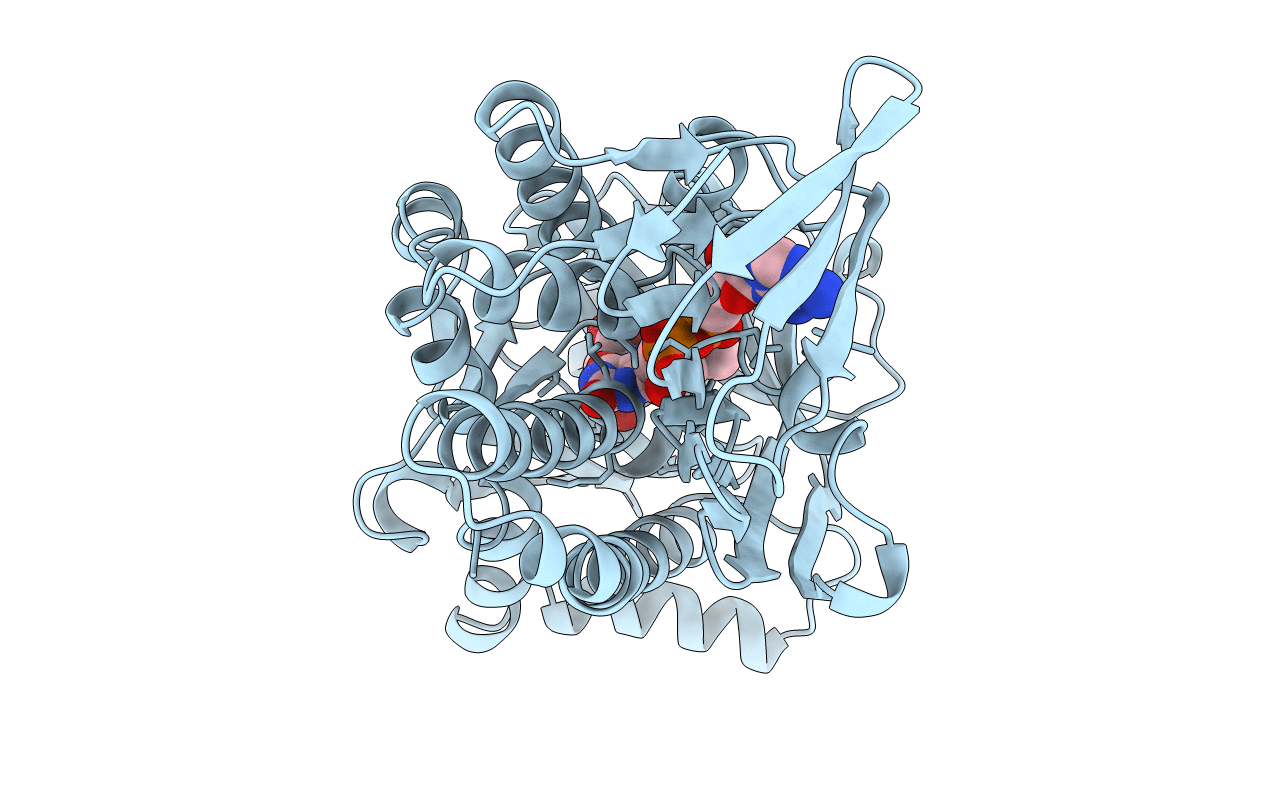
1CJ2 image
Deposition Date 1999-04-21
Release Date 1999-04-30
Last Version Date 2023-08-09
Entry Detail
PDB ID:
1CJ2
Keywords:
Title:
MUTANT GLN34ARG OF PARA-HYDROXYBENZOATE HYDROXYLASE
Biological Source:
Source Organism(s):
Expression System(s):
Method Details:
Experimental Method:
Resolution:
2.80 Å
R-Value Work:
0.14
Space Group:
C 2 2 21
Macromolecular Entities
Structures with similar UniProt ID
Protein Blast
Polymer Type:polypeptide(L)
Molecule:PROTEIN (P-HYDROXYBENZOATE HY
Gene (Uniprot):pobA
Mutagens:Q34R
Chain IDs:A
Chain Length:391
Number of Molecules:1
Biological Source:Pseudomonas fluorescens
Primary Citation
Switch of coenzyme specificity of p-hydroxybenzoate hydroxylase.
J. Mol. Biol. 292 87 96 (1999)
PMID: 10493859 DOI: 10.1006/jmbi.1999.3015

Abstact

p-Hydroxybenzoate hydroxylase (PHBH) is the archetype of the family of NAD(P)H-dependent flavoprotein aromatic hydroxylases. These enzymes share a conserved FAD-binding domain but lack a recognizable fold for binding the pyridine nucleotide. We have switched the coenzyme specificity of strictly NADPH-dependent PHBH from Pseudomonas fluorescens by site-directed mutagenesis. To that end, we altered the solvent exposed helix H2 region (residues 33-40) of the FAD-binding domain. Non-conservative selective replacements of Arg33 and Tyr38 weakened the binding of NADPH without disturbing the protein architecture. Introduction of a basic residue at position 34 increased the NADPH binding strength. Double (M2) and quadruple (M4) substitutions in the N-terminal part of helix H2 did not change the coenzyme specificity. By extending the replacements towards residues 38 and 40, M5 and M6 mutants were generated which were catalytically more efficient with NADH than with NADPH. It is concluded that specificity in P. fluorescens PHBH is conferred by interactions of Arg33, Tyr38 and Arg42 with the 2'-phosphate moiety of bound NADPH, and that introduction of an acidic group at position 38 potentially enables the recognition of the 2'-hydroxy group of NADH. This is the first report on the coenzyme reversion of a flavoprotein aromatic hydroxylase.

Legend

Protein

Chemical

Disease

Primary Citation of related structures
Feedback Form
Name
Email
Institute
Feedback