

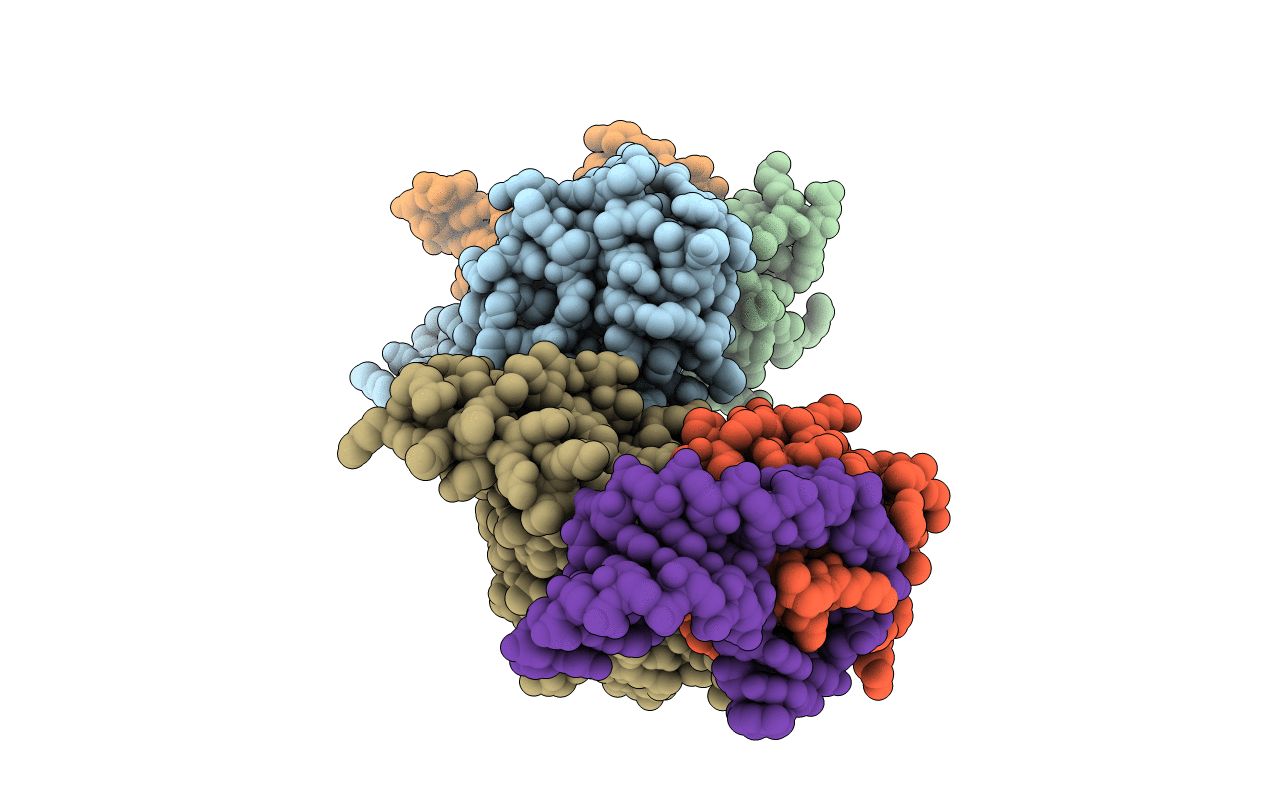
1A9N image
Deposition Date 1998-04-08
Release Date 1998-09-23
Last Version Date 2024-10-30
Entry Detail
PDB ID:
1A9N
Title:
CRYSTAL STRUCTURE OF THE SPLICEOSOMAL U2B''-U2A' PROTEIN COMPLEX BOUND TO A FRAGMENT OF U2 SMALL NUCLEAR RNA
Biological Source:
Source Organism(s):
Homo sapiens (Taxon ID: 9606)
Expression System(s):
Method Details:
Experimental Method:
Resolution:
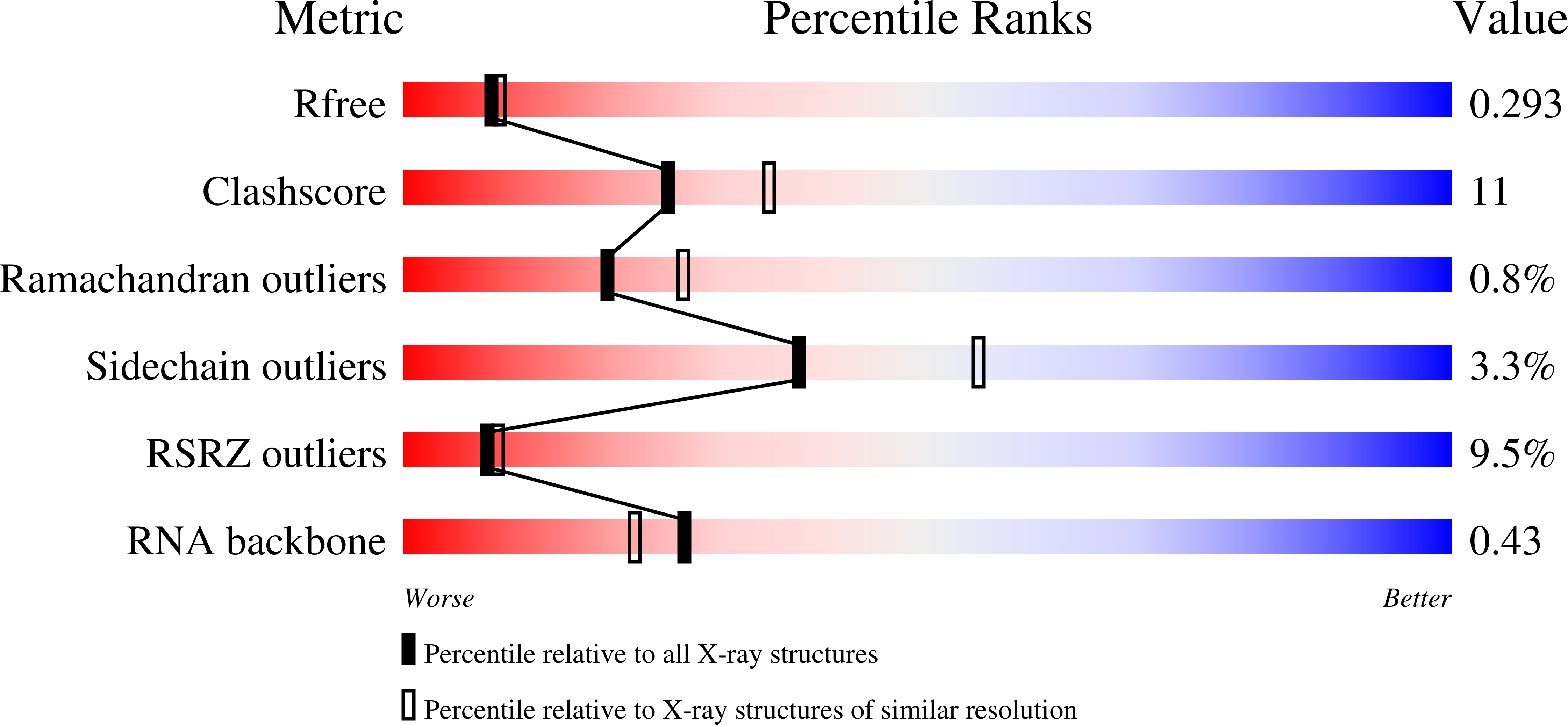
2.38 Å
R-Value Free:
0.32
R-Value Work:
0.28
Space Group:
P 21 21 2
Macromolecular Entities
Structures with similar UniProt ID
Protein Blast
Polymer Type:polypeptide(L)
Molecule:U2A'
Gene (Uniprot):SNRPA1
Mutagens:C89D, S119C
Chain IDs:C (auth: A), D (auth: C)
Chain Length:176
Number of Molecules:2
Biological Source:Homo sapiens
Structures with similar UniProt ID
Protein Blast
Polymer Type:polypeptide(L)
Molecule:SPLICEOSOMAL U2B''
Gene (Uniprot):SNRPB2
Chain IDs:E (auth: B), F (auth: D)
Chain Length:96
Number of Molecules:2
Biological Source:Homo sapiens
Polymer Type:polyribonucleotide
Molecule:RNA (5'-R(*CP*CP*UP*GP*GP*UP*
Chain IDs:A (auth: Q), B (auth: R)
Chain Length:24
Number of Molecules:2
Biological Source:Homo sapiens
Ligand Molecules
Primary Citation
Crystal structure of the spliceosomal U2B"-U2A' protein complex bound to a fragment of U2 small nuclear RNA.
Nature 394 645 650 (1998)
PMID: 9716128 DOI: 10.1038/29234

Abstact

We have determined the crystal structure at 2.4 A resolution of a ternary complex between the spliceosomal U2B"/U2A' protein complex and hairpin-loop IV of U2 small nuclear RNA. Unlike its close homologue the U1A protein, U2B" binds to its cognate RNA only in the presence of U2A', which contains leucine-rich repeats in its sequence. The concave surface of a parallel beta-sheet within the leucine-rich-repeat region of U2A' interacts with the ribonucleoprotein domain of U2B" on the surface opposite its RNA-binding surface. The basic carboxy-terminal region of U2A' interacts with the RNA stem. The crystal structure reveals how protein-protein interaction regulates RNA-binding specificity, and how replacing only a few key residues allows the U2B" and U1A proteins to discriminate between their cognate RNA hairpins by forming alternative networks of interactions.

Legend

Protein

Chemical

Disease

Primary Citation of related structures
Feedback Form
Name
Email
Institute
Feedback