

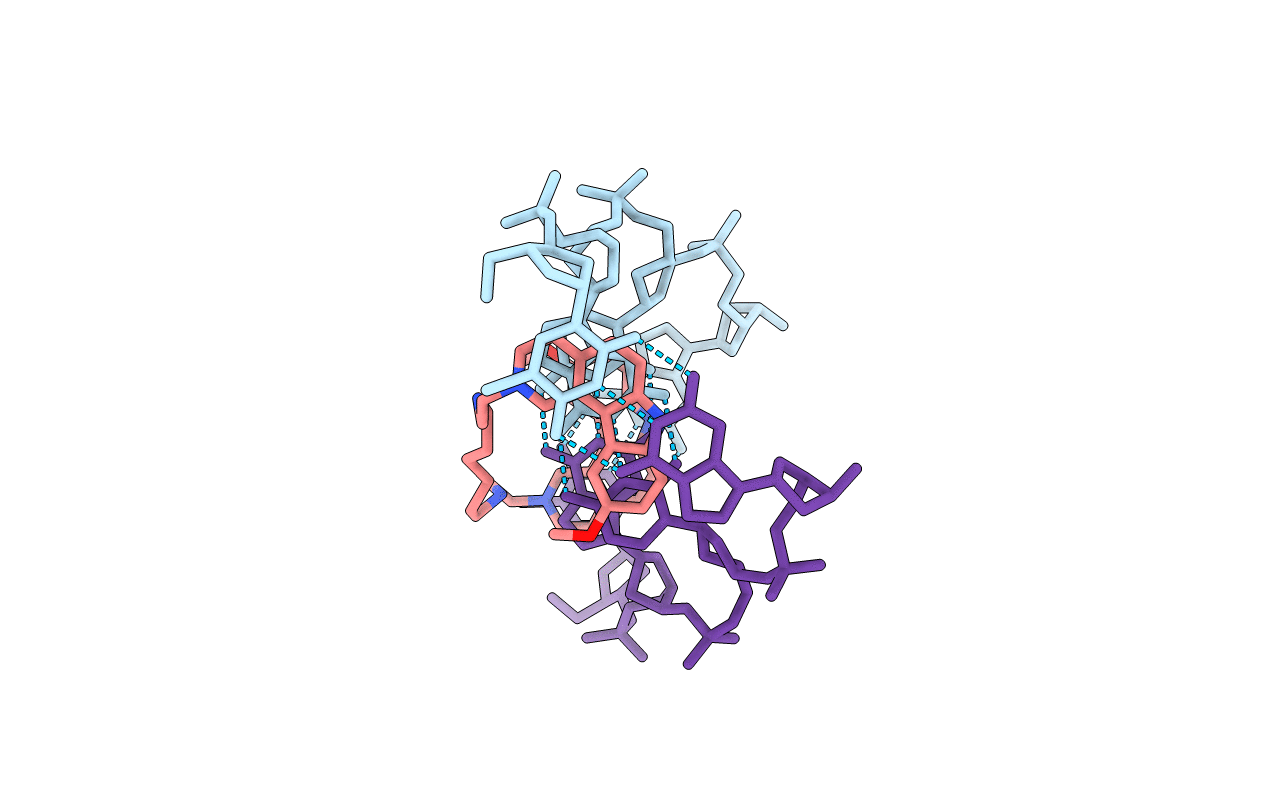
154D image
Deposition Date 1993-12-14
Release Date 1994-08-31
Last Version Date 2024-02-07
Entry Detail
PDB ID:
154D
Keywords:
Title:
DNA DISTORTION IN BIS-INTERCALATED COMPLEXES
Method Details:
Experimental Method:
Resolution:
2.50 Å
R-Value Observed:
0.23
Space Group:
P 41 21 2

Macromolecular Entities
Polymer Type:polydeoxyribonucleotide
Molecule:DNA (5'-D(*(CBR)P*GP*CP*G)-3'
Chain IDs:A, B
Chain Length:4
Number of Molecules:2
Biological Source:
Modified Residue
Compound ID Chain ID Parent Comp ID Details 2D Image
CBR A DC ?
Ligand Molecules
Primary Citation
DNA distortion in bis-intercalated complexes.
Biochemistry 33 3794 3800 (1994)
PMID: 8142381 DOI: 10.1021/bi00179a002

Abstact

The bis-intercalators Flexi-Di and ditercalinium are synthetic dimers that bis-intercalate into DNA and cause cell death in prokaryotes from futile and abortive repair of DNA. Each is composed of two 7H-pyridocarbazole units and a linker. Flexi-Di has a flexible spermine-like linker while ditercalinium has a rigid bis(ethylpiperidinium) linker. This report, describing the 2.5-A X-ray structure of Flexi-Di complexed with [d(BrCGCG)]2, appears to be the first report of a three-dimensional structure of a DNA complex with a bis-intercalator with a flexible linker. DNA complex formation with a ditercalinium analog having a flexible linker was not anticipated to yield unstacked and bent DNA as was observed in the previously reported ditercalinium.[d(CGCG)]2 complex. Surprisingly, the DNA in the Flexi-Di complex is bent to a degree exceeding that of the ditercalinium complex. A comparison of the DNA complexes of Flexi-Di and ditercalinium has allowed us to propose a mechanism by which these bis-intercalators distort DNA. We propose that this class of bis-intercalators pulls the internal base pairs into the major groove and pushes the external base pairs into the minor groove. The result is a bend toward the minor groove. It appears that hydrogen bonds between the linker and the internal guanines effectively pull the central base pairs of the complex out into the major groove. At the external regions of the complex, stacking interactions between the chromophores and terminal base pairs effectively push the terminal base pairs into the minor groove. The result of this push/pull combination is to bend the DNA.

Legend

Protein

Chemical

Disease

Primary Citation of related structures
Feedback Form
Name
Email
Institute
Feedback