

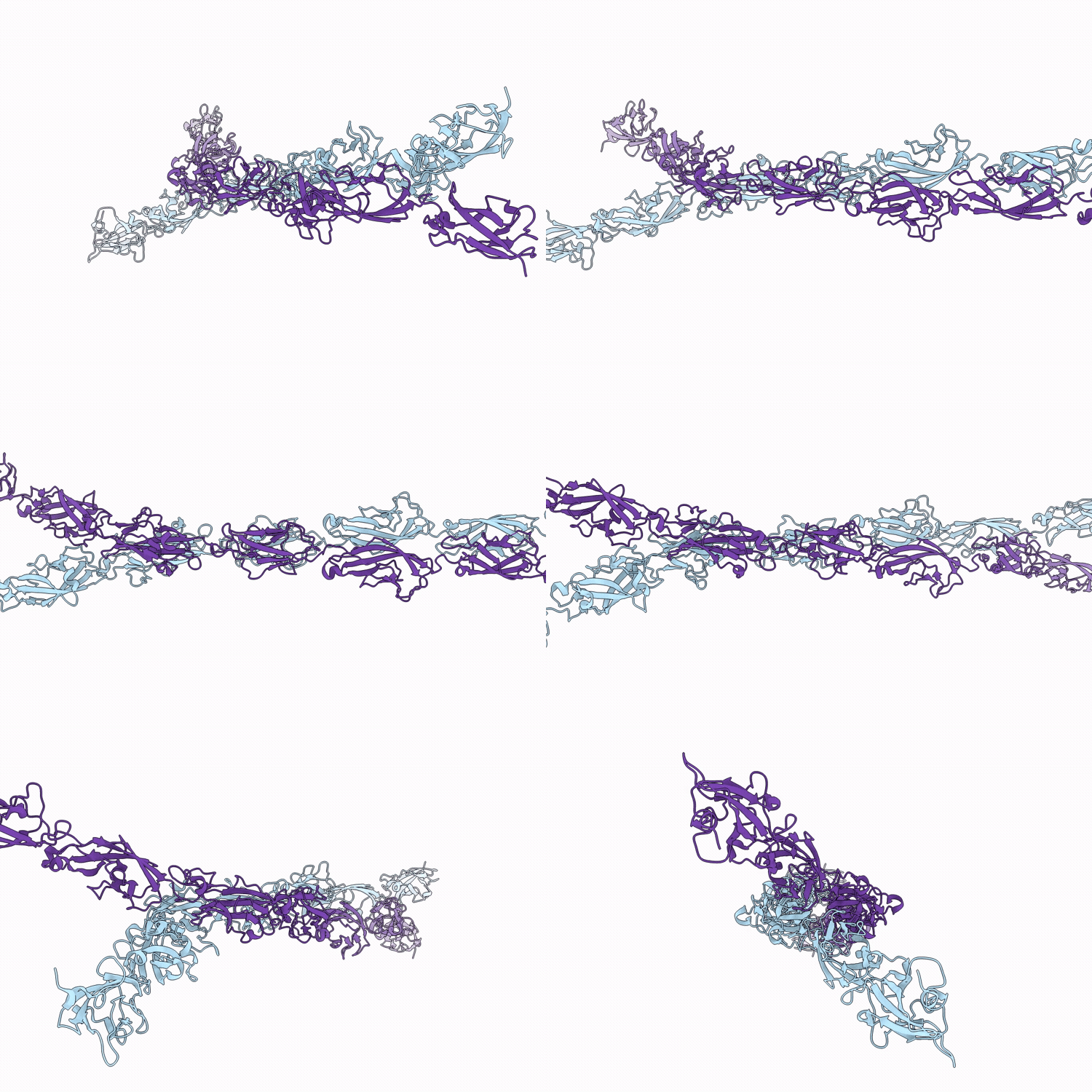
11IY image
Deposition Date 2026-02-26
Release Date 2026-05-06
Last Version Date 2026-05-06
Entry Detail
PDB ID:
11IY
Keywords:
Title:
Protocadherin-15 extracellular domains 1-7
Biological Source:
Source Organism(s):
Mus musculus (Taxon ID: 10090)
Expression System(s):
Method Details:
Experimental Method:
Resolution:
3.57 Å
Aggregation State:
PARTICLE
Reconstruction Method:
SINGLE PARTICLE
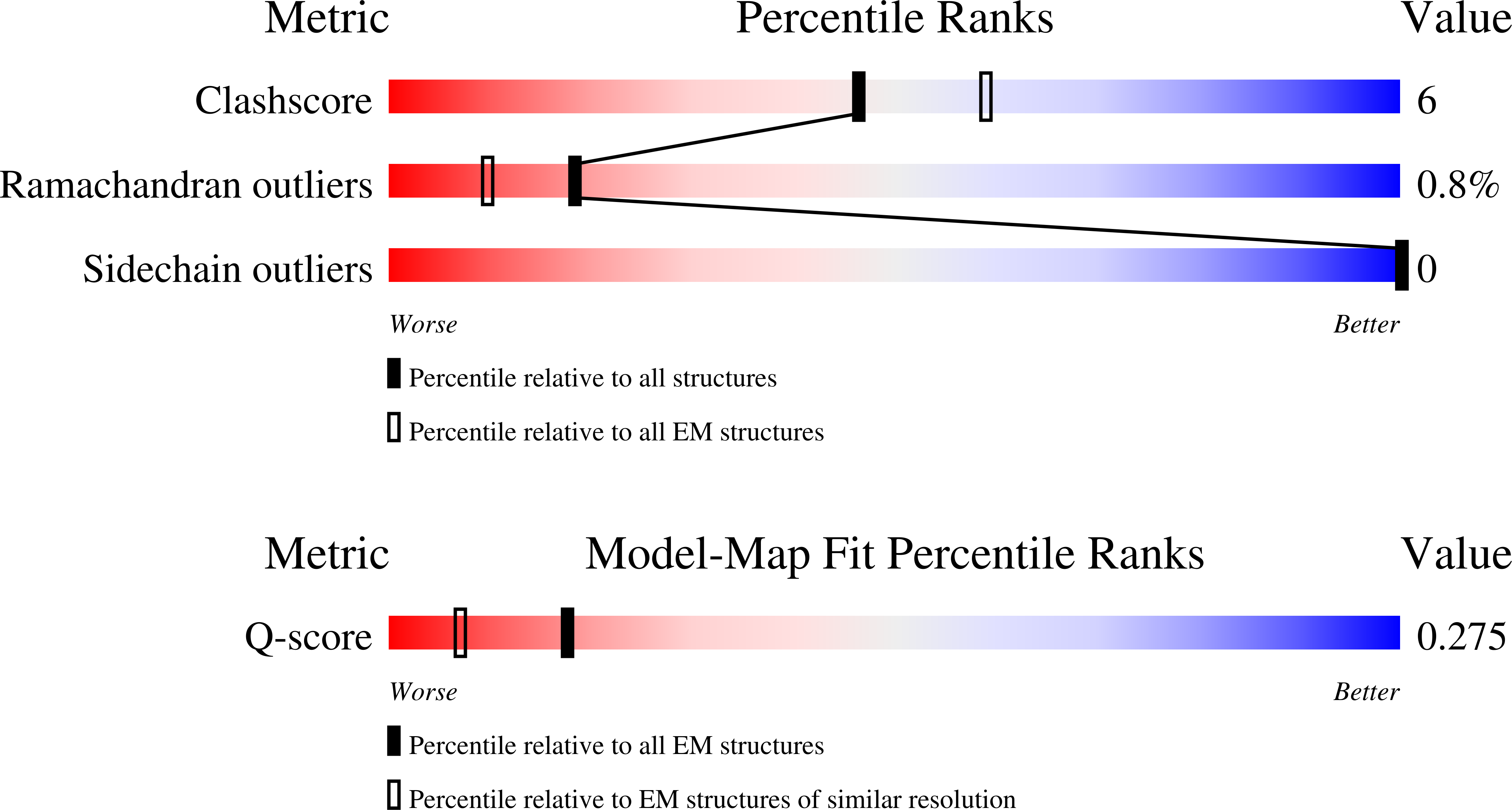
Macromolecular Entities
Structures with similar UniProt ID
Protein Blast
Polymer Type:polypeptide(L)
Molecule:Protocadherin-15
Gene (Uniprot):Pcdh15
Chain IDs:A (auth: C), B (auth: D)
Chain Length:790
Number of Molecules:2
Biological Source:Mus musculus
Ligand Molecules
Primary Citation
Cryo-EM reveals a right-handed double-helix dimer architecture of PCDH15 critical for mechanotransduction.
Biorxiv ? ? ? (2026)
PMID: 41846998 DOI: 10.64898/2026.03.02.709101

Abstact

Tip links connect the stereocilia of mechanosensory hair cells in the inner ear and transmit force onto mechanotransduction (MET) channels. Tip links consist of protocadherin 15 (PCDH15) and cadherin 23 (CDH23), which assemble into an extracellular filament approximately 150 nm in length. Rare freeze-etched electron microscopy (EM) images have suggested that tip links could be right-handed double helices in vivo, but direct structural evidence has been lacking. Using cryo-EM we determined the structure of a large part of the extracellular PCDH15 domain. Two PCDH15 molecules form a parallel cis dimer stabilized by several dimerization interfaces, including two strand crossovers and two parallel contacts, yielding a right-handed double helix. Functional studies show that mutations in PCDH15 dimerization-domains impair MET. Our results establish the molecular foundation for how PCDH15 forms a right-handed double helix to enable mechanical sensing.

Legend

Protein

Chemical

Disease

Primary Citation of related structures
Feedback Form
Name
Email
Institute
Feedback