

10ZG image
Deposition Date 2026-02-12
Release Date 2026-05-06
Last Version Date 2026-05-06
Entry Detail
PDB ID:
10ZG
Keywords:
Title:
Novobiocin Glycosyltransferase (Ngt-1)
Biological Source:
Source Organism(s):
Expression System(s):
Method Details:
Experimental Method:
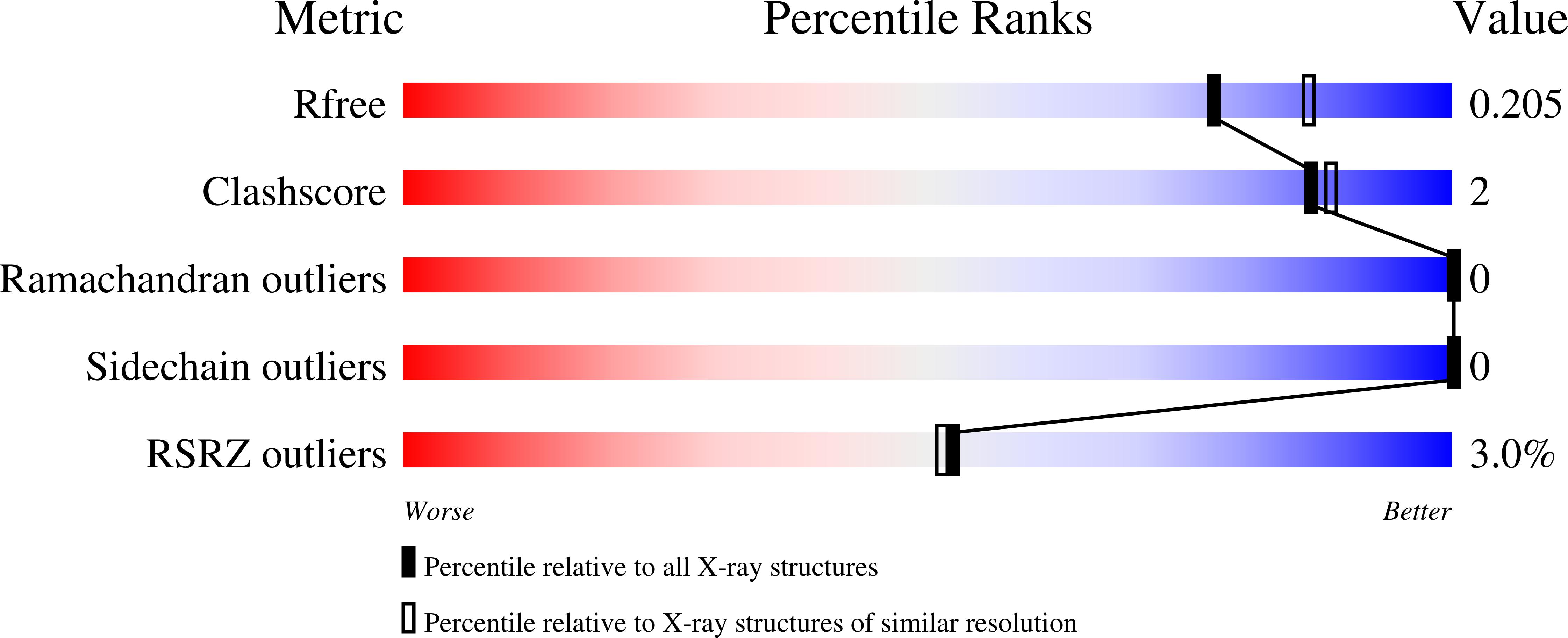
Resolution:
2.00 Å
R-Value Free:
0.20
R-Value Work:
0.17
R-Value Observed:
0.17
Space Group:
P 21 21 21
Macromolecular Entities
Structures with similar UniProt ID
Protein Blast
Polymer Type:polypeptide(L)
Molecule:Glycosyl transferase
Chain IDs:A
Chain Length:398
Number of Molecules:1
Biological Source:Bacillus thuringiensis
Primary Citation
Ngt-1: a glycosyltransferase that confers resistance to three distinct antibiotic classes.
J.Biol.Chem. ? 111479 111479 (2026)
PMID: 42031167 DOI: 10.1016/j.jbc.2026.111479

Abstact

Environmental microbes are a rich source of antibiotic resistance genes with the potential to be mobilized and captured by pathogens under selective pressure. This largely unexplored resistome offers an opportunity to identify novel resistance mechanisms that may eventually emerge in clinical settings, supporting efforts to maintain current antibiotic efficacy. From a screen of environmental bacterial isolates, we identified Bacillus thuringiensis WAC10774B, which confers resistance to the aminocoumarin antibiotic novobiocin through enzymatic inactivation. Analysis of the inactive antibiotic revealed that WAC10774B modifies novobiocin via glycosylation, a unique transformation not reported since the antibiotic's discovery 70 years ago. Using activity-guided protein purification, we identified the novobiocin glycosyltransferase, Ngt-1, and its encoding gene. Surprisingly, ngt-1 confers resistance to three structurally distinct antibiotic classes: novobiocin (aminocoumarin), fidaxomicin (tiacumicin), and salinomycin (polyether). To further explore Ngt-1's functional breadth, we performed steady-state kinetic and protein-structure studies, revealing Ngt-1 as a novel, broad-spectrum glycosyltransferase capable of inactivating antibiotics. These findings highlight the importance of exploring the environmental resistome to identify new resistance enzymes and to inform strategies to combat antimicrobial resistance.

Legend

Protein

Chemical

Disease

Primary Citation of related structures
Feedback Form
Name
Email
Institute
Feedback