

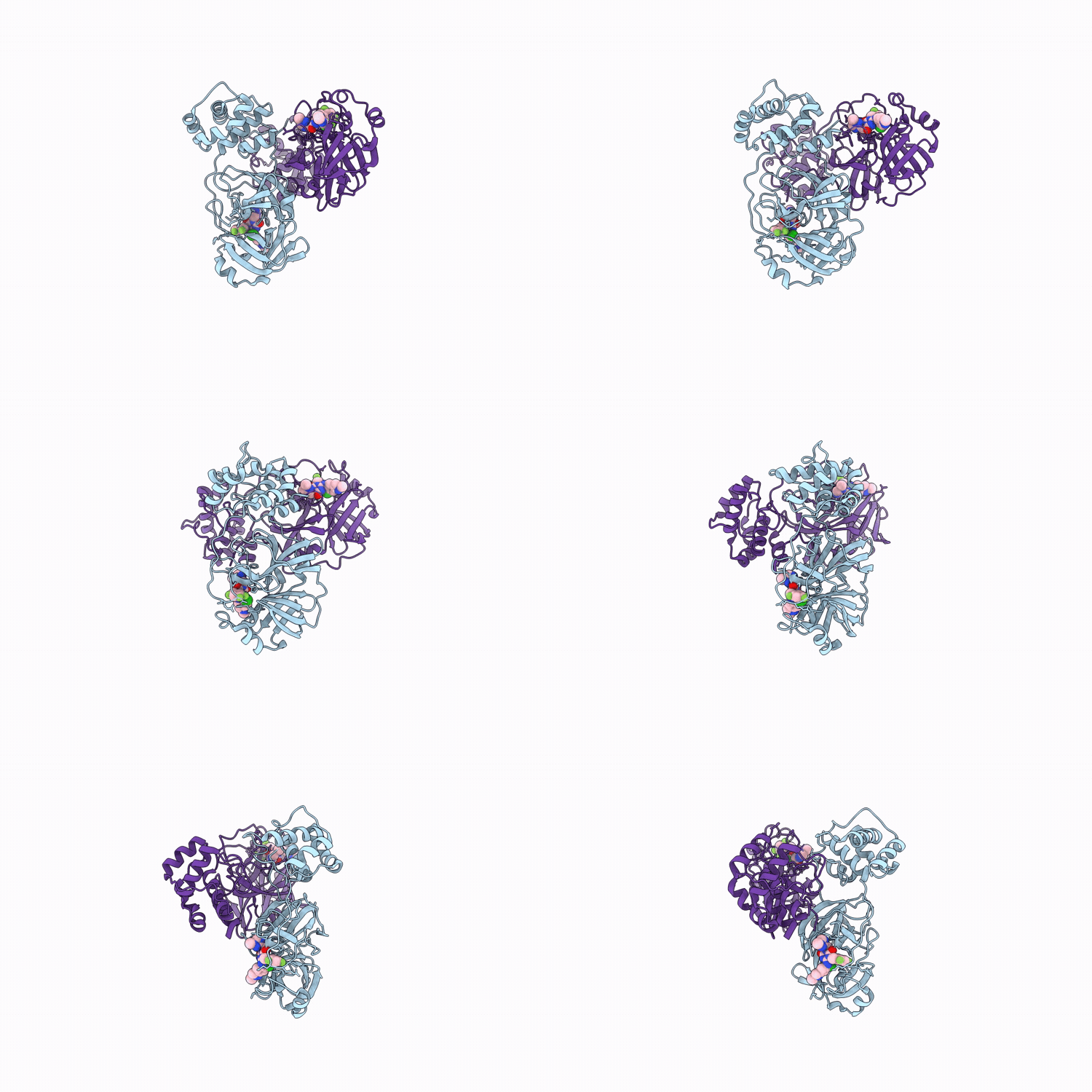
10DV image
Deposition Date 2026-01-14
Release Date 2026-05-06
Last Version Date 2026-05-06
Entry Detail
PDB ID:
10DV
Title:
Room Temperature X-Ray Structure of SARS CoV-2 Main Protease Intermediate Precursor with Ensitrelvir (ESV)
Biological Source:
Source Organism(s):
Homo sapiens (Taxon ID: 9606)
Expression System(s):
Method Details:
Experimental Method:
Resolution:
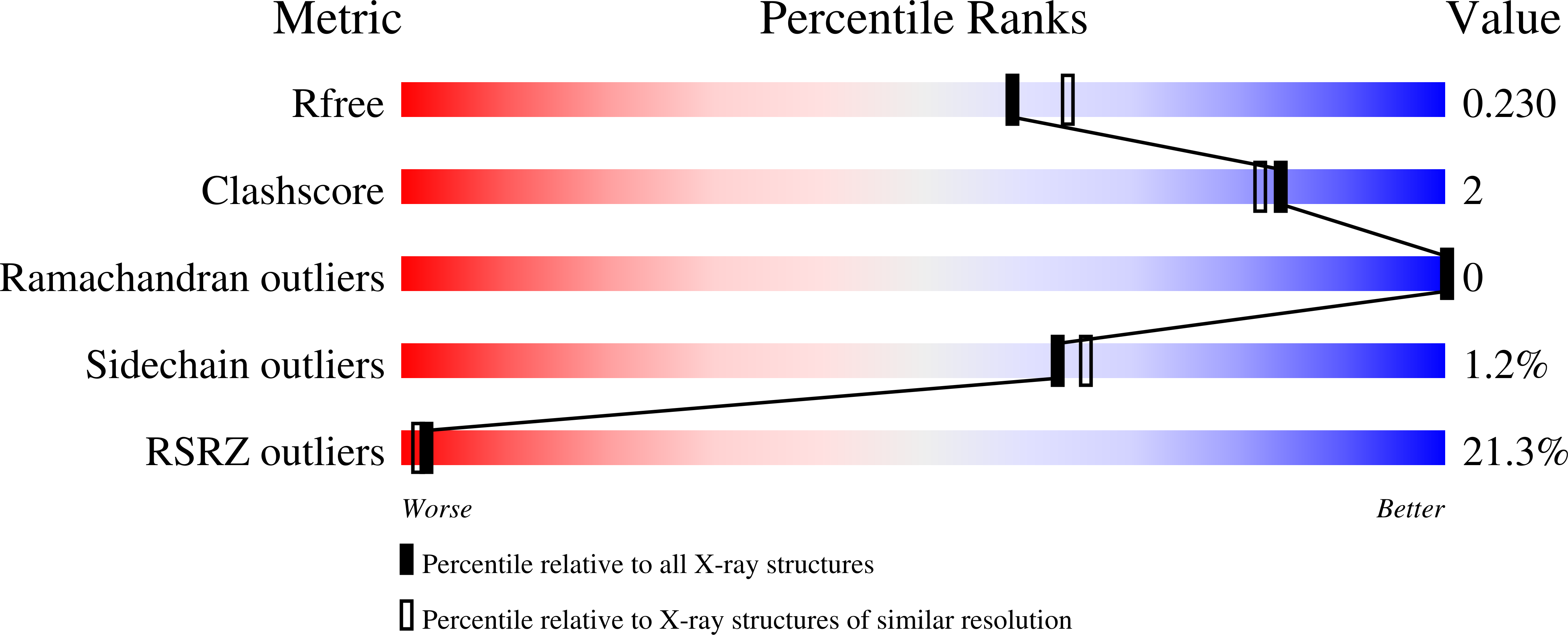
2.05 Å
R-Value Free:
0.23
R-Value Work:
0.21
R-Value Observed:
0.21
Space Group:
P 1
Macromolecular Entities
Protein Blast
Polymer Type:polypeptide(L)
Molecule:Replicase polyprotein 1ab,Imm
Gene (Uniprot):rep, spg
Mutagens:C145A
Chain IDs:A, B
Chain Length:373
Number of Molecules:2
Biological Source:Homo sapiens
Ligand Molecules
Primary Citation
Cleavage at the nsp5-nsp6 site of SARS-CoV-2 main protease intermediate precursor is faster from a monomer than a dimer form.
J.Biol.Chem. 302 111395 111395 (2026)
PMID: 41866037 DOI: 10.1016/j.jbc.2026.111395

Abstact

Our previous studies of severe acute respiratory syndrome coronavirus 2 main protease (MPro) precursor monomer indicate that the initial N-terminal nonstructural protein (nsp)4/nsp5 cleavage occurs intramolecularly, with a small fraction of the active site loop equilibrium being in the active state. To understand the influence of dimer formation of MPro upon N-terminal cleavage on the subsequent C-terminal nsp5/nsp6 intermolecular cleavage kinetics, the stepwise processing of a monomeric, inactive precursor containing the native terminal cleavage sites of MPro (MBP-((-6))MPro(C145A(+3))-GB1-6H, 86.2 kDa) by mature WT MPro (MPro(WT)) was investigated. Differential scanning fluorimetry and analytical ultracentrifugation measurements of various MPro constructs suggest that the C145A mutation decreases the dimer dissociation constant (K(dimer)) by approximately 26-fold, relative to WT C145 and H41A. The monomeric precursor's nsp4-nsp5 site appears to saturate MPro(WT)'s active sites and cleave faster, followed by a slower first-order cleavage at the C-terminal site. No detectable product resulting from the C-terminal cleavage is observed until most of the N-terminal cleavage is complete. The initial intermediate product (termed MPro(C145A-IP)) is a homodimer with an estimated K(dimer) of <0.05 muM. In contrast, the first-order kinetics observed for the cleavage of the monomeric form of the intermediate product is at least 300 times faster than that of the dimer form. Room-temperature X-ray structure of the MPro(C145A-IP)-ensitrelvir complex is like that of the MPro(WT)-ensitrelvir complex and reveals a dynamic C-terminal region including MPro residues 302 to 306. These results are interpreted from the point of view of a mechanism in which nsp5-nsp6 cleavage may occur from a monomeric intermediate, and dimer formation restricts this cleavage.

Legend

Protein

Chemical

Disease

Primary Citation of related structures
Feedback Form
Name
Email
Institute
Feedback