

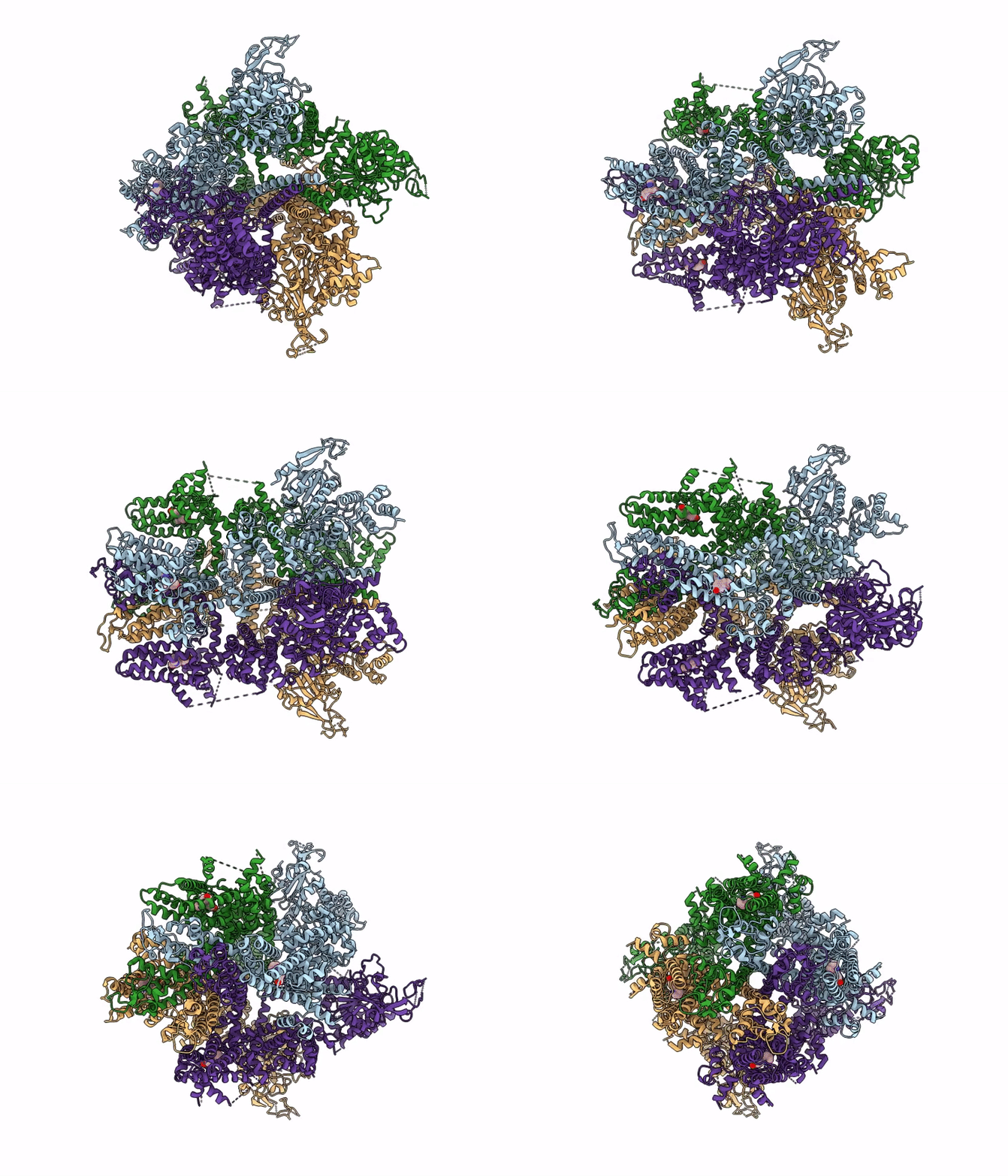
9Y2B image
Deposition Date 2025-08-31
Release Date 2026-02-04
Last Version Date 2026-02-18
Entry Detail
PDB ID:
9Y2B
Title:
Cryo-EM structure of the human TRPM4 channel in complex with EGTA and DAB at 37 degrees Celsius
Biological Source:
Source Organism(s):
Homo sapiens (Taxon ID: 9606)
Expression System(s):
Method Details:
Experimental Method:
Resolution:
3.20 Å
Aggregation State:
PARTICLE
Reconstruction Method:
SINGLE PARTICLE

Macromolecular Entities
Structures with similar UniProt ID
Protein Blast
Polymer Type:polypeptide(L)
Molecule:Transient receptor potential
Gene (Uniprot):TRPM4
Chain IDs:A, B, C, D
Chain Length:1214
Number of Molecules:4
Biological Source:Homo sapiens
Ligand Molecules
Primary Citation
Noncanonical calcium-independent TRPM4 activation governs intestinal fluid homeostasis.
Nat Commun 17 1253 1253 (2026)
PMID: 41507162 DOI: 10.1038/s41467-025-68014-7

Abstact

Imbalance in intestinal fluid homeostasis leads to nutrient malabsorption, intestinal tissue destruction, and systemic inflammation. Transient receptor potential melastatin 4 (TRPM4) is a calcium-activated, non-selective monovalent cation channel converting chemical signals (Ca2+) into electrical signals (membrane depolarization). Here, we show the TRPM4 channel as a direct target of bisacodyl (BIC), a widely used clinical drug for chronic constipation management, and its active metabolite, deacetyl bisacodyl (DAB). DAB-induced laxative effects are abolished in global and intestinal epithelium-specific TRPM4-knockout mice, establishing the essential role of TRPM4 in intestinal fluid regulation. Furthermore, our structural work reveals DAB bound to an uncharacterized pocket, marking it as a non-Ca2+ TRPM4 agonist and unveiling a noncanonical Ca2+-independent activation mechanism. Additionally, we delineate a signaling axis, TRPM4 → VGCC/NCX → ANO1, that governs ion homeostasis in the epithelium. Together, these findings establish TRPM4 as a key regulator of intestinal fluid balance and reveal its noncanonical calcium-independent activation as a therapeutic strategy for constipation.

Legend

Protein

Chemical

Disease

Primary Citation of related structures
Feedback Form
Name
Email
Institute
Feedback