

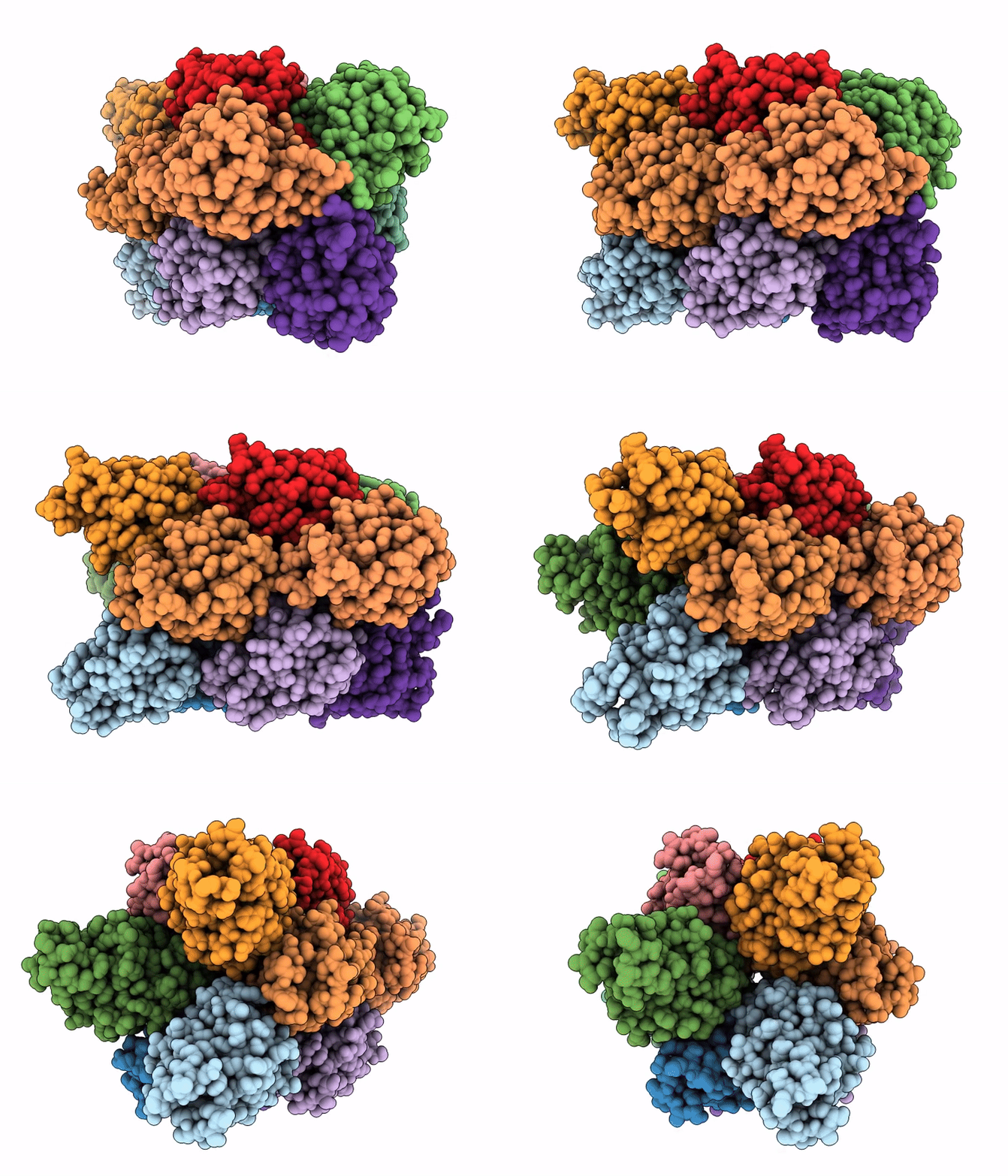
9WTD image
Deposition Date 2025-09-16
Release Date 2026-02-11
Last Version Date 2026-03-25
Entry Detail
PDB ID:
9WTD
Title:
Filament structure of human Reg3alpha
Biological Source:
Source Organism(s):
Homo sapiens (Taxon ID: 9606)
Expression System(s):
Method Details:
Experimental Method:
Resolution:
2.21 Å
Aggregation State:
FILAMENT
Reconstruction Method:
HELICAL
Macromolecular Entities
Structures with similar UniProt ID
Protein Blast
Polymer Type:polypeptide(L)
Molecule:Regenerating islet-derived pr
Gene (Uniprot):REG3A
Chain IDs:A, B, C (auth: D), D (auth: E), E (auth: F), F (auth: G), G (auth: H), H (auth: I), I (auth: J), J (auth: K), K (auth: L), L (auth: C)
Chain Length:138
Number of Molecules:12
Biological Source:Homo sapiens
Ligand Molecules
Primary Citation
Structural basis for human RegIII alpha filament formation.
Commun Chem 9 ? ? (2026)
PMID: 41634150 DOI: 10.1038/s42004-026-01921-y

Abstact

RegIIIα is an antibacterial protein primarily operating in the digestive tract to defend against bacterial infection through direct bactericidal activity. A previous study proposed that RegIIIα forms hexameric pores on the membrane of Gram-positive bacteria, leading to cell lysis. These RegIIIα hexamers can further assemble into filaments, diminishing RegIIIα activity. However, the high-resolution structure of RegIIIα assembly remains elusive, impeding the comprehension of the molecular mechanisms underlying RegIIIα function. In this study, we determined the cryo-electron microscopy (cryo-EM) structure of RegIIIα filaments formed in vitro at a resolution of 2.2 Å. Our structure reveals a similar subunit arrangement but a distinct subunit orientation compared to the previously reported low-resolution model of RegIIIα filaments. Through structural analysis and biochemical assays, we identified two essential interfaces for RegIIIα assembly, offered a potential explanation for the necessity of lipids in RegIIIα assembly, and elucidated the inhibitory mechanism of the pro-segment of RegIIIα. Collectively, our study presents the first near-atomic structure of filaments formed by C-tyle lectin containing proteins, providing structural insights into RegIIIα assembly that are closely related to its physiological functions and regulations.

Legend

Protein

Chemical

Disease

Primary Citation of related structures
Feedback Form
Name
Email
Institute
Feedback