

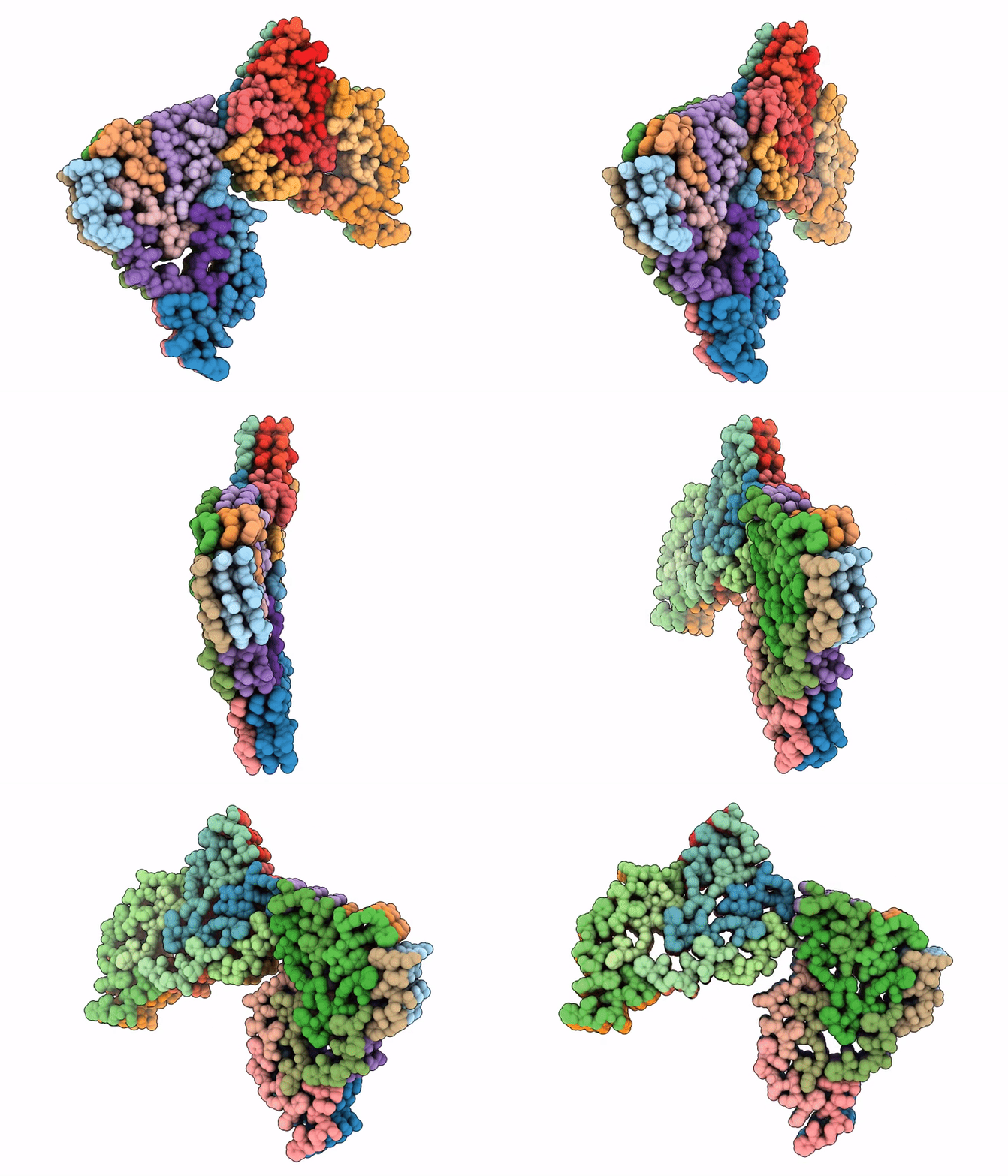
9VNM image
Deposition Date 2025-06-30
Release Date 2025-12-31
Last Version Date 2026-01-28
Entry Detail
PDB ID:
9VNM
Keywords:
Title:
Cryo-EM structure of hnRAC1-2,8beta fibril polymorph1
Biological Source:
Source Organism(s):
Homo sapiens (Taxon ID: 9606)
Method Details:
Experimental Method:
Resolution:
3.37 Å
Aggregation State:
FILAMENT
Reconstruction Method:
HELICAL
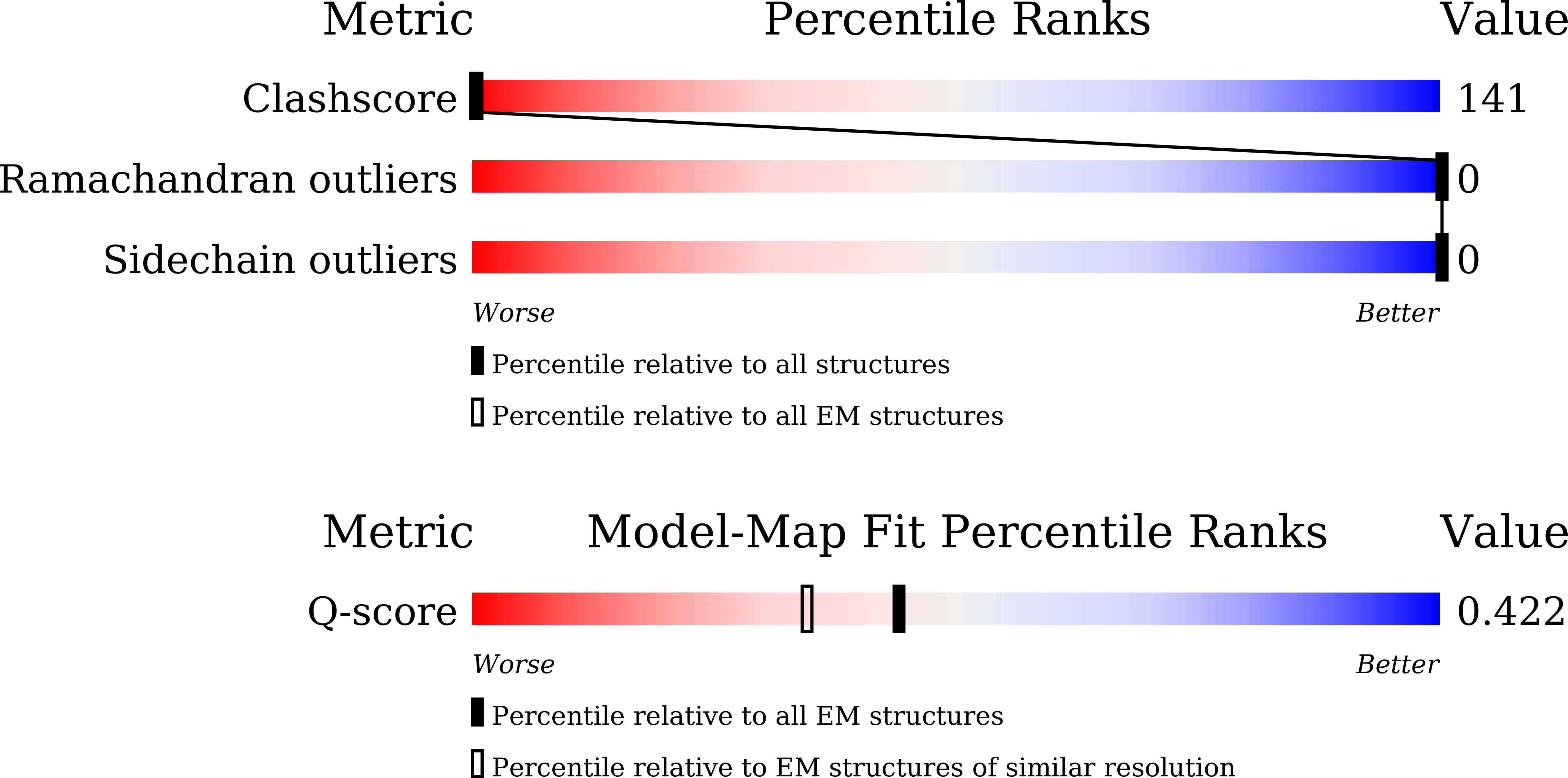
Macromolecular Entities
Polymer Type:polypeptide(L)
Molecule:GLY-SFE-GLY-GLY-ASN-ASP-ASN-S
Chain IDs:A (auth: G), B (auth: A), C (auth: B), D (auth: C), E (auth: D), F (auth: E), G (auth: F), H, I, J, K (auth: Q), L (auth: K), M (auth: L), N (auth: M), O (auth: N), P (auth: O), Q (auth: P), R, S, T, U (auth: g), V (auth: U), W, X (auth: Y), Y (auth: a), Z (auth: c), AA (auth: e), BA (auth: i), CA (auth: k), DA (auth: m), EA (auth: 0), FA (auth: o), GA (auth: q), HA (auth: s), IA (auth: u), JA (auth: w), KA (auth: y), LA (auth: 2), MA (auth: 4), NA (auth: 6), OA (auth: h), PA (auth: V), QA (auth: X), RA (auth: Z), SA (auth: b), TA (auth: d), UA (auth: f), VA (auth: j), WA (auth: l), XA (auth: n), YA (auth: 1), ZA (auth: p), AB (auth: r), BB (auth: t), CB (auth: v), DB (auth: x), EB (auth: z), FB (auth: 3), GB (auth: 5), HB (auth: 7)
Chain Length:9
Number of Molecules:60
Biological Source:Homo sapiens
Ligand Molecules
Primary Citation
Conformational Adaptability and Thermostability in alpha / beta-Peptide Fibrils Induced by beta-Amino Acid Substitution.
Nano Lett. 26 365 375 (2026)
PMID: 41420871 DOI: 10.1021/acs.nanolett.5c05223

Abstact

The self-assembly of peptides into amyloid fibrils enables the design of functional biomaterials, yet the conformational constraints of α-peptides limit the attainable supramolecular diversity. Here, we introduce β-amino acids, β-phenylalanine (β-Phe), and β-homophenylalanine (β-hPhe) into the reversible fibril-forming core sequence hnRAC1 to generate α/β-peptide variants with distinct architectures and enhanced thermal stability. Cryo-EM reveals that β-modified peptides assemble into polymorphic fibrils with cross-β structures that differ markedly from each other and from native hnRAC1. Comparative structural analysis indicates that backbone extension by β-residues increases subunit conformational heterogeneity, enabling tighter packing and formation of more thermostable fibrils. Examination of intra- and intermolecular contacts shows that enhanced π-π stacking, hydrophobic interactions, hydrogen bonds, and electrostatic interactions likely contribute to fibril stabilization. These results show that minimal backbone modifications can remodel amyloid architecture, offering a generalizable strategy for designing structurally diverse and robust peptide-based biomaterials.

Legend

Protein

Chemical

Disease

Primary Citation of related structures
Feedback Form
Name
Email
Institute
Feedback