

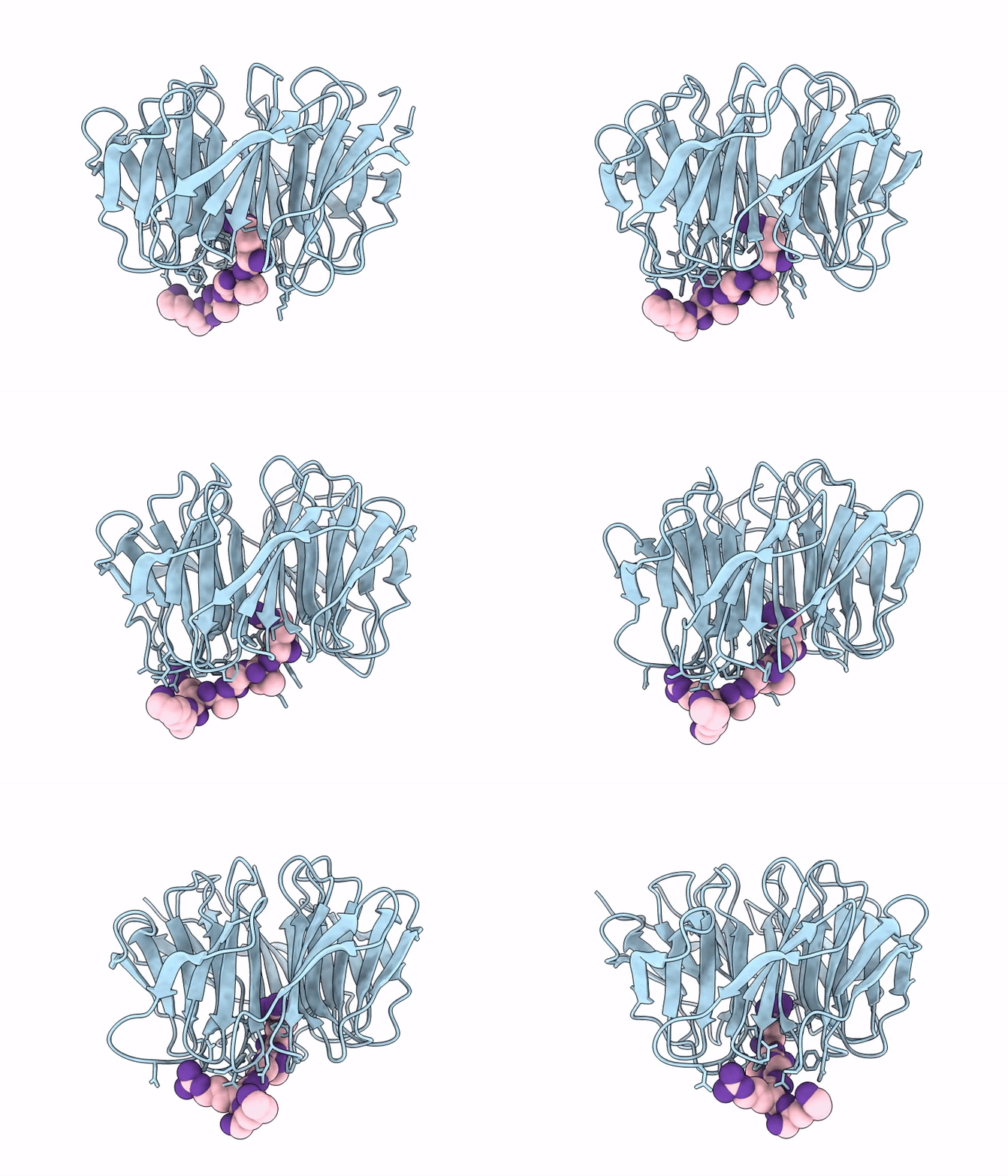
9UXM image
Deposition Date 2025-05-14
Release Date 2026-02-11
Last Version Date 2026-02-25
Entry Detail
PDB ID:
9UXM
Keywords:
Title:
Structure of WDR5 in complex with Peptide 1
Biological Source:
Source Organism(s):
Expression System(s):
Method Details:
Experimental Method:
Resolution:
1.48 Å
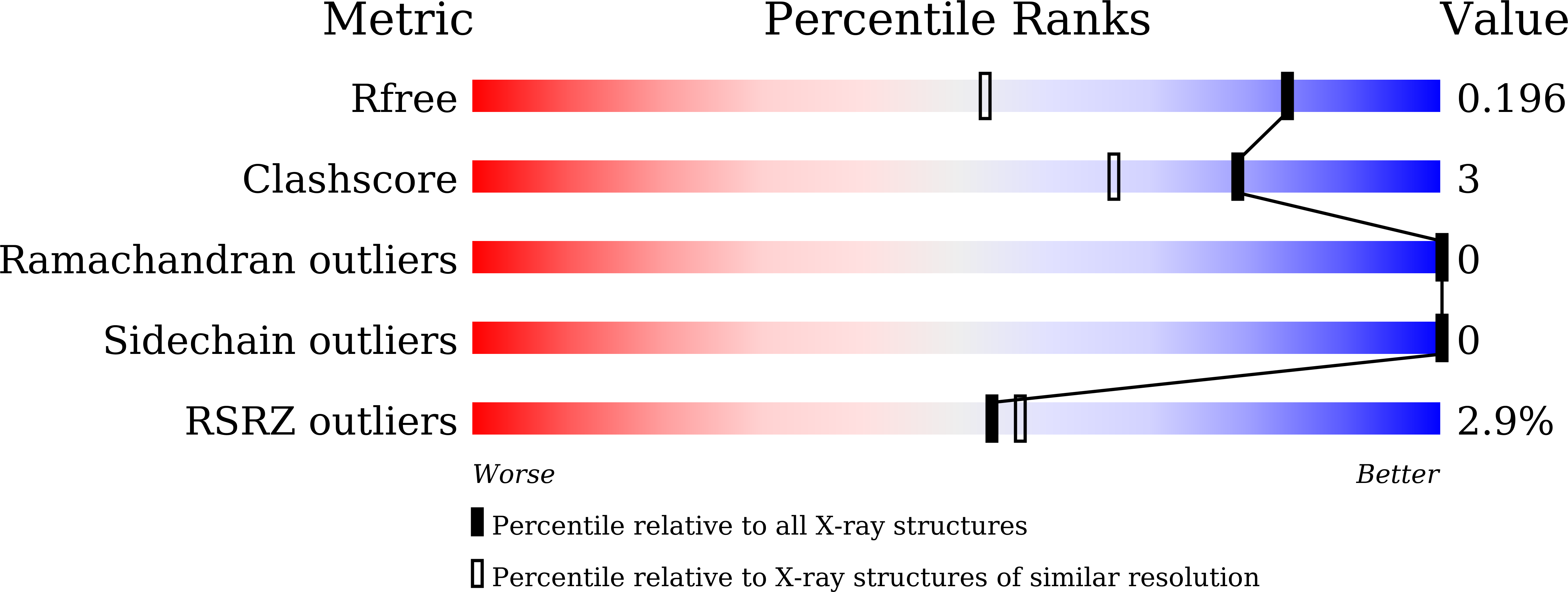
R-Value Free:
0.19
R-Value Work:
0.17
R-Value Observed:
0.17
Space Group:
C 2 2 21
Macromolecular Entities
Structures with similar UniProt ID
Protein Blast
Polymer Type:polypeptide(L)
Molecule:WD repeat-containing protein
Gene (Uniprot):WDR5
Chain IDs:A
Chain Length:315
Number of Molecules:1
Biological Source:Homo sapiens
Polymer Type:polypeptide(L)
Molecule:Peptide 1
Chain IDs:B (auth: M)
Chain Length:9
Number of Molecules:1
Biological Source:synthetic construct
Primary Citation
Structural Basis for Non-classical WIN Peptides Recognition by WDR5.
J.Mol.Biol. 438 169666 169666 (2026)
PMID: 41621782 DOI: 10.1016/j.jmb.2026.169666

Abstact

WD repeat-containing protein 5 (WDR5) is a core scaffolding component of multiple chromatin-modifying complexes that engages diverse partner proteins through a conserved arginine-binding cavity known as the WDR5-interacting (WIN) site. Dysregulation of WDR5 has been implicated in oncogenesis, making the WIN site a promising therapeutic target. Current inhibitor development has primarily focused on mimicking canonical WIN motif interactions, thereby limiting exploration of alternative recognition modes. Here, we present high-resolution crystal structures of two arginine-containing peptide probes that reveal previously unrecognized binding geometries at the WIN pocket. One peptide adopts an extended linear conformation that bridges both the WIN pocket and the adjacent S7 site. The other binds in a reversed, or "trans-WIN," orientation, in which a C-terminal arginine anchors the WIN site while an upstream proline residue occupies the S7 pocket. Isothermal titration calorimetry confirmed moderate and specific affinities for both peptides. These findings reveal unexpected conformational adaptability of the WIN site and demonstrate that its recognition capacity extends beyond the canonical mode defined by histone H3 and other partner proteins. Collectively, our results expand the structural repertoire of WIN-site recognition and establish a framework for rational design of next-generation WDR5 inhibitors that exploit multi-site engagement and alternative binding topologies.

Legend

Protein

Chemical

Disease

Primary Citation of related structures
Feedback Form
Name
Email
Institute
Feedback