

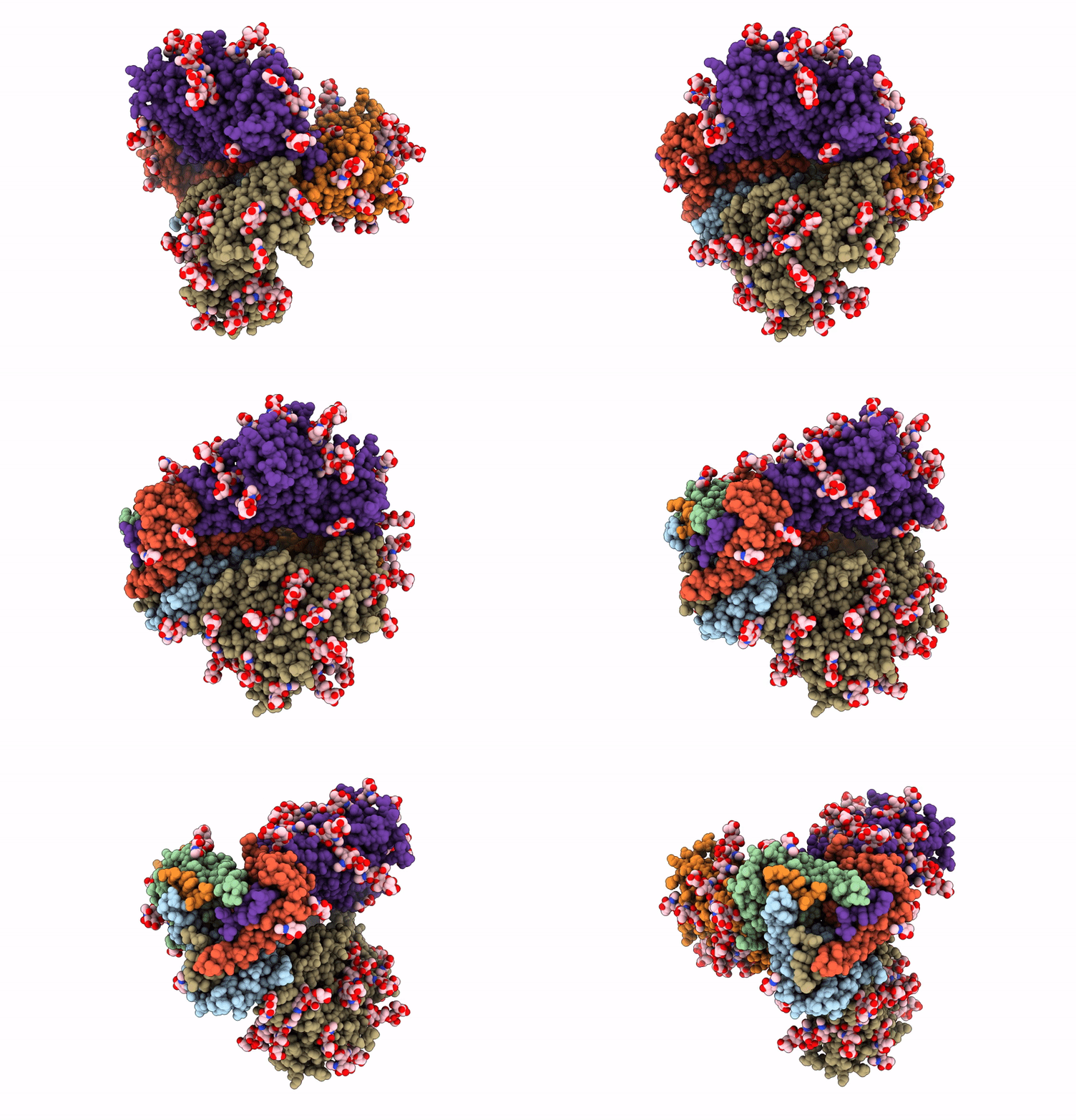
9PQ3 image
Deposition Date 2025-07-22
Release Date 2025-12-17
Last Version Date 2026-02-18
Entry Detail
PDB ID:
9PQ3
Keywords:
Title:
Cryo-EM structure of HIV-1 459C-ALT DS-SOSIP RnS Env trimer
Biological Source:
Source Organism(s):
Expression System(s):
Method Details:
Experimental Method:
Resolution:
3.94 Å
Aggregation State:
PARTICLE
Reconstruction Method:
SINGLE PARTICLE
Macromolecular Entities
Structures with similar UniProt ID
Protein Blast
Polymer Type:polypeptide(L)
Molecule:HIV-1 459C-ALT RnS DS-SOSIP g
Chain IDs:A, C (auth: B), E (auth: F)
Chain Length:153
Number of Molecules:3
Biological Source:Human immunodeficiency virus 1
Structures with similar UniProt ID
Protein Blast
Polymer Type:polypeptide(L)
Molecule:HIV-1 459C-ALT RnS DS-SOSIP g
Chain IDs:B (auth: C), D (auth: G), F (auth: I)
Chain Length:469
Number of Molecules:3
Biological Source:Human immunodeficiency virus 1
Ligand Molecules
Primary Citation

Abstact

Broadly neutralizing antibodies (bNAbs) targeting multiple sites of HIV-1 Env vulnerability can be induced by infection, but simultaneous elicitation of bNAbs against multiple epitopes has not been achieved by vaccination. In this study, we designed a dual-epitope vaccine targeting both the fusion peptide (FP) and the V2 apex and evaluated its capacity to induce bNAbs against both epitopes in rhesus macaques. This vaccine combined an FP conjugate with a cocktail of engineered Env trimers with enhanced V2 apex recognition and increased antigen retention in lymph nodes. Macaque immunization with the dual-epitope vaccine elicited >1,000-fold higher autologous tier 2-neutralizing titers than wild-type Env trimers and enhanced heterologous neutralization. Both FP- and V2 apex-monoclonal antibodies were isolated from immunized macaques and showed heterologous neutralization with genetic and structural signatures similar to well-characterized FP and V2 apex bNAbs. These results demonstrate proof of concept for simultaneous vaccine elicitation of neutralizing antibodies against multiple sites of Env vulnerability.

Legend

Protein

Chemical

Disease

Primary Citation of related structures
Feedback Form
Name
Email
Institute
Feedback