

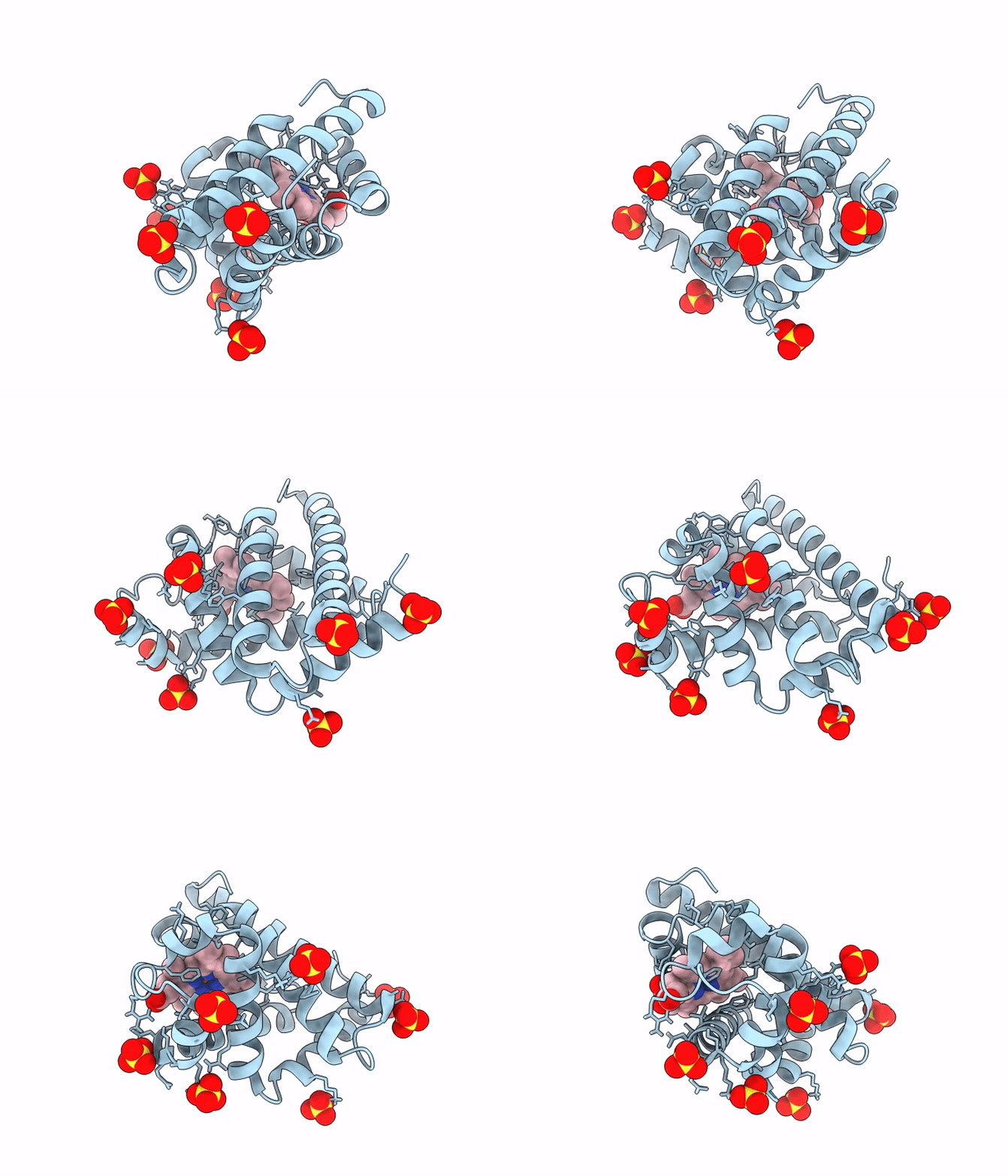
9P1E image
Deposition Date 2025-06-09
Release Date 2026-02-04
Last Version Date 2026-02-25
Entry Detail
PDB ID:
9P1E
Keywords:
Title:
Myoglobin variant RR22
Biological Source:
Source Organism(s):
Expression System(s):
Method Details:
Experimental Method:
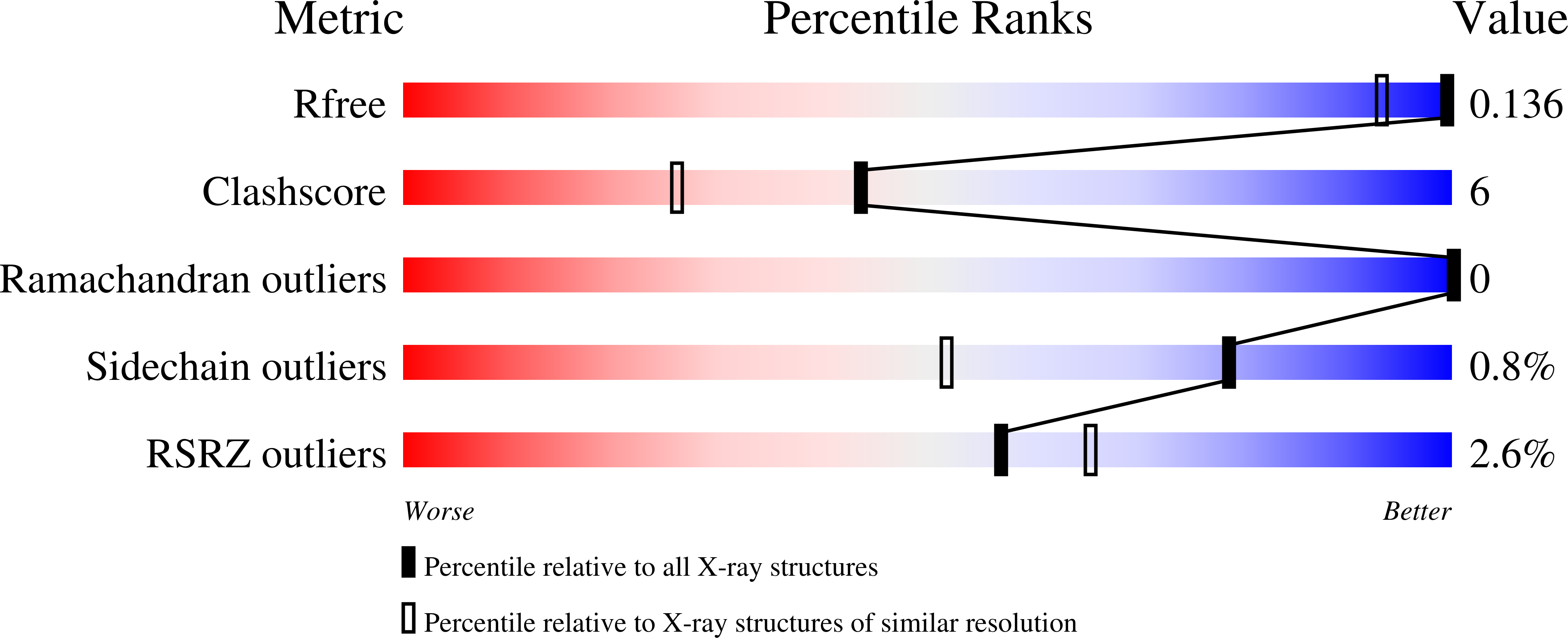
Resolution:
1.15 Å
R-Value Free:
0.13
R-Value Work:
0.11
R-Value Observed:
0.11
Space Group:
P 6
Macromolecular Entities
Structures with similar UniProt ID
Protein Blast
Polymer Type:polypeptide(L)
Molecule:Myoglobin
Gene (Uniprot):MB
Chain IDs:A
Chain Length:154
Number of Molecules:1
Biological Source:Physeter macrocephalus
Primary Citation
Computational design of generalist cyclopropanases with stereodivergent selectivity.
Nat Commun 17 1620 1620 (2026)
PMID: 41587967 DOI: 10.1038/s41467-026-68327-1

Abstact

Stereodivergent catalysis, whereby the full complement of stereoisomeric products is obtained through a set of stereocomplementary catalysts, represents a powerful tool for synthetic organic and medicinal chemistry. Despite recent progress in engineering biocatalysts for new-to-nature cyclopropanation reactions, cyclopropanases featuring a combination of stereodivergent selectivity with broad substrate scope have been elusive. Here, we report a mechanism-based, multi-state computational design workflow useful for the design of 'generalist' cyclopropanation biocatalysts with tailored selectivity. Using this strategy, cyclopropanases with high and predictable trans-(1 R,2 R), cis-(1 R,2S), or cis-(1S,2 R)-stereoselectivity in the transformation of a broad range of olefin substrates are designed based on three different hemoprotein scaffolds, including one (indoleamine 2,3-dioxygenase-1) not previously reported to support non-native carbene transfer reactions. Combined with a previously reported trans-(1S,2S)-stereoselective cyclopropanase, this biocatalytic toolbox provides access to a full set of cyclopropane stereoisomers from over 20 structurally diverse olefin substrates with high diastereo- and enantioselectivity (up to 99% de. and 99% ee). Crystal structures of a designed catalyst show good agreement with the computational model and highlight the role of subtle conformational heterogeneity in determining stereoselectivity. We envision that the present computational design methodology can guide the development of biocatalysts with tailored stereoselectivity for other carbene transfer reactions and enzymatic transformations.

Legend

Protein

Chemical

Disease

Primary Citation of related structures
Feedback Form
Name
Email
Institute
Feedback