

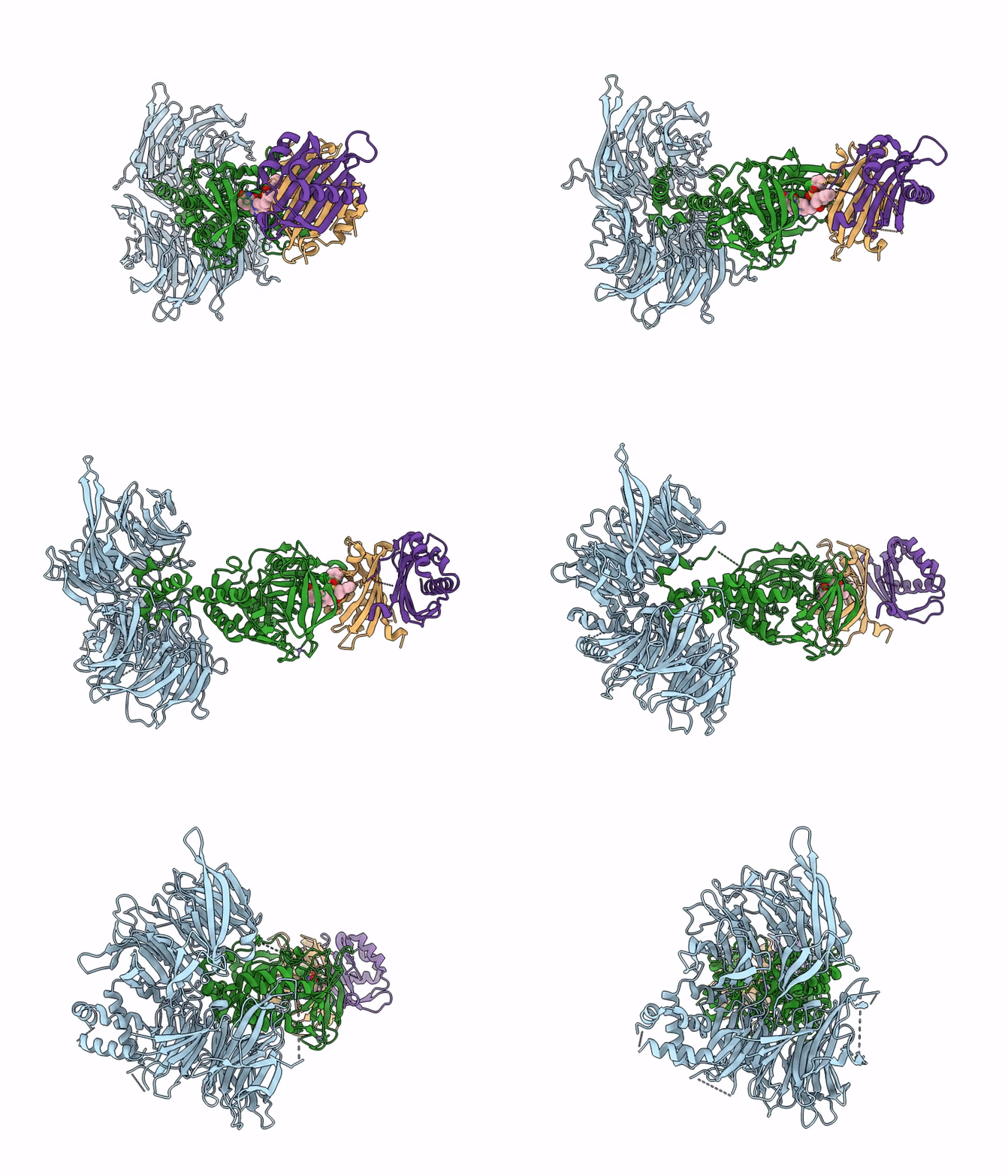
9OS2 image
Deposition Date 2025-05-23
Release Date 2026-01-28
Last Version Date 2026-04-01
Entry Detail
PDB ID:
9OS2
Keywords:
Title:
Cryo-EM structure of the DDB1/CRBN-MRT-5702-G3BP2 ternary complex
Biological Source:
Source Organism(s):
Homo sapiens (Taxon ID: 9606)
Method Details:
Experimental Method:
Resolution:
2.50 Å
Aggregation State:
PARTICLE
Reconstruction Method:
SINGLE PARTICLE
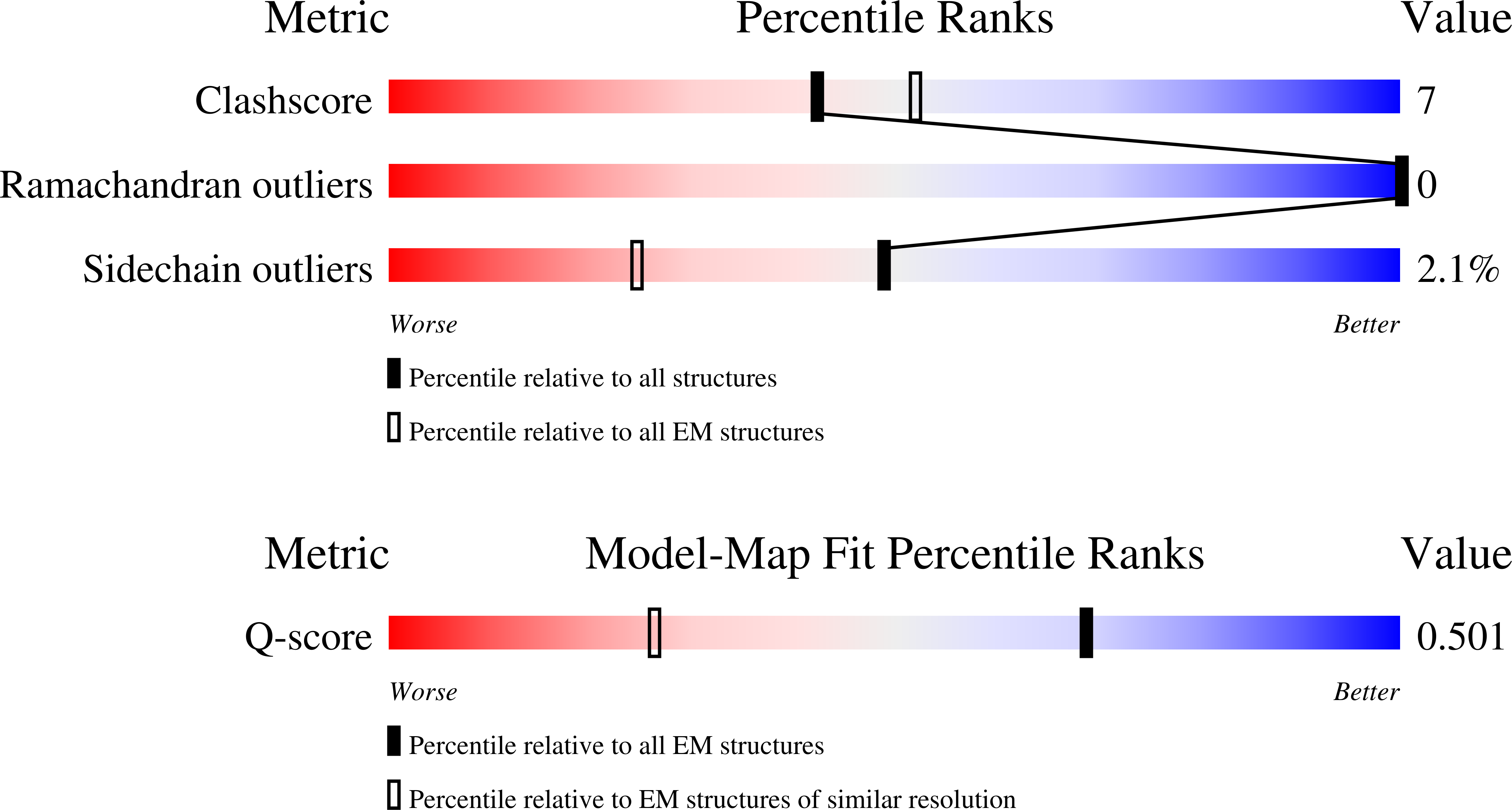
Macromolecular Entities
Structures with similar UniProt ID
Protein Blast
Polymer Type:polypeptide(L)
Molecule:DNA damage-binding protein 1
Gene (Uniprot):DDB1
Chain IDs:B (auth: A)
Chain Length:1140
Number of Molecules:1
Biological Source:Homo sapiens
Structures with similar UniProt ID
Protein Blast
Polymer Type:polypeptide(L)
Molecule:Protein cereblon
Gene (Uniprot):CRBN
Chain IDs:A (auth: B)
Chain Length:378
Number of Molecules:1
Biological Source:Homo sapiens
Structures with similar UniProt ID
Protein Blast
Polymer Type:polypeptide(L)
Molecule:Ras GTPase-activating protein
Gene (Uniprot):G3BP2
Chain IDs:C, D
Chain Length:482
Number of Molecules:2
Biological Source:Homo sapiens
Primary Citation

Abstact

Molecular glue degraders (MGDs) are small-molecule compounds that divert E3 ligases to degrade nonnatural substrates called neosubstrates. Clinically effective MGDs bind cereblon (CRBN), a substrate receptor of the Cullin 4-RING E3 ubiquitin ligase (CRL4CRBN), and recruit neosubstrates to an MGD-induced neosurface on the CRBN CULT domain through molecular mimicry of a natural CRBN degron. Here, we identify G3BP2 (Ras-GAP SH3 domain-binding protein 2), a neosubstrate that bypasses canonical interactions with CRBN by engaging an unconventional binding site on the CRBN LON domain. The ternary complex interface does not resemble known interactions with CRBN. Instead, CRBN leverages a preexisting protein-protein interaction (PPI) hotspot on the target protein by mimicking an endogenous binding partner of G3BP2. Our findings suggest that composite neosurfaces that mimic and stabilize the footprint of natural PPIs (in short, 'glueprints') could become a viable strategy for the rational expansion of the MGD target repertoire.

Legend

Protein

Chemical

Disease

Primary Citation of related structures
Feedback Form
Name
Email
Institute
Feedback