

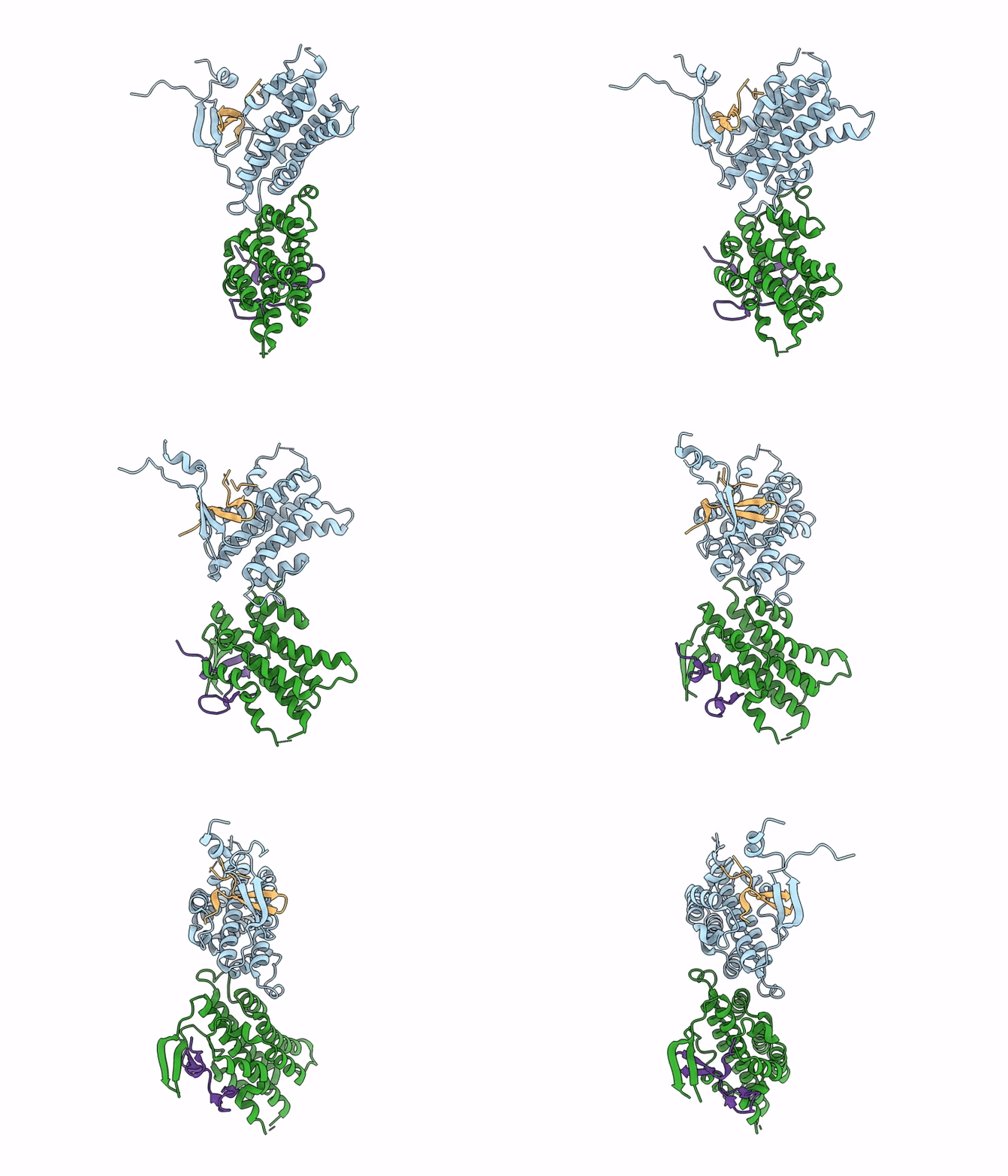
9OIK image
Deposition Date 2025-05-06
Release Date 2026-01-28
Last Version Date 2026-02-11
Entry Detail
PDB ID:
9OIK
Keywords:
Title:
Structure of S. Typhimurium 14028 Gifsy-1 prophage HepS bound to bacteriophage lambda J Tail Tip
Biological Source:
Method Details:
Experimental Method:
Resolution:
1.86 Å
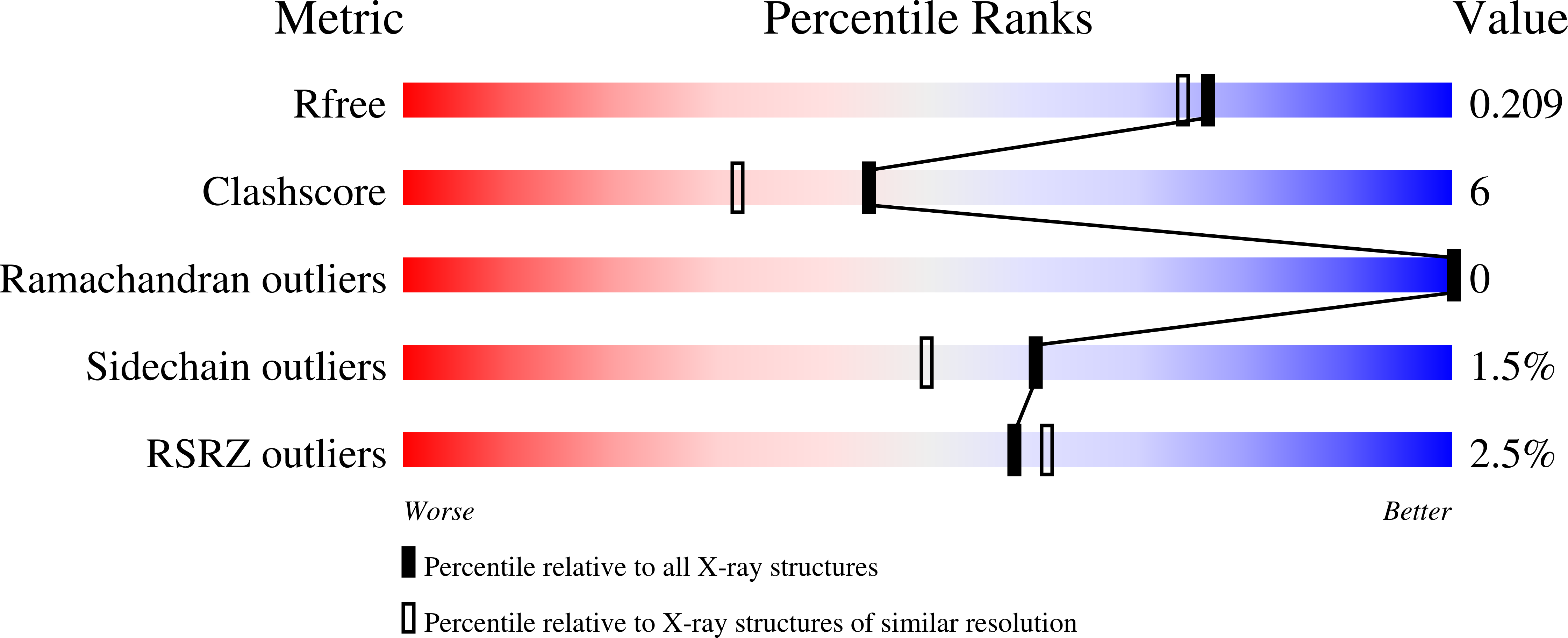
R-Value Free:
0.20
R-Value Work:
0.18
R-Value Observed:
0.18
Space Group:
C 1 2 1
Macromolecular Entities
Structures with similar UniProt ID
Protein Blast
Polymer Type:polypeptide(L)
Molecule:HepS-H105A
Gene (Uniprot):STM14_3211
Mutagens:H105A
Chain IDs:A, B
Chain Length:228
Number of Molecules:2
Biological Source:Salmonella enterica subsp. enterica serovar Typhimurium str. ATCC 14028
Protein Blast
Polymer Type:polypeptide(L)
Molecule:J tail tip
Gene (Uniprot):J, SMT3
Chain IDs:C, D
Chain Length:156
Number of Molecules:2
Biological Source:Escherichia phage Lambda
Primary Citation
A prophage-encoded abortive infection protein preserves host and prophage spread.
Nature ? ? ? (2026)
PMID: 41606329 DOI: 10.1038/s41586-025-10070-6

Abstact

Most bacterial pathogens are polylysogens, harbouring multiple vertically transmitted prophages1-3. These prophages enhance bacterial pathogenicity and survival by encoding virulence factors and anti-phage defence systems while retaining the capacity for horizontal transfer. Thus, prophage-encoded anti-phage defences must block propagation of external phages without inhibiting the spread of the prophages that encode them. Here we identify HepS-an abortive infection system encoded on the Gifsy-1 prophage constituted of a single HEPN domain protein-which restricts phages of the Siphoviridae family. We demonstrate that in its native host context of Salmonella enterica serovar Typhimurium, HepS both senses phage infection and enacts abortive infection. Structures of HepS reveal a tetrameric nuclease complex that undergoes allosteric activation upon recognition of Siphoviridae tail tip proteins during production of new phage particles. Once activated, HepS cleaves specific transfer RNA anticodon loops and arrests phage replication. Gifsy-1, a Siphoviridae itself, evades self-targeting by expressing a tail tip variant that does not trigger HepS, as do co-resident Siphoviridae prophages Gifsy-2 and Gifsy-3. This evasion permits Gifsy-1 to spread despite encoding HepS. These findings reveal a mechanism by which a prophage defends the host while maintaining its propagation abilities.

Legend

Protein

Chemical

Disease

Primary Citation of related structures
Feedback Form
Name
Email
Institute
Feedback