

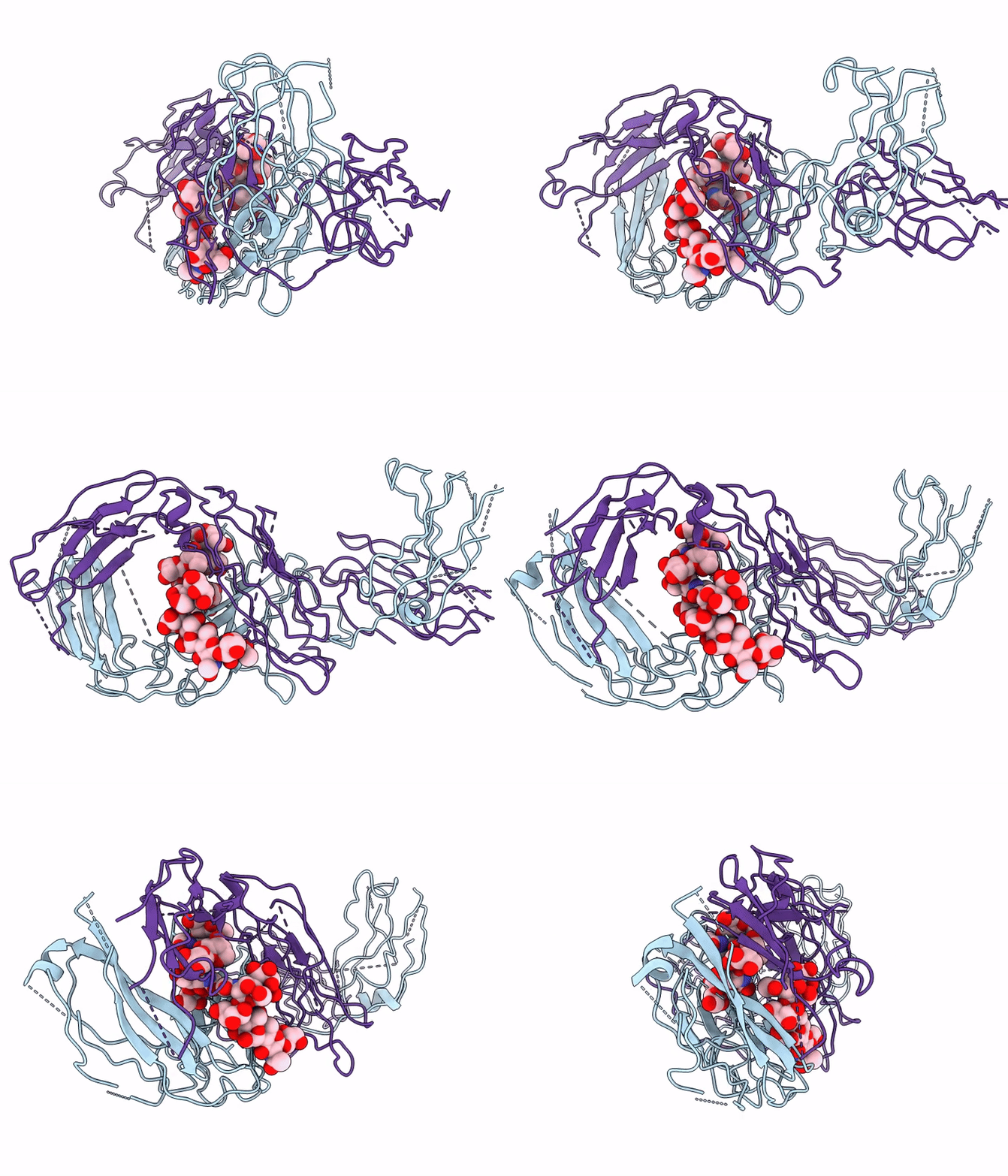
9OA9 image
Deposition Date 2025-04-20
Release Date 2026-02-04
Last Version Date 2026-03-18
Entry Detail
PDB ID:
9OA9
Title:
CryoEM structure of anti-MHC-I mAb B1.23.2 Fc domains
Biological Source:
Source Organism(s):
Homo sapiens (Taxon ID: 9606)
Expression System(s):
Method Details:
Experimental Method:
Resolution:
3.44 Å
Aggregation State:
PARTICLE
Reconstruction Method:
SINGLE PARTICLE
Macromolecular Entities
Polymer Type:polypeptide(L)
Molecule:Anti-MHC-I mAb B1.23.2 Fc dom
Chain IDs:A (auth: J), B (auth: K)
Chain Length:443
Number of Molecules:2
Biological Source:Homo sapiens
Ligand Molecules
Primary Citation
Structural mechanism of anti-MHC-I antibody blocking of inhibitory NK cell receptors in tumor immunity.
Commun Biol 9 ? ? (2026)
PMID: 41629525 DOI: 10.1038/s42003-026-09641-8

Abstact

Anti-major histocompatibility complex class I (MHC-I) mAbs can stimulate immune responses to tumors and infections by blocking suppressive signals delivered via various immune inhibitory receptors. To understand such functions, we determined the structure of a highly cross-reactive anti-human MHC-I mAb, B1.23.2, in complex with the MHC-I molecule HLA-B*44:05 by both cryo-electron microscopy (cryo-EM) and X-ray crystallography. Structural models determined by the two methods were essentially identical revealing that B1.23.2 binds a conserved region on the α21 helix that overlaps the killer immunoglobulin-like receptor (KIR) binding site. Structural comparison to KIR/HLA complexes reveals a mechanism by which B1.23.2 blocks inhibitory receptor interactions, leading to natural killer (NK) cell activation. B1.23.2 treatment of the human KLM-1 pancreatic cancer model in humanized (NSG-IL15) mice provides evidence of suppression of tumor growth. Such anti-MHC-I mAb that block inhibitory KIR/HLA interactions may prove useful for tumor immunotherapy.

Legend

Protein

Chemical

Disease

Primary Citation of related structures
Feedback Form
Name
Email
Institute
Feedback