

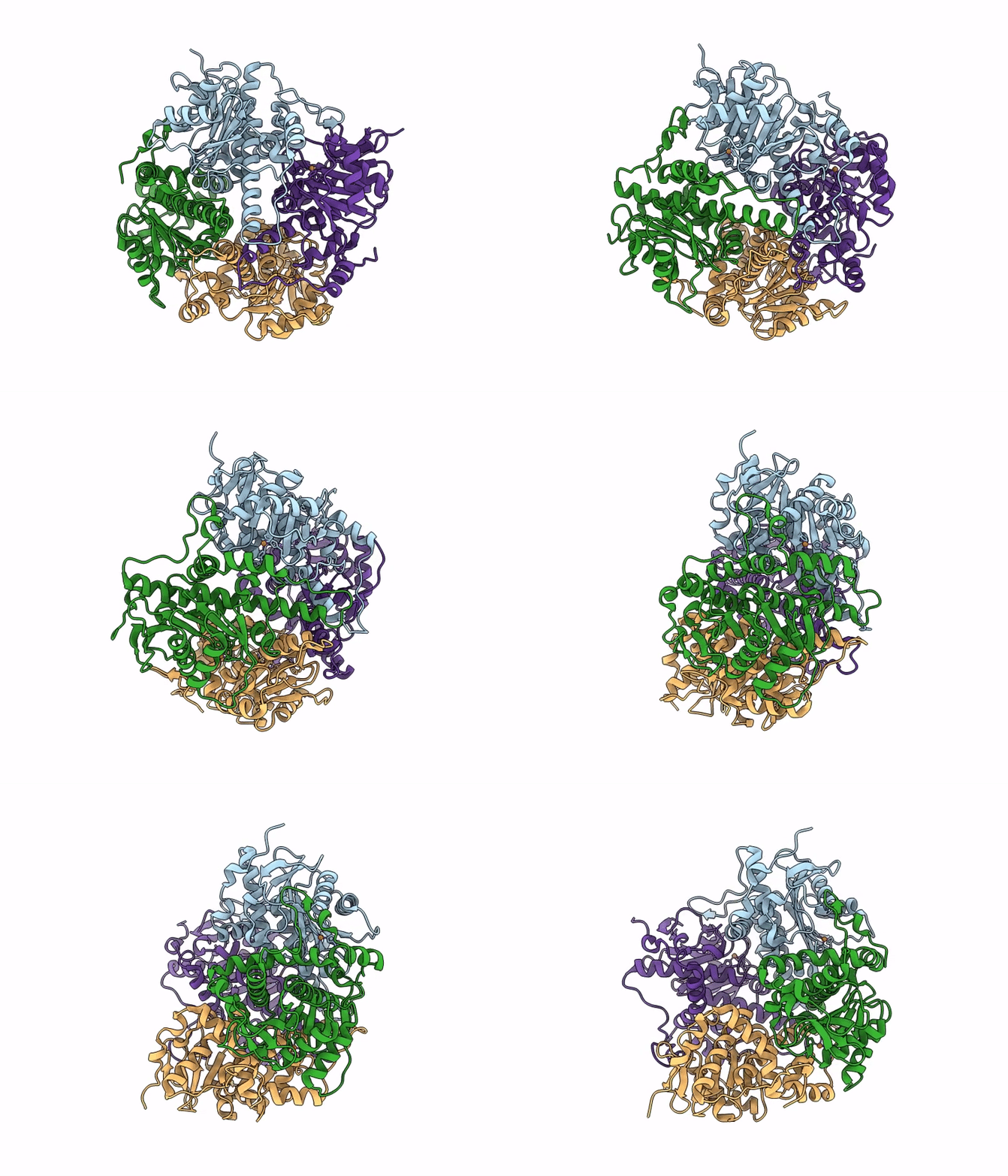
9N43 image
Deposition Date 2025-02-01
Release Date 2026-01-28
Last Version Date 2026-02-04
Entry Detail
PDB ID:
9N43
Title:
Crystal structure of none-heme iron enzyme (TqaM) from Trichoderma atroviride bound with iron
Biological Source:
Source Organism(s):
Expression System(s):
Method Details:
Experimental Method:
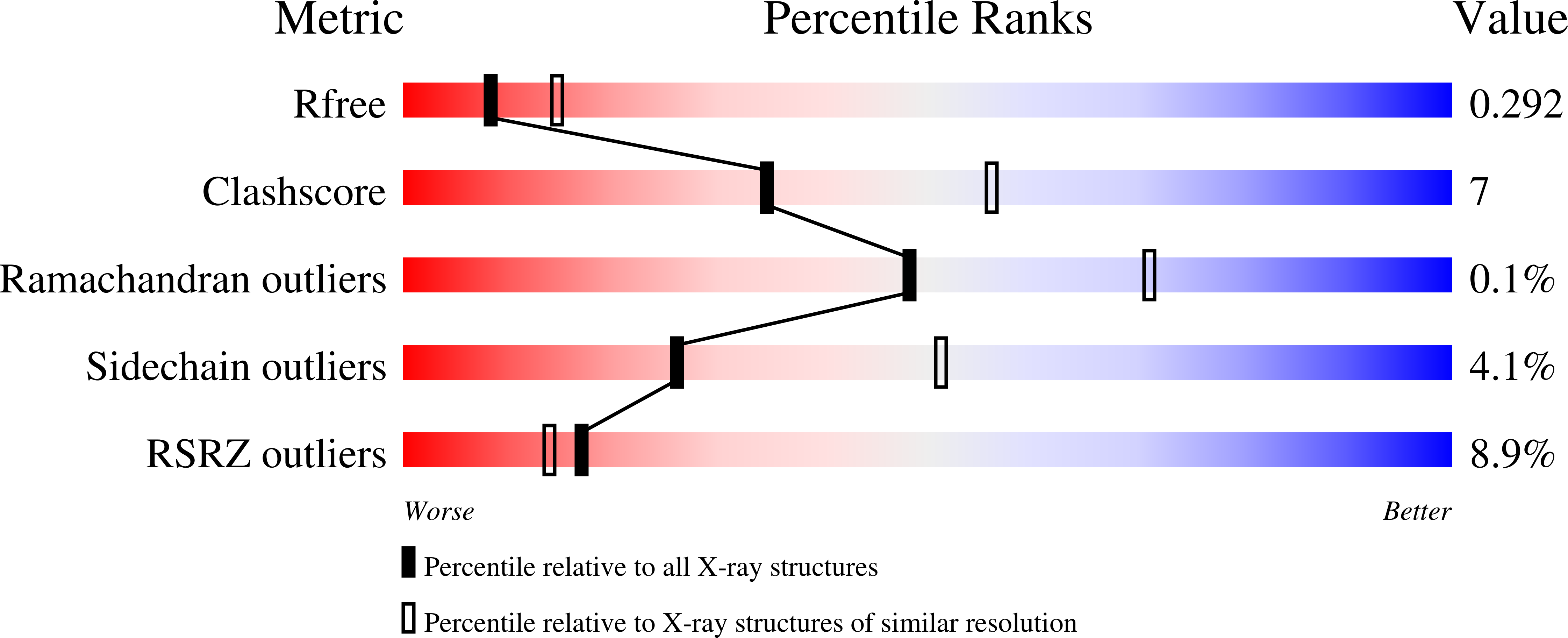
Resolution:
2.60 Å
R-Value Free:
0.29
R-Value Work:
0.26
R-Value Observed:
0.26
Space Group:
C 2 2 21
Macromolecular Entities
Structures with similar UniProt ID
Protein Blast
Polymer Type:polypeptide(L)
Molecule:Class II aldolase/adducin N-t
Gene (Uniprot):TRIATDRAFT_52267
Chain IDs:A, B, C, D
Chain Length:283
Number of Molecules:4
Biological Source:Trichoderma atroviride
Ligand Molecules
Primary Citation
Directed Evolution and Unusual Protonation Mechanism of Pyridoxal Radical C-C Coupling Enzymes for the Enantiodivergent Photobiocatalytic Synthesis of Noncanonical Amino Acids.
J.Am.Chem.Soc. 147 4602 4612 (2025)
PMID: 39849356 DOI: 10.1021/jacs.4c16716

Abstact

Visible light-driven pyridoxal radical biocatalysis has emerged as a new strategy for the stereoselective synthesis of valuable noncanonical amino acids in a protecting-group-free fashion. In our previously developed dehydroxylative C-C coupling using engineered PLP-dependent tryptophan synthases, an enzyme-controlled unusual α-stereochemistry reversal and pH-controlled enantiopreference were observed. Herein, through high-throughput photobiocatalysis, we evolved a set of stereochemically complementary PLP radical enzymes, allowing the synthesis of both l- and d-amino acids with enhanced enantiocontrol across a broad pH window. These newly engineered l- and d-amino acid synthases permitted the use of a broad range of organoboron substrates, including boronates, trifluoroborates, and boronic acids, with excellent efficiency. Mechanistic studies unveiled unexpected PLP racemase activity with our earlier PLP enzyme variants. This promiscuous racemase activity was abolished in our evolved amino acid synthases, shedding light on the origin of enhanced enantiocontrol. Further mechanistic investigations suggest a switch of proton donor to account for the stereoinvertive formation of d-amino acids, highlighting an unusual stereoinversion mechanism that is rare in conventional two-electron PLP enzymology.

Legend

Protein

Chemical

Disease

Primary Citation of related structures
Feedback Form
Name
Email
Institute
Feedback