

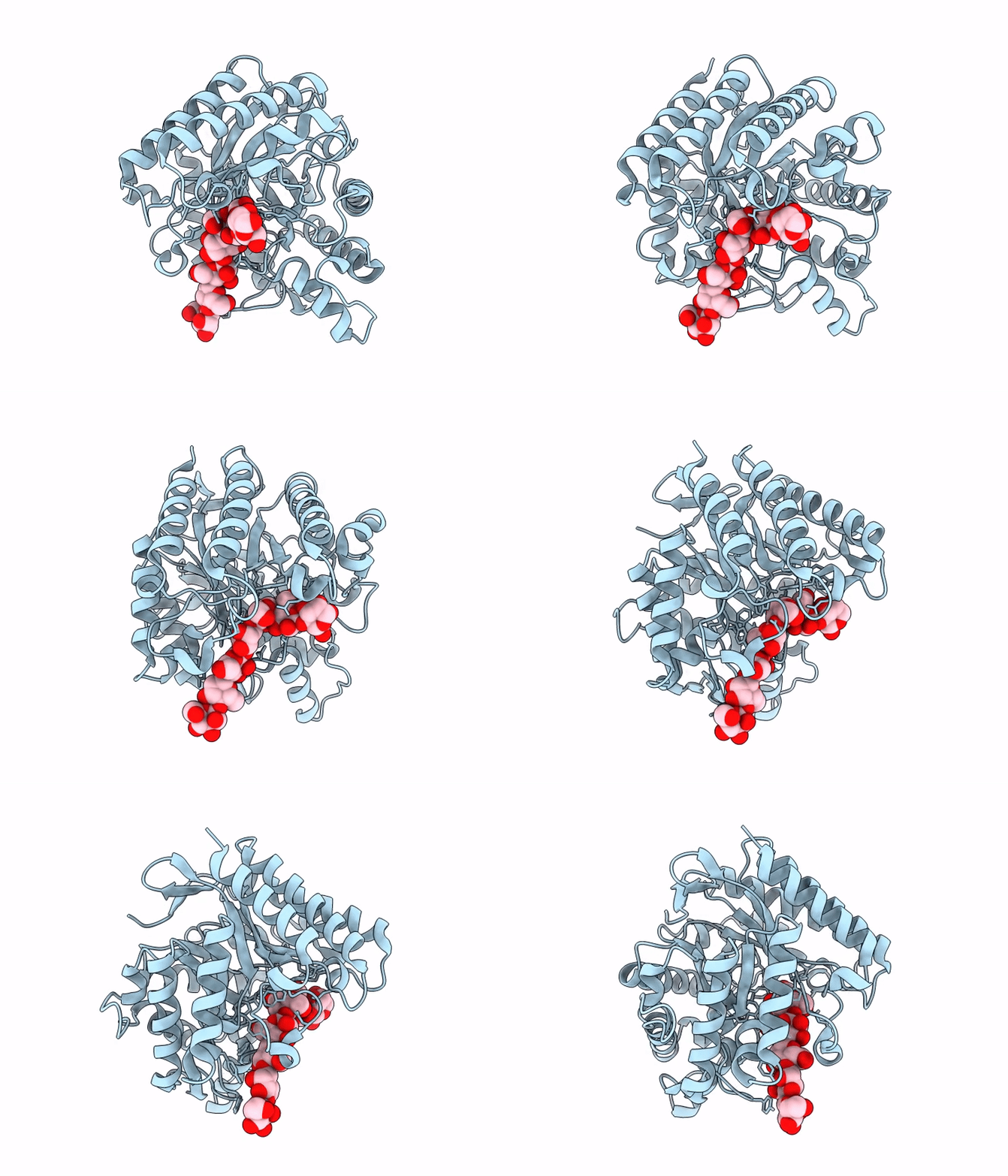
9M21 image
Deposition Date 2025-02-26
Release Date 2026-02-04
Last Version Date 2026-02-04
Entry Detail
PDB ID:
9M21
Keywords:
Title:
GmMAN19-1 from Glycine max in complex with mannopentaose
Biological Source:
Source Organism(s):
Glycine max (Taxon ID: 3847)
Expression System(s):
Method Details:
Experimental Method:
Resolution:
2.62 Å
R-Value Free:
0.23
R-Value Work:
0.15
R-Value Observed:
0.16
Space Group:
P 63

Macromolecular Entities
Structures with similar UniProt ID
Protein Blast
Polymer Type:polypeptide(L)
Molecule:mannan endo-1,4-beta-mannosid
Gene (Uniprot):LOC100787923
Chain IDs:A
Chain Length:387
Number of Molecules:1
Biological Source:Glycine max
Primary Citation
Unveiling the Structural and Biochemical Characteristics of an Acidophilic beta-Mannanase from Soybean ( Glycine max ).
J.Agric.Food Chem. 73 25479 25490 (2025)
PMID: 40994130 DOI: 10.1021/acs.jafc.5c03141

Abstact

Endo-1,4-β-mannanase (EC 3.2.1.78) cleaves β-1,4-mannans in cell walls, facilitating endosperm softening and seed germination. Here, we present the structural and biochemical characterization of GmMAN19-1, a GH5_7 β-mannanase from soybean (Glycine max), a crop with substantial agricultural importance. GmMAN19-1 is specifically expressed in cotyledons during postgermination and exhibits acidophilic activity optimal at pH 4.6 and 40 °C. Crystal structures of GmMAN19-1 were determined at 1.39 and 2.62 Å in the apo form and in complex with mannopentaose (M5), respectively. The structure adopts a canonical (α/β)8 TIM barrel fold with a V-shaped active site groove. Notably, two distinct M5 binding modes were identified, suggesting dual functionality involving hydrolytic and transglycosylation activities. Site-directed mutagenesis further validated key catalytic and substrate-interacting residues: E186A abolished enzymatic activity, while Q267W altered transglycosylation product profiles and enhanced activity toward branched substrates. The binding groove can accommodate galactose side chains, supporting partial activity toward galactomannans. These findings provide comprehensive insights into the substrate specificity and catalytic mechanism of plant β-mannanases and establish GmMAN19-1 as a potential candidate for applications in food processing, biomass conversion, and industrial biotechnology, particularly due to its acidophilic nature and enhanced activity toward branched mannans.

Legend

Protein

Chemical

Disease

Primary Citation of related structures
Feedback Form
Name
Email
Institute
Feedback