

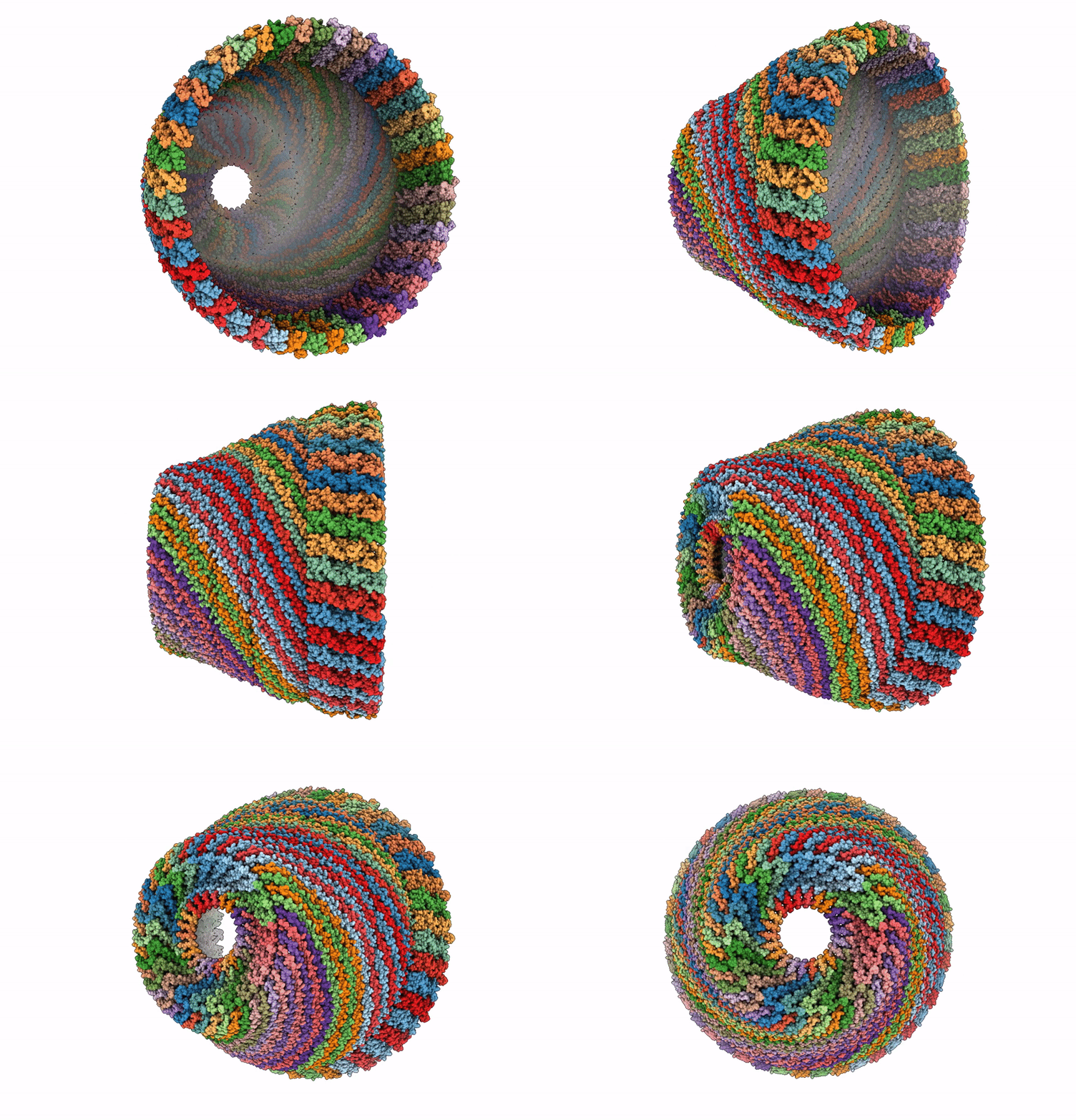
9L3G image
Deposition Date 2024-12-18
Release Date 2025-12-24
Last Version Date 2026-04-01
Entry Detail
PDB ID:
9L3G
Title:
Structure of the flotillin complex
Biological Source:
Source Organism(s):
Homo sapiens (Taxon ID: 9606)
Expression System(s):
Method Details:
Experimental Method:
Resolution:
3.58 Å
Aggregation State:
PARTICLE
Reconstruction Method:
SINGLE PARTICLE
Macromolecular Entities
Structures with similar UniProt ID
Protein Blast
Polymer Type:polypeptide(L)
Molecule:Flotillin-1
Gene (Uniprot):FLOT1
Chain IDs:A, C (auth: B), E (auth: I), G (auth: N), I (auth: C), K (auth: D), M (auth: J), O, Q (auth: E), S (auth: H), U (auth: Q), W (auth: S), Y (auth: F), AA (auth: G), CA (auth: K), EA (auth: P), GA (auth: U), IA (auth: V), KA (auth: R), MA (auth: T), OA (auth: L), QA (auth: M)
Chain Length:462
Number of Molecules:22
Biological Source:Homo sapiens
Structures with similar UniProt ID
Protein Blast
Polymer Type:polypeptide(L)
Molecule:Flotillin-2
Gene (Uniprot):FLOT2
Chain IDs:B (auth: a), D (auth: b), F (auth: i), H (auth: n), J (auth: c), L (auth: d), N (auth: j), P (auth: o), R (auth: e), T (auth: h), V (auth: q), X (auth: s), Z (auth: f), BA (auth: g), DA (auth: k), FA (auth: p), HA (auth: u), JA (auth: v), LA (auth: r), NA (auth: t), PA (auth: l), RA (auth: m)
Chain Length:462
Number of Molecules:22
Biological Source:Homo sapiens
Ligand Molecules
Primary Citation
Molecular mechanisms of flotillin complexes in organizing membrane microdomains.
Nat Commun 17 ? ? (2026)
PMID: 41663364 DOI: 10.1038/s41467-026-69197-3

Abstact

Flotillin-1 and flotillin-2 form hetero-oligomers to create flotillin membrane microdomains essential for endocytosis and protein sorting. However, the mechanisms of flotillin oligomerization and microdomain organization remain incompletely understood. Here, we present the cryo-EM structure of human flotillin complex, showing that flotillin-1 and -2 form a 44-mer, membrane attached, and dome-shaped structure that defines a 30-nm circular membrane domain. The cryo-ET data demonstrates that while attached to the cytoplasmic leaflet, flotillin complexes possess intrinsic structural plasticity in situ on the native membrane. Each flotillin complex may represent a fundamental unit of membrane microdomains, with their clustering enabling the formation of larger and more elaborate domains. We further reveal that phosphorylation at residues Y160 (flotillin-1) and Y163 (flotillin-2) may act as a molecular switch to modulate complex assembly, potentially regulating its function in endocytosis. These findings demonstrate the molecular mechanism of flotillin-mediated membrane segregation and microdomain formation, and suggest a previously unrecognized role of flotillin in sequestrating membrane proteins.

Legend

Protein

Chemical

Disease

Primary Citation of related structures
Feedback Form
Name
Email
Institute
Feedback