

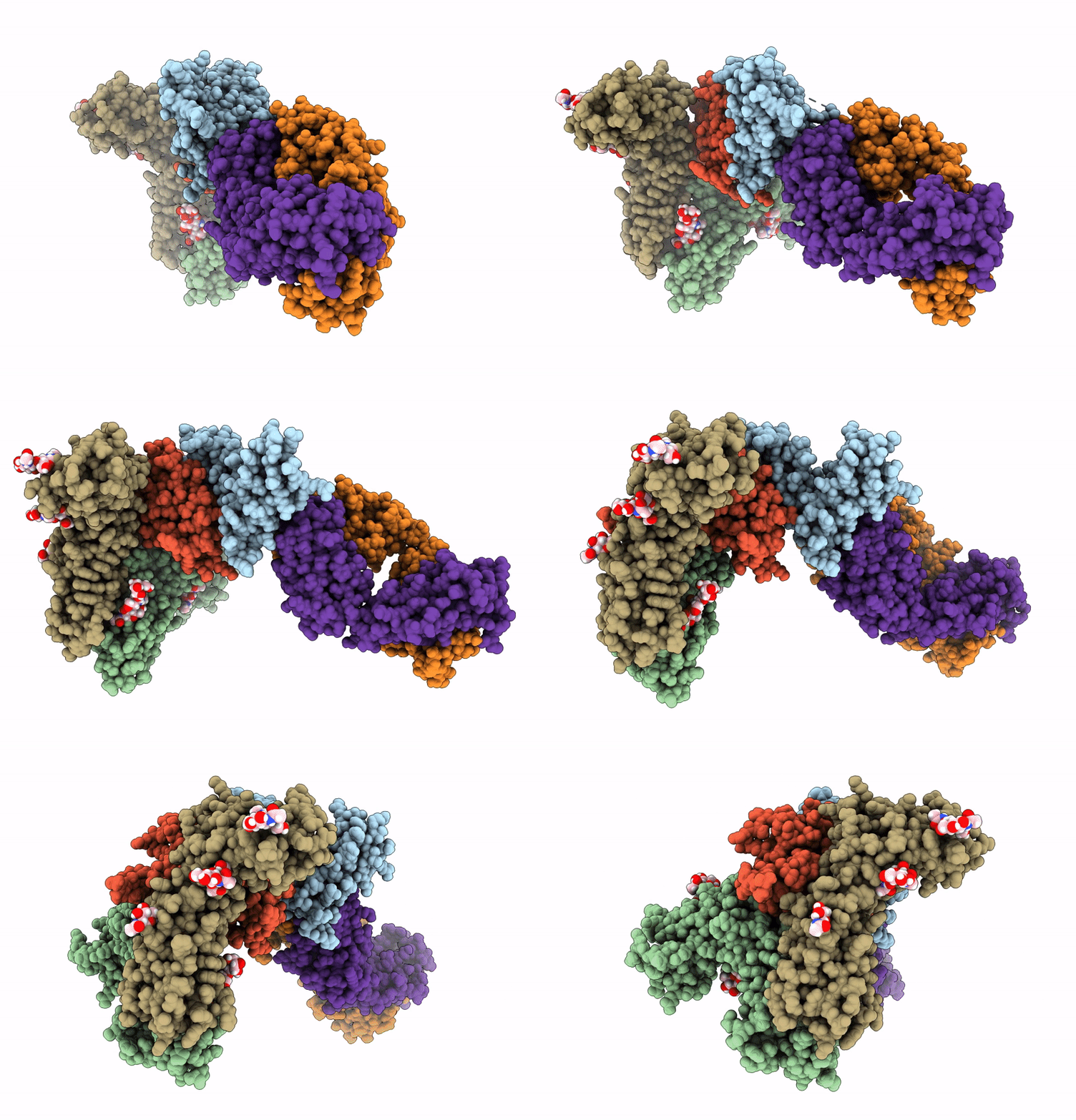
9KMC image
Deposition Date 2024-11-15
Release Date 2025-11-19
Last Version Date 2026-02-18
Entry Detail
PDB ID:
9KMC
Keywords:
Title:
Cryo-EM structure of the heterotrimeric interleukin-2 receptor in complex with interleukin-2 and anti-CD25 Fab S417
Biological Source:
Source Organism(s):
Method Details:
Experimental Method:
Resolution:
2.97 Å
Aggregation State:
PARTICLE
Reconstruction Method:
SINGLE PARTICLE
Macromolecular Entities
Structures with similar UniProt ID
Protein Blast
Polymer Type:polypeptide(L)
Molecule:Interleukin-2 receptor subuni
Gene (Uniprot):IL2RA
Chain IDs:A
Chain Length:240
Number of Molecules:1
Biological Source:Homo sapiens
Structures with similar UniProt ID
Protein Blast
Polymer Type:polypeptide(L)
Molecule:Interleukin-2 receptor subuni
Gene (Uniprot):IL2RB
Chain IDs:B
Chain Length:222
Number of Molecules:1
Biological Source:Homo sapiens
Structures with similar UniProt ID
Protein Blast
Polymer Type:polypeptide(L)
Molecule:Cytokine receptor common subu
Gene (Uniprot):IL2RG
Chain IDs:C
Chain Length:241
Number of Molecules:1
Biological Source:Homo sapiens
Structures with similar UniProt ID
Protein Blast
Polymer Type:polypeptide(L)
Molecule:Interleukin-2
Gene (Uniprot):IL2
Chain IDs:D
Chain Length:133
Number of Molecules:1
Biological Source:Homo sapiens
Polymer Type:polypeptide(L)
Molecule:Fab S417 heavy chain
Chain IDs:E
Chain Length:228
Number of Molecules:1
Biological Source:synthetic construct
Polymer Type:polypeptide(L)
Molecule:Fab S417 light chain
Chain IDs:F
Chain Length:213
Number of Molecules:1
Biological Source:synthetic construct
Ligand Molecules
Primary Citation

Abstact

Chimeric antigen receptor (CAR)-T cell therapy has transformed the treatment of B-cell malignancies, but its success in acute myeloid leukemia (AML) remains limited. Durable responses depend on the formation of long-lived memory T cells, whereas T cell exhaustion contributes to non-response and relapse. In patients with AML who achieved remission after cord blood transplantation, we here first observe enrichment of memory T cells with high expression of the chemokine receptor CXCR4. Next, we show that engineering CAR-T cells to co-express CXCR4 enhances their persistence and anti-leukemic activity in patient-derived xenograft models. Using single-cell profiling and metabolic analysis, we find that CXCR4 promotes memory-associated transcriptional programs, reduces exhaustion, and supports oxidative metabolism. These effects are observed with CAR-T cells targeting CD25 or CD96 as AML-associated targets. Our results indicate that CXCR4 strengthens CAR-T cell memory and durability, offering a strategy to improve immunotherapy outcomes in AML and beyond.

Legend

Protein

Chemical

Disease

Primary Citation of related structures
Feedback Form
Name
Email
Institute
Feedback