

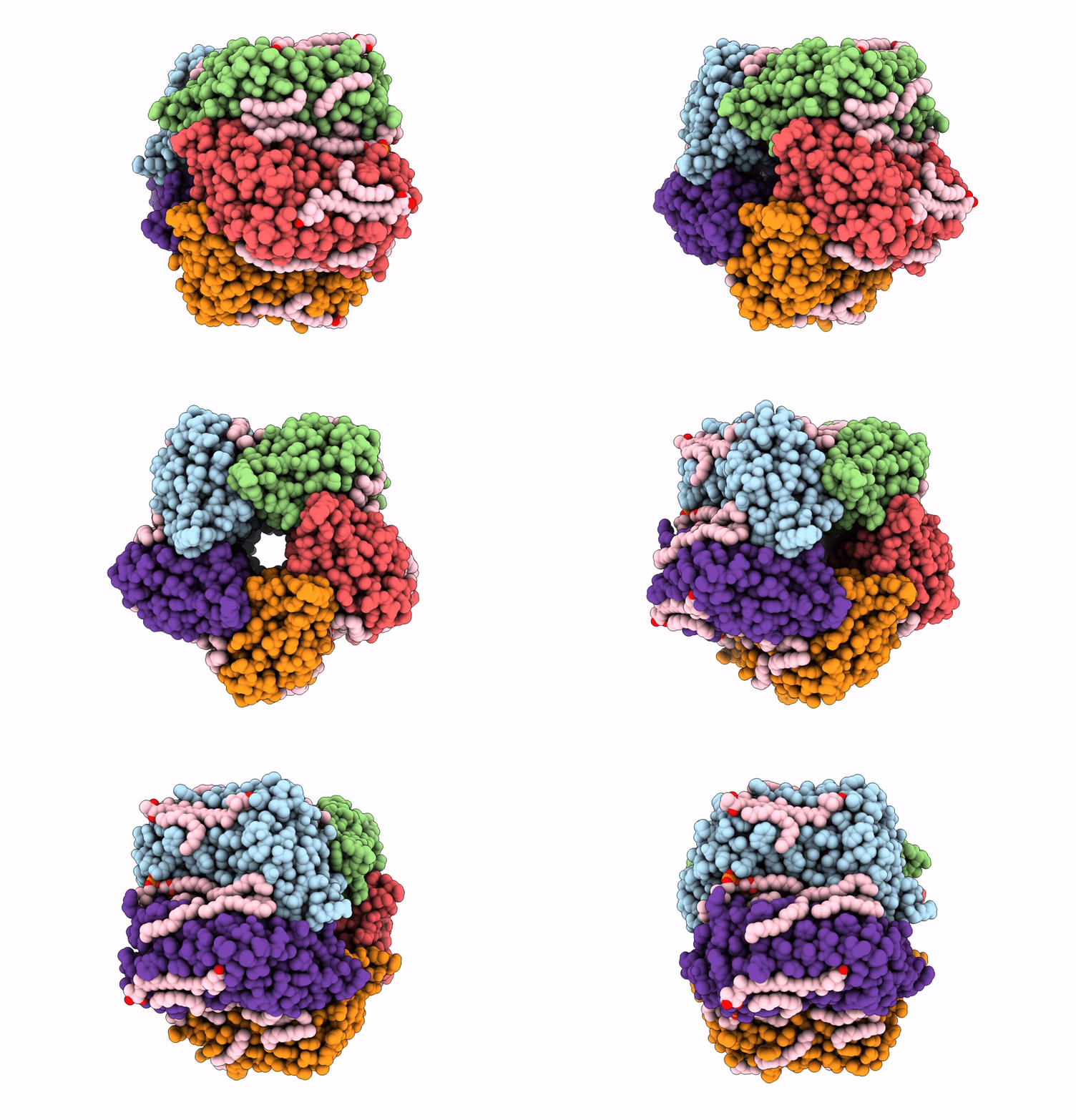
9JOW image
Deposition Date 2024-09-25
Release Date 2025-07-30
Last Version Date 2026-02-18
Entry Detail
PDB ID:
9JOW
Title:
Cryo-EM structure of the myxol-bound light-driven chloride ion-pumping rhodopsin, NM-R3
Biological Source:
Source Organism(s):
Expression System(s):
Method Details:
Experimental Method:
Resolution:
2.48 Å
Aggregation State:
PARTICLE
Reconstruction Method:
SINGLE PARTICLE

Macromolecular Entities
Structures with similar UniProt ID
Protein Blast
Polymer Type:polypeptide(L)
Molecule:Chloride pumping rhodopsin
Gene (Uniprot):ClR
Chain IDs:A, B, C, D, E
Chain Length:279
Number of Molecules:5
Biological Source:Nonlabens marinus S1-08
Primary Citation
Carotenoids bind rhodopsins and act as photocycle-accelerating pigments in marine Bacteroidota.
Nat Microbiol 10 2603 2615 (2025)
PMID: 40908369 DOI: 10.1038/s41564-025-02109-1

Abstact

Microbial rhodopsins are photoreceptor proteins widely distributed in marine microorganisms that harness light energy and support marine ecosystems. While retinal is typically the sole chromophore in microbial rhodopsins, some proteorhodopsins, which are proton-pumping rhodopsins abundant in the ocean, use carotenoid antennae to transfer light energy to retinal. However, the mechanism by which carotenoids enhance rhodopsin functions remains unclear. Here, using the marine Bacteroidota isolate Nonlabens marinus S1-08T, we reconstituted complexes of rhodopsins with the carotenoid myxol and detected energy transfer to retinal in both proteorhodopsin and chloride ion-pumping rhodopsin. Carotenoid binding facilitated light harvesting and accelerated the photocycle, thereby improving the light utilization efficiency of proteorhodopsin. Cryogenic electron microscopy structural analysis further revealed the molecular architecture of the carotenoid-rhodopsin complexes. The ability to bind carotenoids is conserved in rhodopsins of the marine-dominant phylum Bacteroidota, which are widely transcribed in the photic zone. These findings reveal how carotenoids enhance rhodopsin functions in marine Bacteroidota.

Legend

Protein

Chemical

Disease

Primary Citation of related structures
Feedback Form
Name
Email
Institute
Feedback