

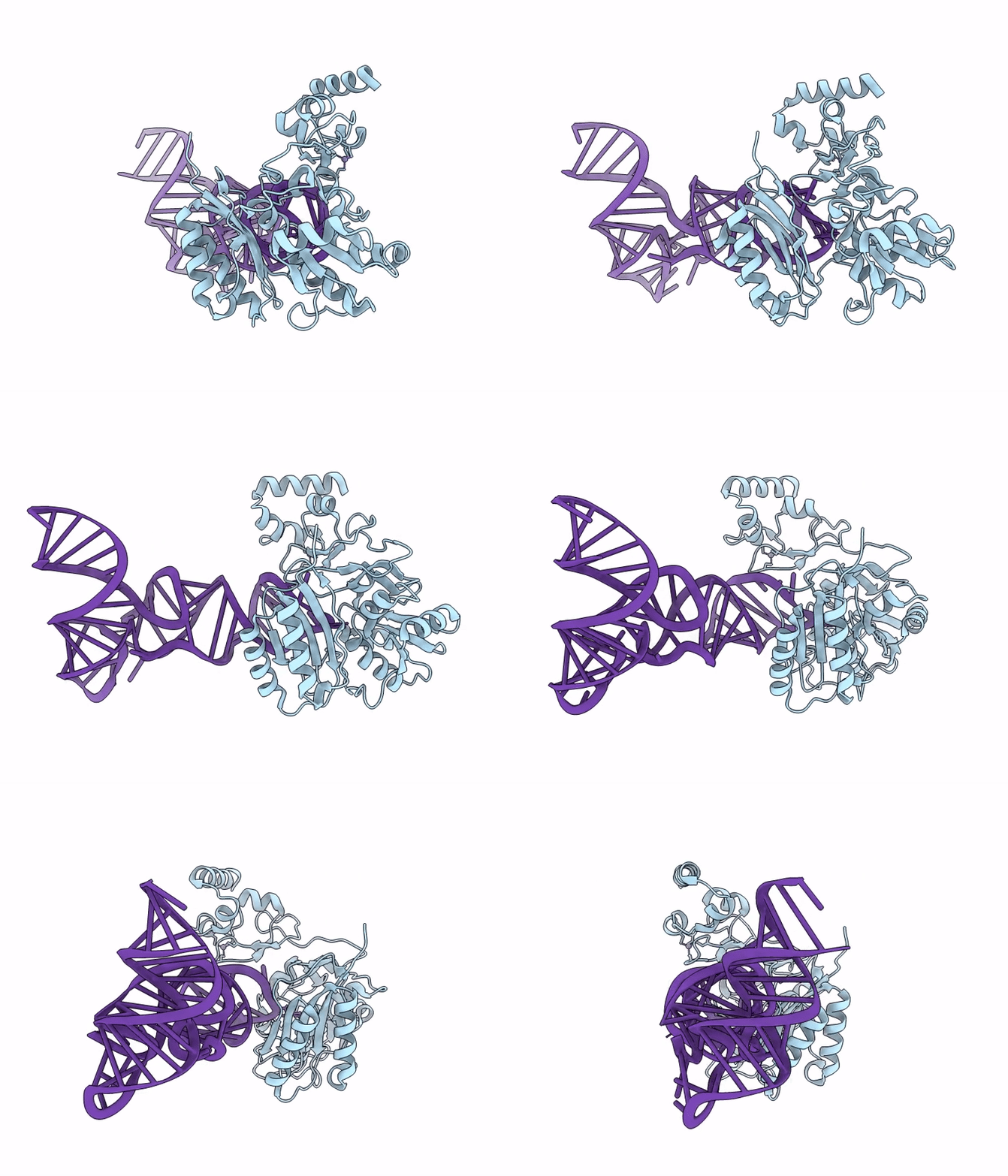
9J5O image
Deposition Date 2024-08-13
Release Date 2026-01-21
Last Version Date 2026-02-04
Entry Detail
PDB ID:
9J5O
Title:
Cryo-EM structure of TrhO from B. subtilis complexed with tRNA Ala
Biological Source:
Source Organism(s):
Expression System(s):
Method Details:
Experimental Method:
Resolution:
3.04 Å
Aggregation State:
PARTICLE
Reconstruction Method:
SINGLE PARTICLE
Macromolecular Entities
Structures with similar UniProt ID
Protein Blast
Polymer Type:polypeptide(L)
Molecule:tRNA uridine(34) hydroxylase
Gene (Uniprot):trhO
Chain IDs:A
Chain Length:352
Number of Molecules:1
Biological Source:Bacillus subtilis subsp. subtilis str. 168
Polymer Type:polyribonucleotide
Molecule:RNA (76-MER)
Chain IDs:B
Chain Length:76
Number of Molecules:1
Biological Source:Bacillus subtilis subsp. subtilis str. 168
Ligand Molecules
Primary Citation
Unconventional monooxygenation by the O 2 -dependent tRNA wobble uridine hydroxylase TrhO.
Nat.Chem.Biol. ? ? ? (2026)
PMID: 41554887 DOI: 10.1038/s41589-025-02129-2

Abstact

Modifications at the wobble position of transfer RNA (tRNA) are critical for accurate codon recognition and efficient translation. 5-Hydroxyuridine serves as a key intermediate for more complex wobble uridine derivatives commonly found in bacterial tRNAs and is synthesized by either prephenate-dependent TrhP or dioxygen-dependent TrhO. Despite its biological importance, structural and mechanistic insights into these enzymes have remained elusive. Here, we report the cryo-electron microscopy structure of Bacillus subtilis TrhO-tRNAAla complex. Combined with biochemical analyses, our results reveal that TrhO functions without any metal or organic cofactor, unlike most other oxygenases. We propose that the conserved C179 reacts with dioxygen to form a thiohydroperoxy intermediate, which is cleaved to produce 5-hydroxyuridine and a sulfenic acid at C179. The oxidized cysteine subsequently forms a disulfide bond with the adjacent C185, protecting the catalytic cysteine from irreversible overoxidation. These findings broaden our understanding of cofactor-independent dioxygen use in aromatic ring hydroxylation.

Legend

Protein

Chemical

Disease

Primary Citation of related structures
Feedback Form
Name
Email
Institute
Feedback