

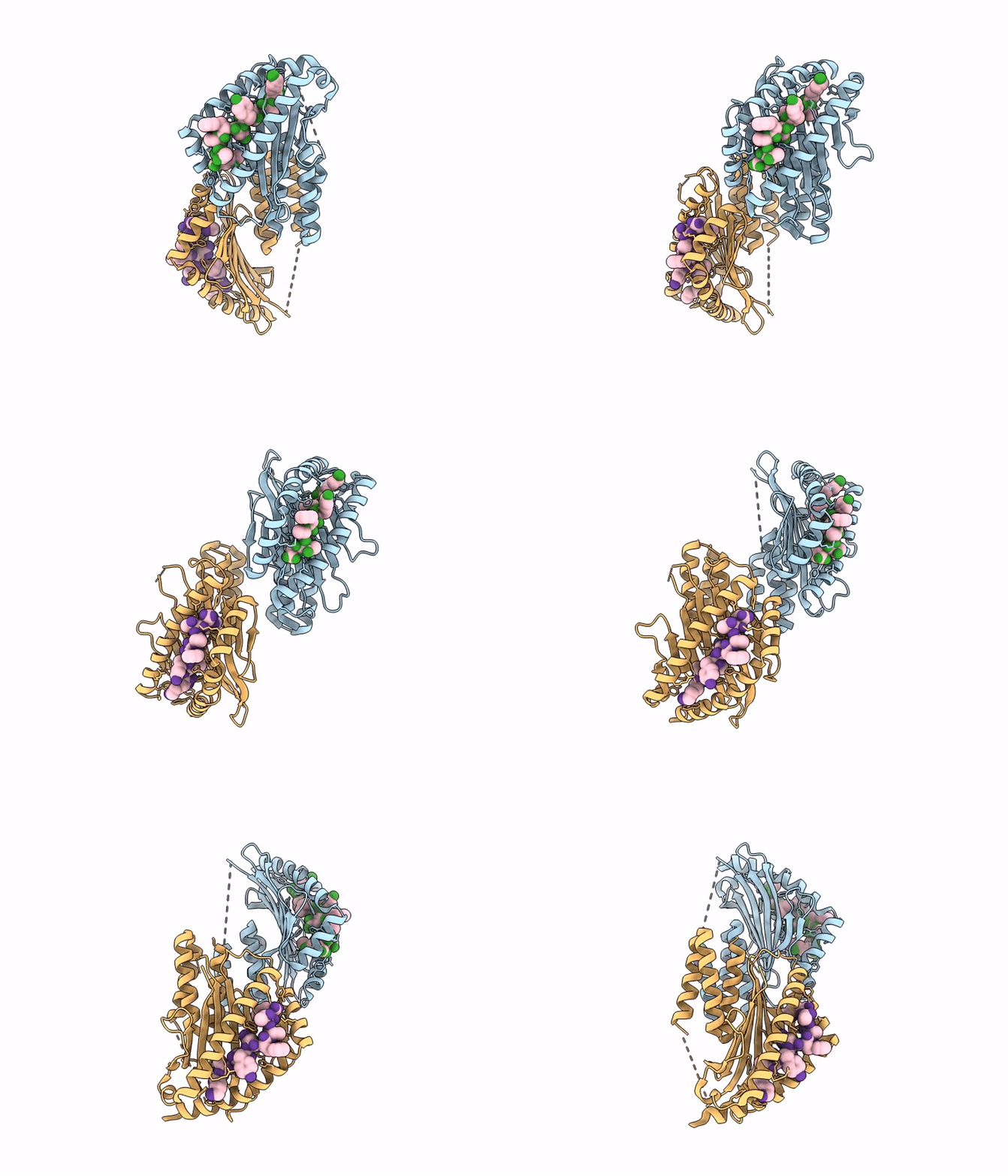
9HY4 image
Deposition Date 2025-01-09
Release Date 2025-12-31
Last Version Date 2026-01-14
Entry Detail
PDB ID:
9HY4
Keywords:
Title:
Solubly expressed miniaturized SMART H2-Db
Biological Source:
Source Organism(s):
Expression System(s):
Method Details:
Experimental Method:
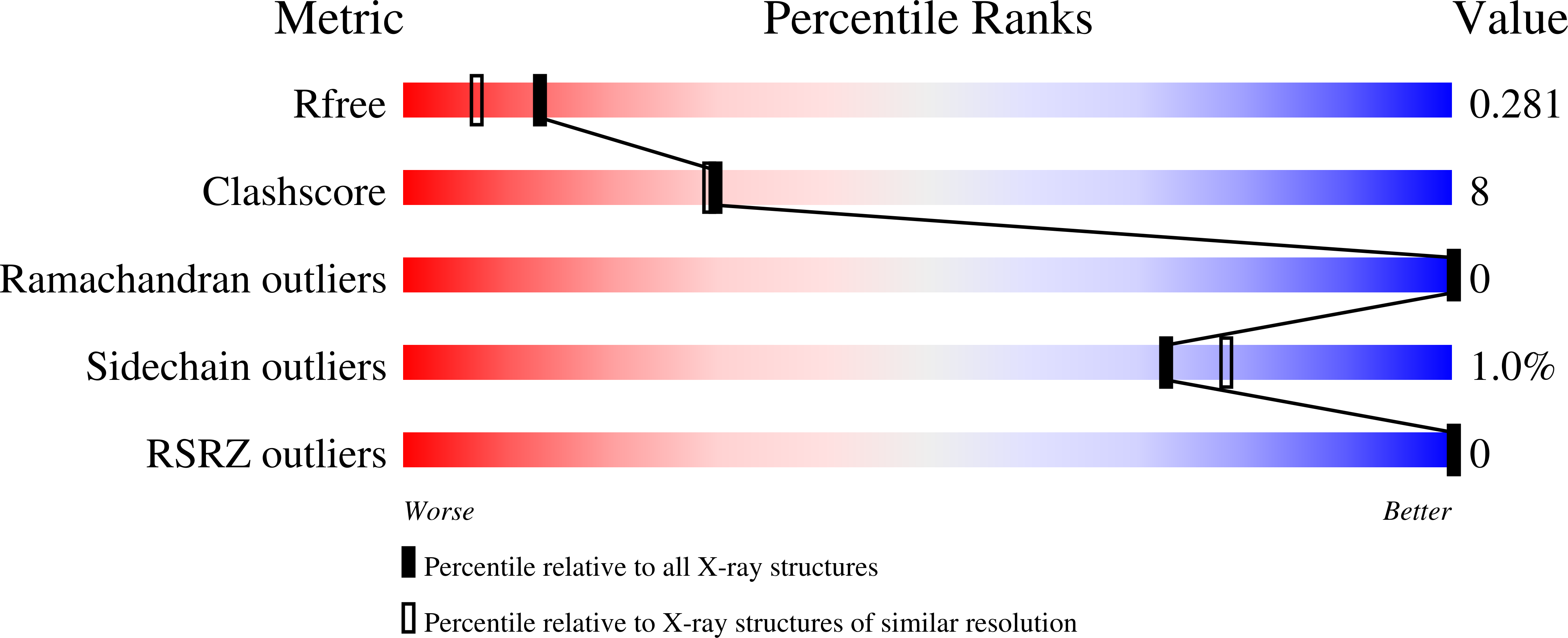
Resolution:
2.00 Å
R-Value Free:
0.28
R-Value Work:
0.22
R-Value Observed:
0.22
Space Group:
C 1 2 1
Macromolecular Entities
Structures with similar UniProt ID
Protein Blast
Polymer Type:polypeptide(L)
Molecule:H-2 class I histocompatibilit
Gene (Uniprot):H2-D1
Chain IDs:A, C
Chain Length:255
Number of Molecules:2
Biological Source:Mus musculus
Polymer Type:polypeptide(L)
Molecule:LYS-ALA-VAL-TYR-ASN-PHE-ALA-T
Chain IDs:B, D
Chain Length:9
Number of Molecules:2
Biological Source:Mammarenavirus choriomeningitidis
Primary Citation
Design of solubly expressed miniaturized SMART MHCs.
Proc.Natl.Acad.Sci.USA 123 e2505932123 e2505932123 (2026)
PMID: 41481462 DOI: 10.1073/pnas.2505932123

Abstact

The precise recognition of specific peptide-major histocompatibility complex (pMHC) complexes by T cell receptors (TCRs) plays a key role in infectious disease, cancer, and autoimmunity. A critical step in many immunobiological studies is the identification of T cells expressing TCRs specific to a given pMHC antigen. However, the intrinsic instability of empty class-I MHCs limits their soluble expression in Escherichia coli and makes it very difficult to characterize even a small fraction of possible pMHC/TCR interactions. To overcome this limitation, we designed small proteins which buttress the peptide binding groove of class I MHCs, replacing β2-microglobulin (β2m) and the heavy chain α3 domain, and enable soluble and partially soluble expression in E. coli of H-2Db and A*02:01, respectively. We demonstrate that these soluble, monomeric, antigen-receptive, truncated (SMART) MHCs retain both peptide- and TCR-binding specificity and that peptide-bound structures of both allomorphs are similar to their full-length, native counterparts. With extension to the majority of HLA alleles, SMART MHCs should be broadly useful for probing the T cell repertoire in approaches ranging from yeast display to T cell staining.

Legend

Protein

Chemical

Disease

Primary Citation of related structures
Feedback Form
Name
Email
Institute
Feedback