

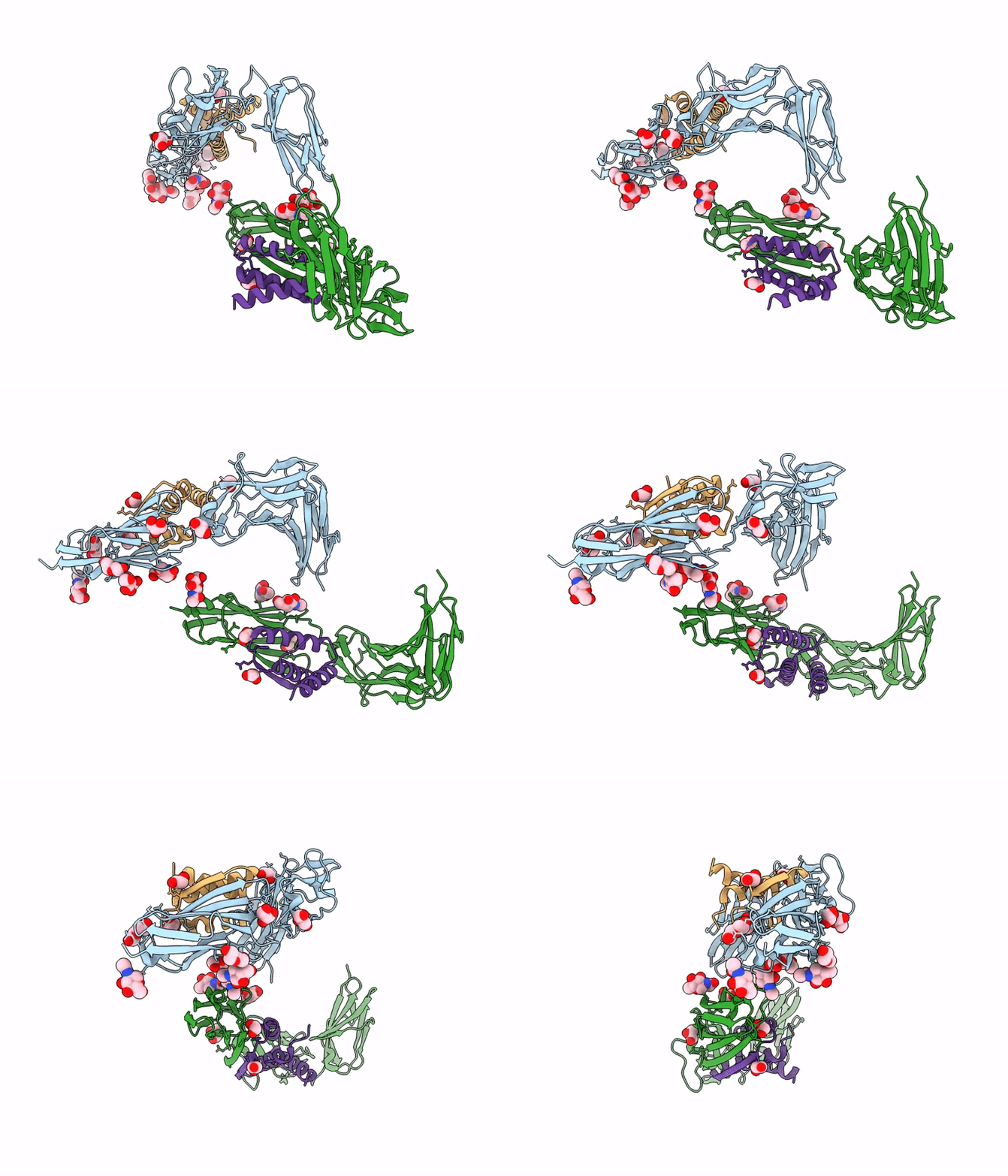
9H71 image
Deposition Date 2024-10-25
Release Date 2026-01-21
Last Version Date 2026-02-11
Entry Detail
PDB ID:
9H71
Keywords:
Title:
KIT123-KITbp complex (Domains D1-3 of the human receptor tyrosine kinase KIT complexed with the de novo designed minibinder KITbp)
Biological Source:
Source Organism(s):
Method Details:
Experimental Method:
Resolution:
2.80 Å
R-Value Free:
0.28
R-Value Work:
0.22
R-Value Observed:
0.22
Space Group:
P 21 21 21
Macromolecular Entities
Structures with similar UniProt ID
Protein Blast
Polymer Type:polypeptide(L)
Molecule:Mast/stem cell growth factor
Gene (Uniprot):KIT
Chain IDs:A, B
Chain Length:295
Number of Molecules:2
Biological Source:Homo sapiens
Polymer Type:polypeptide(L)
Molecule:KITbp (de novo designed minib
Chain IDs:C, D
Chain Length:65
Number of Molecules:2
Biological Source:synthetic construct
Primary Citation

Abstact

Designing proteins that bind with high affinity to hydrophilic protein target sites remains a challenging problem. Here we show that RFdiffusion can be conditioned to generate protein scaffolds that form geometrically matched extended β-sheets with target protein edge β-strands in which polar groups on the target are complemented with hydrogen bonding groups on the design. We use this approach to design binders against edge-strand target sites on KIT, PDGFRɑ, ALK-2, ALK-3, FCRL5, NRP1, and α-CTX, and obtain higher (pM to mid nM) affinities and success rates than unconditioned RFdiffusion. Despite sharing β-strand interactions, designs have high specificity, reflecting the precise customization of interacting β-strand geometry and additional designed binder-target interactions. A binder-KIT co-crystal structure is nearly identical to the design model, confirming the accuracy of the design approach. The ability to robustly generate binders to the hydrophilic interaction surfaces of exposed β-strands considerably increases the range of computational binder design.

Legend

Protein

Chemical

Disease

Primary Citation of related structures
Feedback Form
Name
Email
Institute
Feedback