

9E6E image
Deposition Date 2024-10-29
Release Date 2025-11-05
Last Version Date 2026-02-11
Entry Detail
PDB ID:
9E6E
Title:
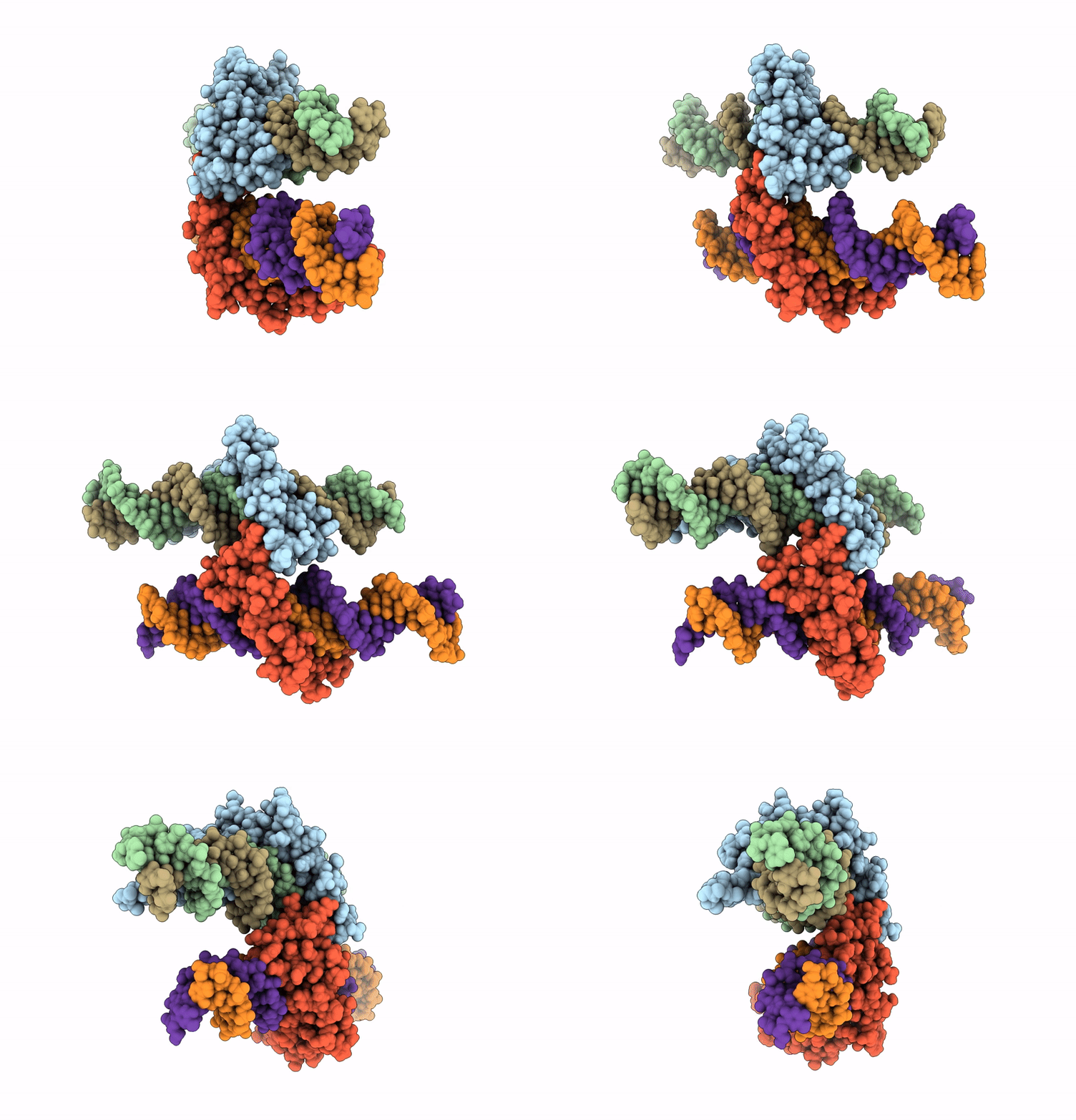
Yeast Fzf1 Zn-fingers 1-3 bound to YHB1 26 bp DNA
Biological Source:
Source Organism(s):
Method Details:
Experimental Method:
Resolution:
2.95 Å
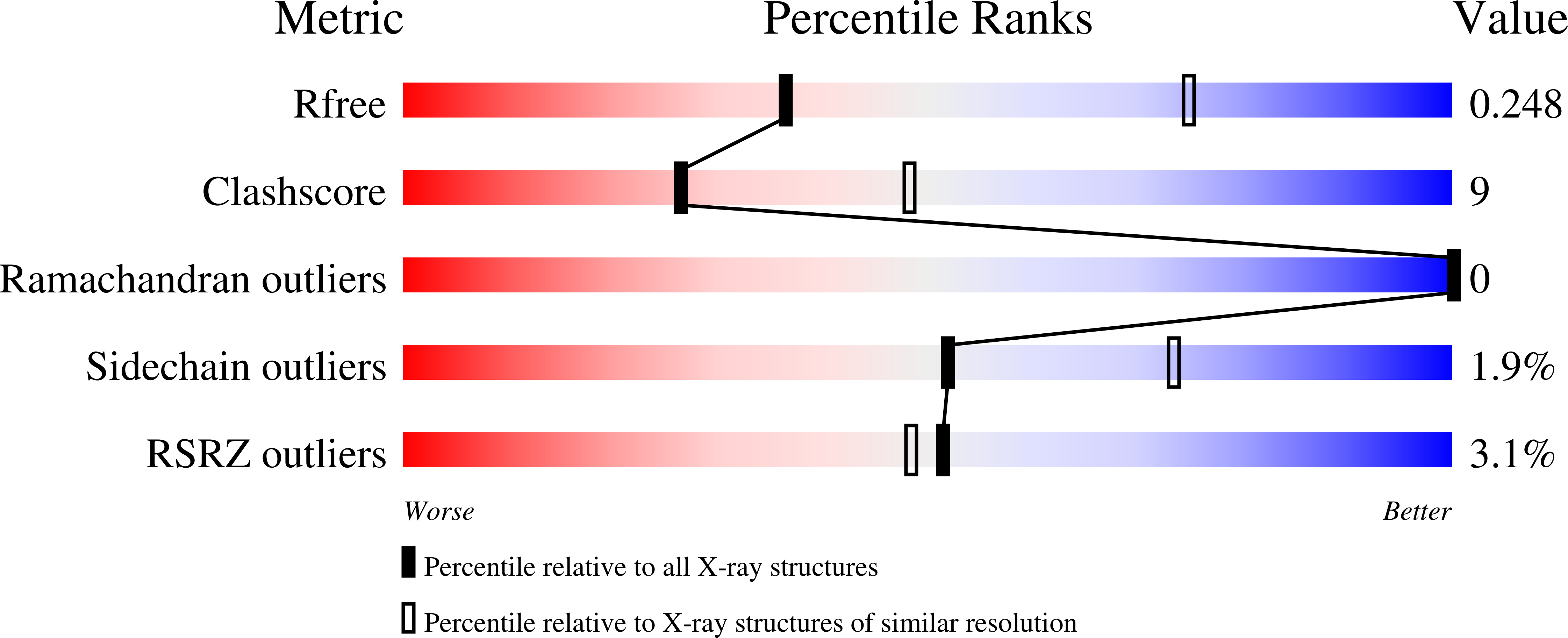
R-Value Free:
0.24
R-Value Work:
0.21
R-Value Observed:
0.21
Space Group:
P 21 21 21
Macromolecular Entities
Structures with similar UniProt ID
Protein Blast
Polymer Type:polypeptide(L)
Molecule:Zinc finger protein FZF1
Gene (Uniprot):FZF1
Chain IDs:A (auth: D), F (auth: A)
Chain Length:299
Number of Molecules:2
Biological Source:Saccharomyces cerevisiae
Polymer Type:polydeoxyribonucleotide
Molecule:DNA 1
Chain IDs:B (auth: E), D (auth: B)
Chain Length:27
Number of Molecules:2
Biological Source:Saccharomyces cerevisiae
Polymer Type:polydeoxyribonucleotide
Molecule:DNA 2
Chain IDs:C (auth: F), E (auth: C)
Chain Length:27
Number of Molecules:2
Biological Source:Saccharomyces cerevisiae
Ligand Molecules
Primary Citation
Zinc-finger transcription factor Fzf1 binds to its target DNA in a non-canonical manner.
Nucleic Acids Res. 54 ? ? (2026)
PMID: 41607282 DOI: 10.1093/nar/gkag054

Abstact

Saccharomyces cerevisiae Fzf1 is a transcriptional regulator with five Cys2His2 zinc fingers, controlling the expression of SSU1, YHB1, DDI2/3, and YNR064C genes through a shared promoter sequence CS2. After exposure to chemicals such as cyanamide (CY) or methyl methanesulfonate (MMS), Fzf1-regulated gene expression increases in yeast cells without concomitant changes in Fzf1 levels, suggesting that chemical modification of Fzf1 leads to increased transcription of target genes. Here, we showed that Fzf1 binds to the four known CS2 promoter sequences with comparable nanomolar affinity, while treatment of Fzf1 with inducing chemicals CY or MMS modestly increased its binding affinity for CS2 sequences. Crystallographic analysis of the N-terminal three zinc fingers of Fzf1 bound to a 26-bp YHB1 CS2 DNA containing the consensus sequence 3'-C3G4T5C6T7G8A9T10A11G12T13-5' reveals non-canonical recognition of duplex DNA for a zinc finger transcription factor. The first zinc finger interacts with the 5'-end dG3' of the standard non-recognition strand, while the second and third fingers read two (3'-T7G8-5') and four (3'-T10A11G12T13-5') adjacent base pairs on the recognition strand, respectively. Recognition of the DNA phosphodiester backbone by Fzf1 mostly resembles other zinc finger proteins. Future work will aim to elucidate how chemical modification of Fzf1 increases transcriptional activation in vivo.

Legend

Protein

Chemical

Disease

Primary Citation of related structures
Feedback Form
Name
Email
Institute
Feedback