

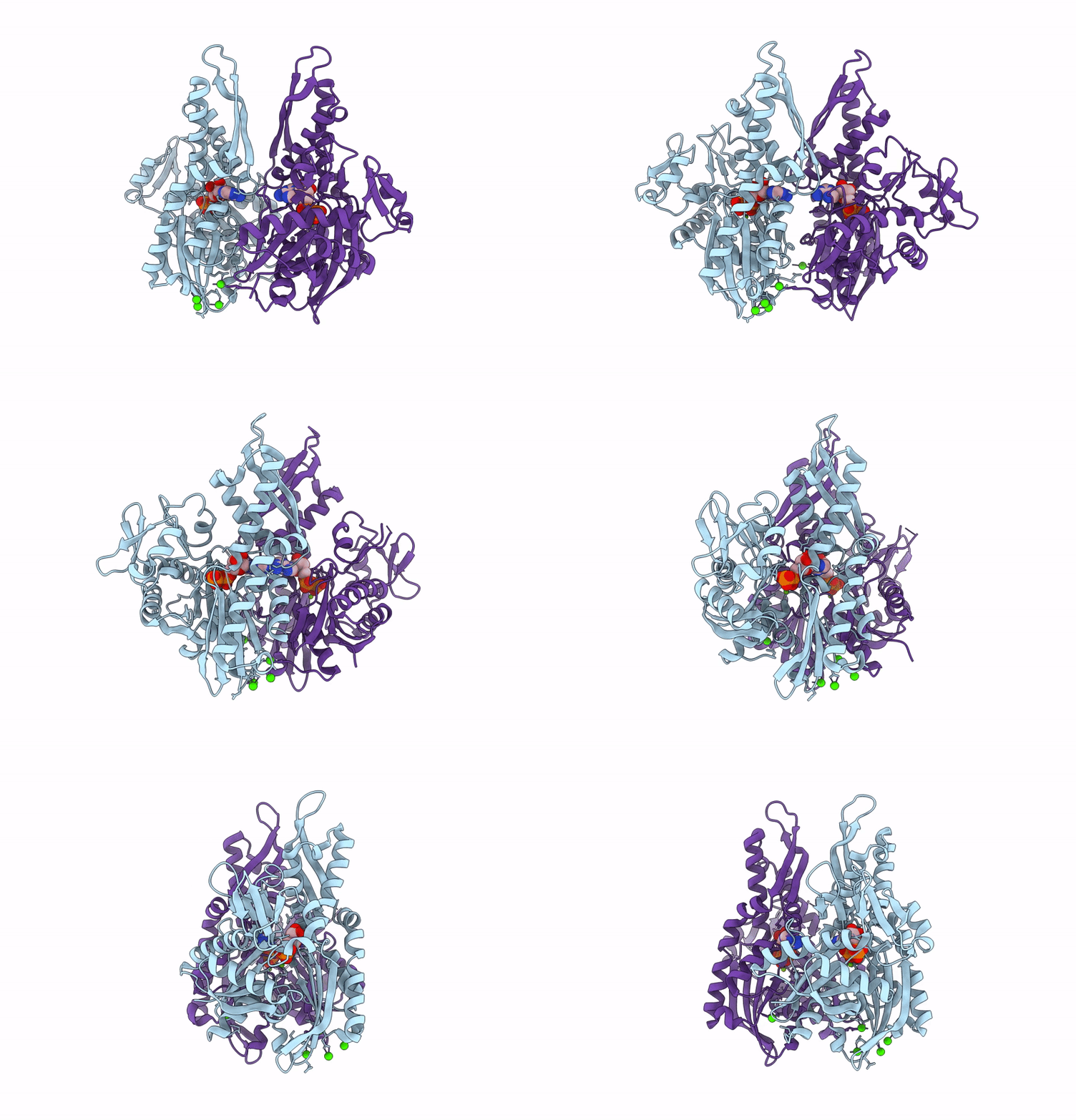
8W1M image
Deposition Date 2024-02-16
Release Date 2025-02-26
Last Version Date 2026-03-11
Entry Detail
PDB ID:
8W1M
Keywords:
Title:
T.thermophilus DNAK nucleotide binding domain in complex with ADP
Biological Source:
Source Organism(s):
Expression System(s):
Method Details:
Experimental Method:
Resolution:
2.75 Å
R-Value Free:
0.25
R-Value Work:
0.22
R-Value Observed:
0.22
Space Group:
P 21 21 2

Macromolecular Entities
Structures with similar UniProt ID
Protein Blast
Polymer Type:polypeptide(L)
Molecule:Chaperone protein DnaK
Gene (Uniprot):dnaK
Chain IDs:A, B
Chain Length:382
Number of Molecules:2
Biological Source:Thermus thermophilus
Primary Citation
Mechanisms of assembly and function of the Hsp70-Hsp40 chaperone machinery.
Mol.Cell 85 4032 4046.e7 (2025)
PMID: 41092901 DOI: 10.1016/j.molcel.2025.09.023

Abstact

Hsp70 and Hsp40 molecular chaperones form a central machinery that remodels client proteins involved in numerous biological processes. Here, we integrated cryo-electron microscopy and nuclear magnetic resonance spectroscopy to determine the architecture of the full-length Hsp70-Hsp40 machinery. The structure of the complex in a physiologically inhibited state reveals distinct regulatory mechanisms. In the active state, the Hsp40 glycine-phenylalanine (G/F)-rich region acts as a pseudo-substrate for Hsp70, directly modulating refolding. This region also maintains Hsp40 in an autoinhibited state; upon binding to Hsp70, the inhibition is disrupted, exposing a cryptic client-binding site that enables client engagement and refolding. Transitions between these states are central to controlling refolding efficiency. Disrupting either the autoinhibited state or the G/F-Hsp70 interaction impairs function and elicits a compensatory heat shock response in cells. Our findings uncover the regulatory dynamics of a fundamental chaperone system, with broad implications for understanding protein homeostasis and the cellular response to stress.

Legend

Protein

Chemical

Disease

Primary Citation of related structures
Feedback Form
Name
Email
Institute
Feedback