

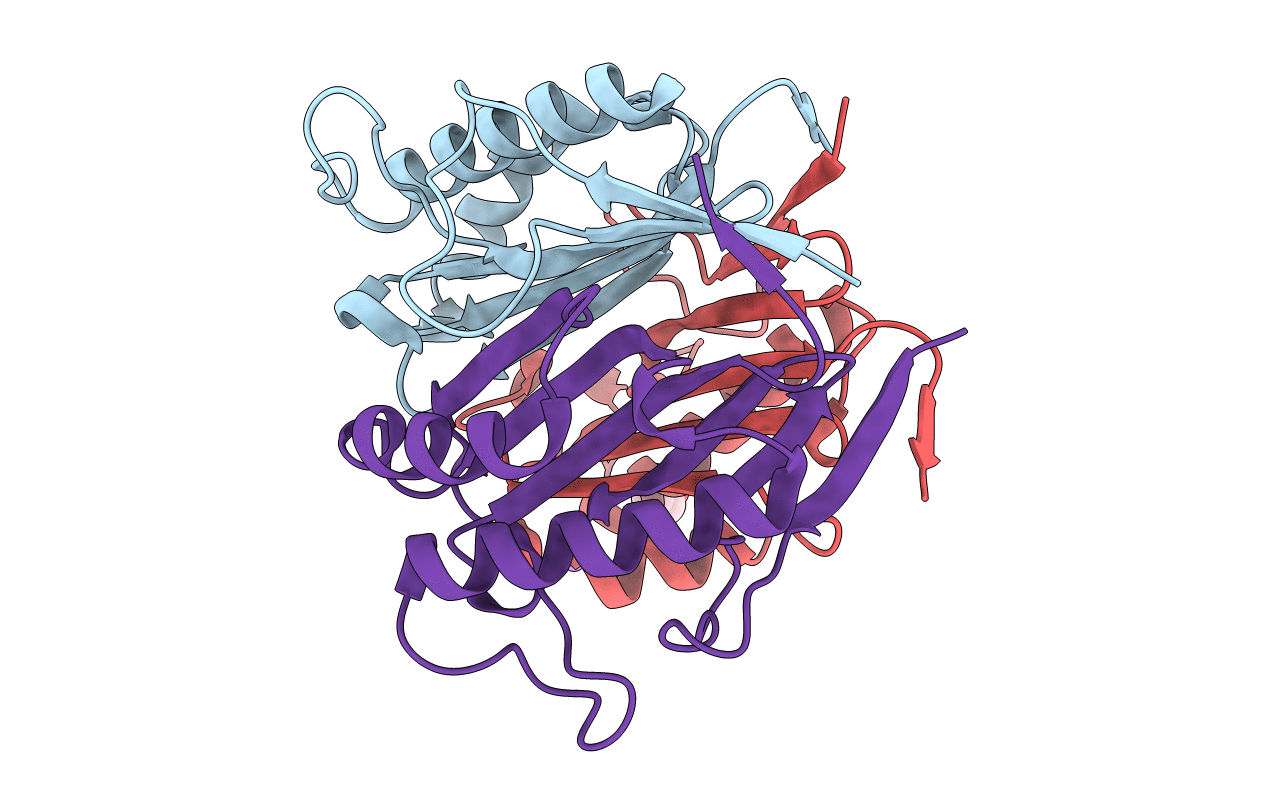
7ZS6 image
Deposition Date 2022-05-06
Release Date 2022-07-13
Last Version Date 2024-01-31
Entry Detail
PDB ID:
7ZS6
Title:
Crystal structure of Apis mellifera RidA
Biological Source:
Source Organism(s):
Apis mellifera (Taxon ID: 7460)
Expression System(s):
Method Details:
Experimental Method:
Resolution:
1.31 Å
R-Value Free:
0.16
R-Value Work:
0.13
Space Group:
I 41 2 2

Macromolecular Entities
Structures with similar UniProt ID
Protein Blast
Polymer Type:polypeptide(L)
Molecule:Reactive intermediate deamina
Gene (Uniprot):LOC100576270
Chain IDs:A (auth: AAA), B (auth: BBB), C (auth: CCC)
Chain Length:140
Number of Molecules:3
Biological Source:Apis mellifera
Primary Citation
Apis mellifera RidA, a novel member of the canonical YigF/YER057c/UK114 imine deiminase superfamily of enzymes pre-empting metabolic damage.
Biochem.Biophys.Res.Commun. 616 70 75 (2022)
PMID: 35640488 DOI: 10.1016/j.bbrc.2022.05.062

Abstact

The Reactive intermediate deiminase (Rid) protein family is a group of enzymes widely distributed in all Kingdoms of Life. RidA is one of the eight known Rid subfamilies, and its members act by preventing the accumulation of 2-aminoacrylate, a highly reactive enamine generated during the metabolism of some amino acids, by hydrolyzing the 2-iminopyruvate tautomer to pyruvate and ammonia. RidA members are homotrimers exhibiting a remarkable thermal stability. Recently, a novel subclass of RidA was identified in teleosts, which differs for stability and substrate specificity from the canonical RidA. In this study we structurally and functionally characterized RidA from Apis mellifera (AmRidA) as the first example of an invertebrate RidA to assess its belonging to the canonical RidA group, and to further correlate structural and functional features of this novel enzyme class. Circular dichroism revealed a spectrum typical of the RidA proteins and the high thermal stability. AmRidA exhibits the 2-imino acid hydrolase activity typical of RidA family members with a substrate specificity similar to that of the canonical RidA. The crystal structure confirmed the homotrimeric assembly and the presence of the typical structural features of RidA proteins, such as the proposed substrate recognition loop, and the ß-sheets ß1-ß9 and ß1-ß2. In conclusion, our data define AmRidA as a canonical member of the well-conserved RidA family and further clarify the diagnostic structural features of this class of enzymes.

Legend

Protein

Chemical

Disease

Primary Citation of related structures
Feedback Form
Name
Email
Institute
Feedback