

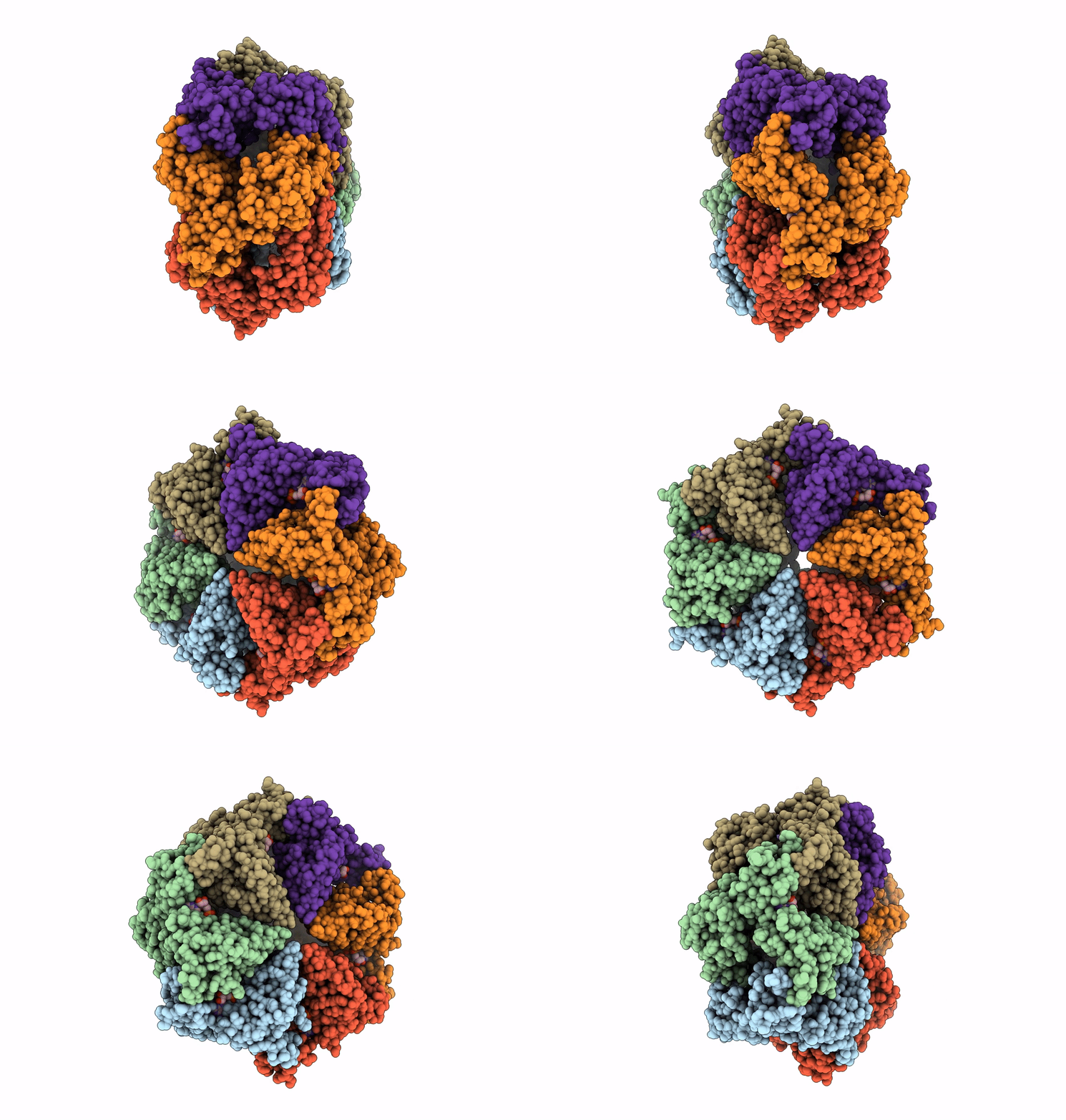
7ZBH image
Deposition Date 2022-03-23
Release Date 2023-04-05
Last Version Date 2026-02-04
Entry Detail
PDB ID:
7ZBH
Keywords:
Title:
ATP-dependent zinc metalloprotease FtsH (BB0789) from Borrelia burgdorferi
Biological Source:
Source Organism(s):
Expression System(s):
Method Details:
Experimental Method:
Resolution:
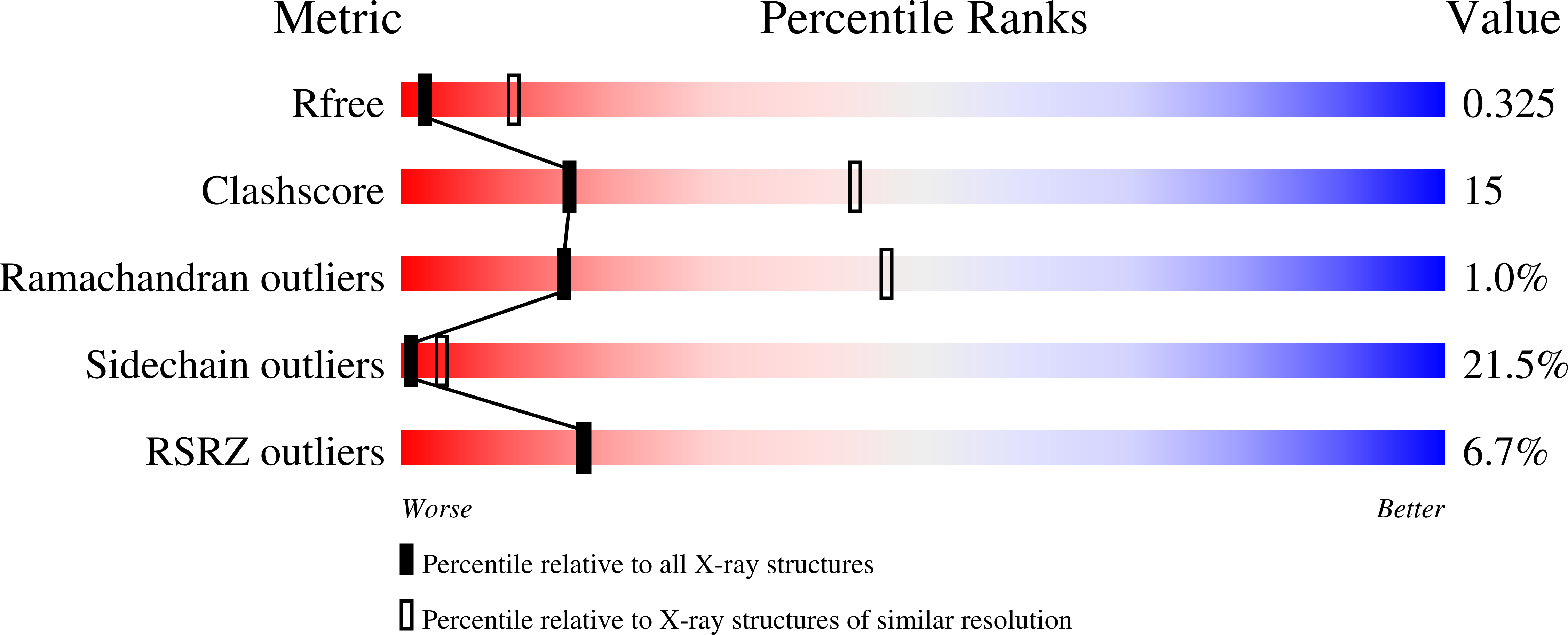
3.30 Å
R-Value Free:
0.33
R-Value Work:
0.27
R-Value Observed:
0.28
Space Group:
C 1 2 1
Macromolecular Entities
Structures with similar UniProt ID
Protein Blast
Polymer Type:polypeptide(L)
Molecule:ATP-dependent zinc metallopro
Gene (Uniprot):ftsH
Chain IDs:A, B, C (auth: D), D (auth: F), E (auth: I), F (auth: K)
Chain Length:453
Number of Molecules:6
Biological Source:Borreliella burgdorferi B31
Primary Citation
Structure of the Borrelia burgdorferi ATP-dependent metalloprotease FtsH in its functionally relevant hexameric form.
Biochim Biophys Acta Proteins Proteom 1872 140969 140969 (2024)
PMID: 37852516 DOI: 10.1016/j.bbapap.2023.140969

Abstact

ATP-dependent proteases FtsH are conserved in bacteria, mitochondria, and chloroplasts, where they play an essential role in degradation of misfolded/unneeded membrane and cytosolic proteins. It has also been demonstrated that the FtsH homologous protein BB0789 is crucial for mouse and tick infectivity and in vitro growth of the Lyme disease-causing agent Borrelia burgdorferi. This is not surprising, considering B. burgdorferi complex life cycle, residing in both in mammals and ticks, which requires a wide range of membrane proteins and short-lived cytosolic regulatory proteins to invade and persist in the host organism. In the current study, we have solved the crystal structure of the cytosolic BB0789166-614, lacking both N-terminal transmembrane α-helices and the small periplasmic domain. The structure revealed the arrangement of the AAA+ ATPase and the zinc-dependent metalloprotease domains in a hexamer ring, which is essential for ATPase and proteolytic activity. The AAA+ domain was found in an ADP-bound state, while the protease domain showed coordination of a zinc ion by two histidine residues and one aspartic acid residue. The loop region that forms the central pore in the oligomer was poorly defined in the crystal structure and therefore predicted by AlphaFold to complement the missing structural details, providing a complete picture of the functionally relevant hexameric form of BB0789. We confirmed that BB0789 is functionally active, possessing both protease and ATPase activities, thus providing novel structural-functional insights into the protein, which is known to be absolutely necessary for B. burgdorferi to survive and cause Lyme disease.

Legend

Protein

Chemical

Disease

Primary Citation of related structures
Feedback Form
Name
Email
Institute
Feedback