

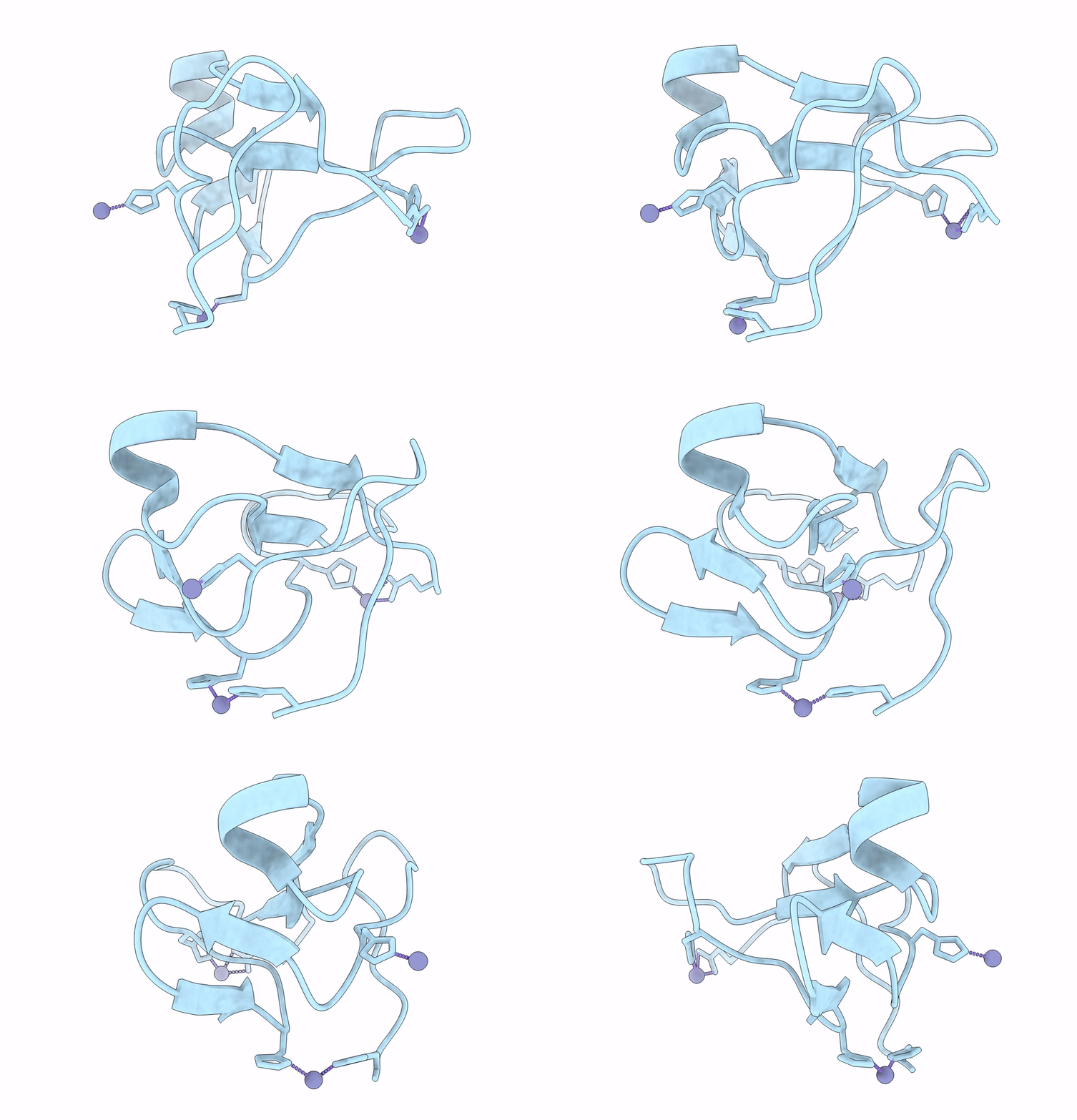
7PRJ image
Deposition Date 2021-09-21
Release Date 2022-10-05
Last Version Date 2026-02-11
Entry Detail
PDB ID:
7PRJ
Keywords:
Title:
Factor XII Fibronectin type II (FXII FnII) domain
Biological Source:
Source Organism(s):
Homo sapiens (Taxon ID: 9606)
Expression System(s):
Method Details:
Experimental Method:
Resolution:
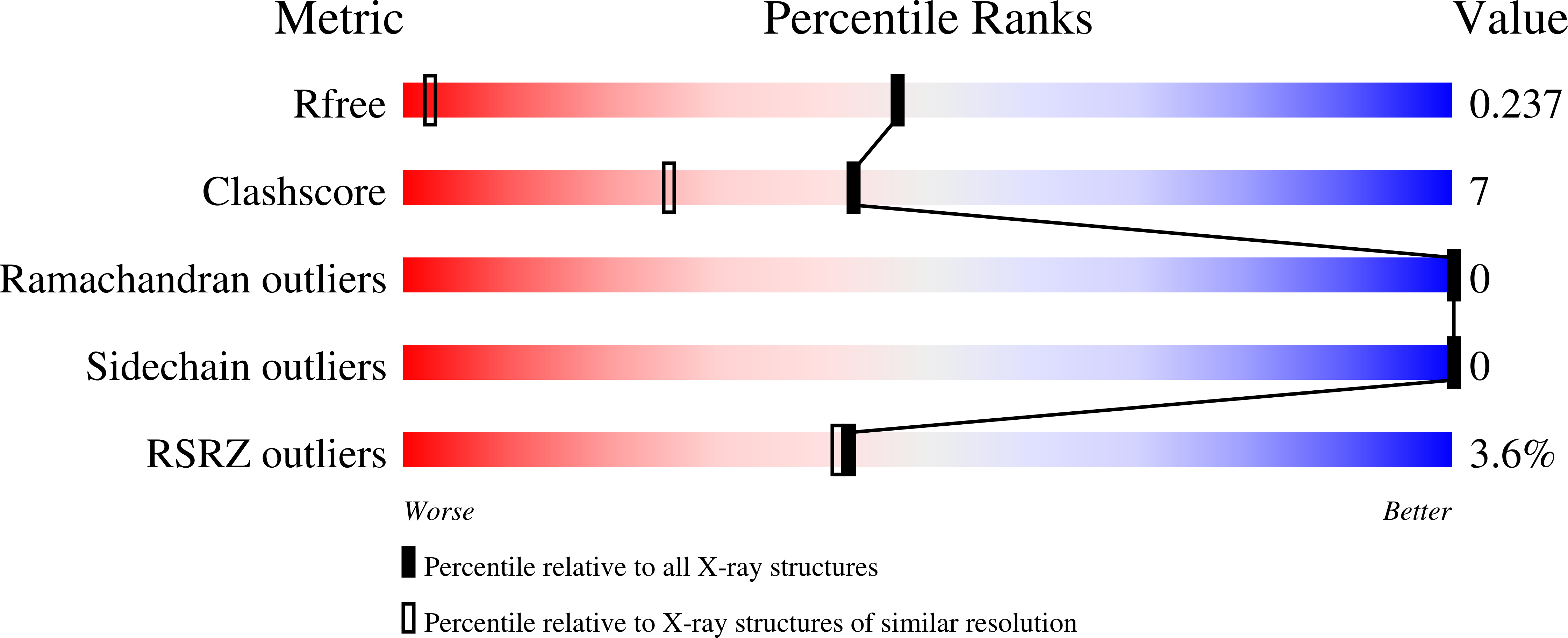
1.20 Å
R-Value Free:
0.23
R-Value Work:
0.19
R-Value Observed:
0.19
Space Group:
P 21 21 21
Macromolecular Entities
Structures with similar UniProt ID
Protein Blast
Polymer Type:polypeptide(L)
Molecule:Coagulation factor XII
Gene (Uniprot):F12
Chain IDs:A
Chain Length:71
Number of Molecules:1
Biological Source:Homo sapiens
Ligand Molecules
Primary Citation
Crystal structure of coagulation factor XII N-terminal domains 1-5.
Acta Crystallogr D Struct Biol 81 380 393 (2025)
PMID: 40576968 DOI: 10.1107/S2059798325005297

Abstact

Factor XIIa (FXIIa) is generated from its zymogen factor XII (FXII) by contact with polyanions such as inorganic polyphosphates. FXIIa cleaves the substrates prekallikrein and factor XI, triggering inflammatory cascades and plasma coagulation. From the N-terminus, FXII has fibronectin type II (FnII), epidermal growth factor-1 (EGF1), fibronectin type I (FnI), EGF2 and kringle domains. The N-terminal domains of FXII mediate polyanion and Zn2+ binding. To understand how ligand binding to polyanions and Zn2+ is coordinated across multiple domains, we determined the crystal structure of recombinant FXII domains 1-5 (FXIIHC5) to 3.4 Å resolution. A separate crystal structure of the isolated FXII FnII domain at 1.2 Å resolution revealed two bound Zn2+ ions. In FXIIHC5 a head-to-tail interaction is formed between the FnII and kringle domains, co-localizing the lysine-binding sites of the kringle domain and the cation-binding site of the FnII domain. Two FXIIHC5 monomers interlock, burying a large surface area of 2067 Å2, such that two kringle domains point outwards separated by a distance of 20 Å. The polyanion-binding site in the EGF1 domain is localized onto a plane together with the FnII and FnI domains. Using native mass spectrometry, we detected a major FXIIHC5 monomer peak and a minor dimer peak. Small-angle X-ray scattering and gel-filtration chromatography revealed the presence of monomers and dimers in solution. These FXII N-terminal domain structures provide a holistic framework to understand how the mosaic domain structure of FXII assembles diverse ligand-binding sites in three dimensions.

Legend

Protein

Chemical

Disease

Primary Citation of related structures
Feedback Form
Name
Email
Institute
Feedback