

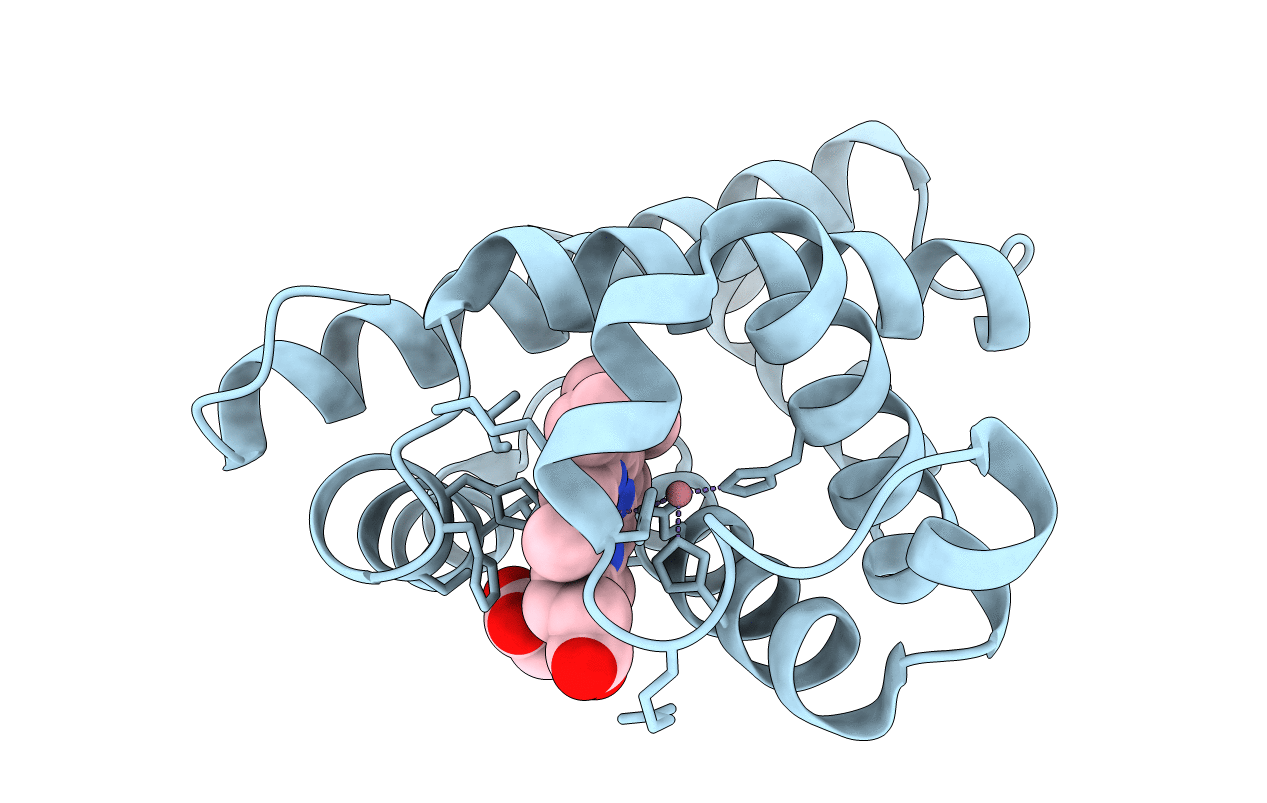
5VRT image
Deposition Date 2017-05-11
Release Date 2017-08-16
Last Version Date 2023-10-04
Entry Detail
PDB ID:
5VRT
Title:
Nonheme Iron Replacement in a Biosynthetic Nitric Oxide Reductase Model Performing O2 Reduction to Water: Co-bound FeBMb
Biological Source:
Source Organism(s):
Expression System(s):
Method Details:
Experimental Method:
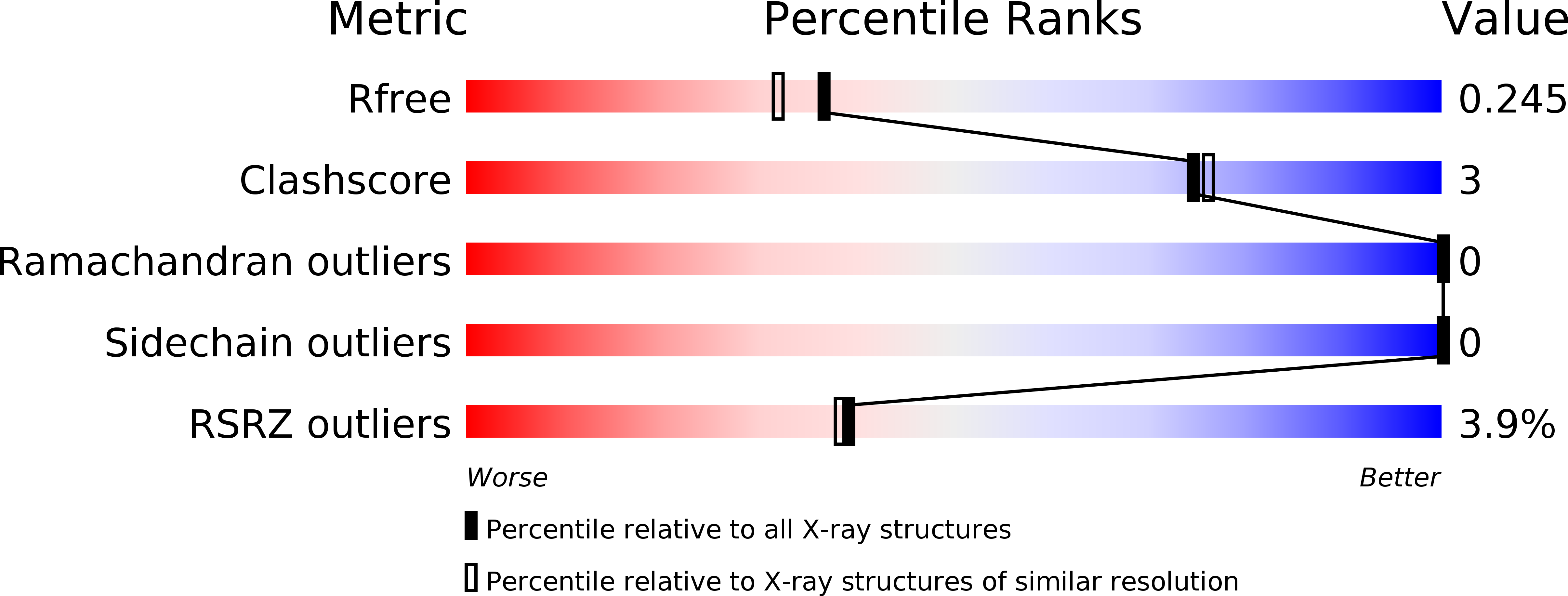
Resolution:
2.00 Å
R-Value Free:
0.23
R-Value Work:
0.18
R-Value Observed:
0.19
Space Group:
P 21 21 21
Macromolecular Entities
Structures with similar UniProt ID
Protein Blast
Polymer Type:polypeptide(L)
Molecule:Myoglobin
Gene (Uniprot):MB
Mutagens:H29L, H43F, and E68V
Chain IDs:A
Chain Length:153
Number of Molecules:1
Biological Source:Physeter catodon
Primary Citation
Manganese and Cobalt in the Nonheme-Metal-Binding Site of a Biosynthetic Model of Heme-Copper Oxidase Superfamily Confer Oxidase Activity through Redox-Inactive Mechanism.
J. Am. Chem. Soc. 139 12209 12218 (2017)
PMID: 28768416 DOI: 10.1021/jacs.7b05800

Abstact

The presence of a nonheme metal, such as copper and iron, in the heme-copper oxidase (HCO) superfamily is critical to the enzymatic activity of reducing O2 to H2O, but the exact mechanism the nonheme metal ion uses to confer and fine-tune the activity remains to be understood. We herein report that manganese and cobalt can bind to the same nonheme site and confer HCO activity in a heme-nonheme biosynthetic model in myoglobin. While the initial rates of O2 reduction by the Mn, Fe, and Co derivatives are similar, the percentages of reactive oxygen species (ROS) formation are 7%, 4%, and 1% and the total turnovers are 5.1 ± 1.1, 13.4 ± 0.7, and 82.5 ± 2.5, respectively. These results correlate with the trends of nonheme-metal-binding dissociation constants (35, 22, and 9 μM) closely, suggesting that tighter metal binding can prevent ROS release from the active site, lessen damage to the protein, and produce higher total turnover numbers. Detailed spectroscopic, electrochemical, and computational studies found no evidence of redox cycling of manganese or cobalt in the enzymatic reactions and suggest that structural and electronic effects related to the presence of different nonheme metals lead to the observed differences in reactivity. This study of the roles of nonheme metal ions beyond the Cu and Fe found in native enzymes has provided deeper insights into nature's choice of metal ion and reaction mechanism and allows for finer control of the enzymatic activity, which is a basis for the design of efficient catalysts for the oxygen reduction reaction in fuel cells.

Legend

Protein

Chemical

Disease

Primary Citation of related structures
Feedback Form
Name
Email
Institute
Feedback