

5HX6 image
Deposition Date 2016-01-29
Release Date 2016-03-02
Last Version Date 2024-03-06
Entry Detail
PDB ID:
5HX6
Title:
Crystal structure of RIP1 kinase with a benzo[b][1,4]oxazepin-4-one
Biological Source:
Source Organism(s):
Homo sapiens (Taxon ID: 9606)
Method Details:
Experimental Method:
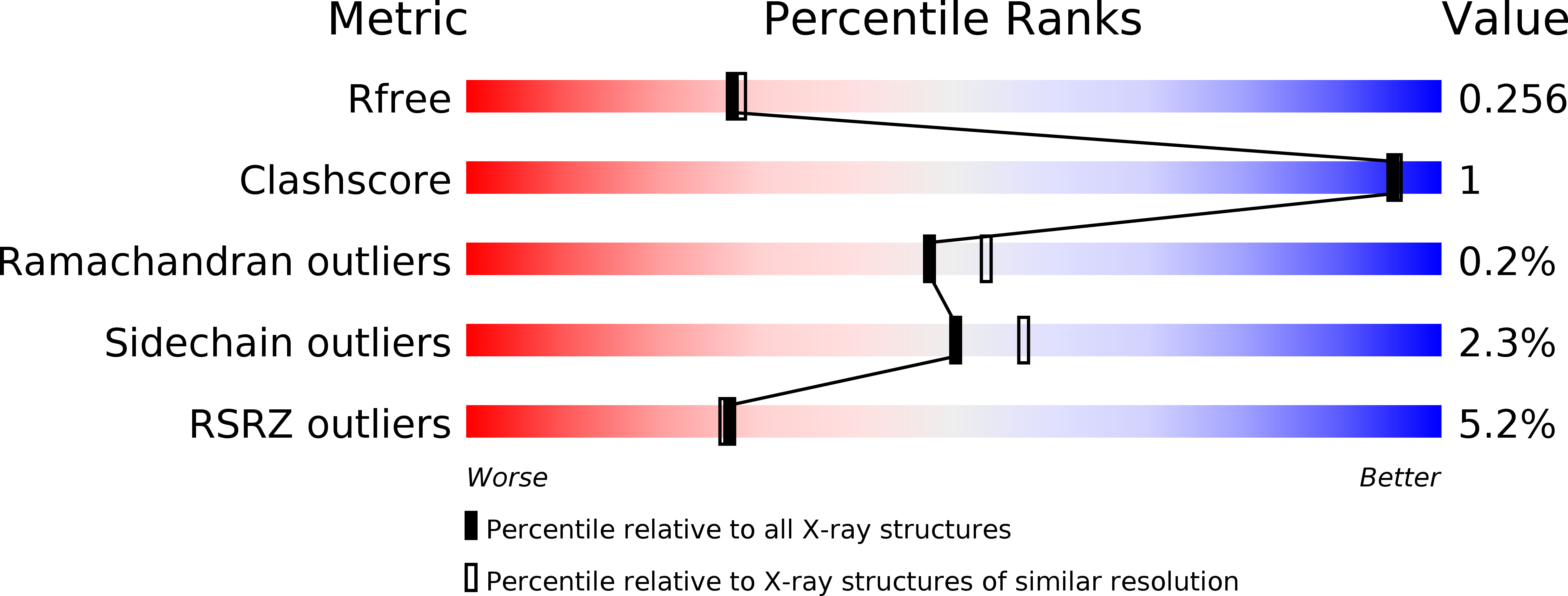
Resolution:
2.23 Å
R-Value Free:
0.24
R-Value Work:
0.19
R-Value Observed:
0.20
Space Group:
P 21 21 21
Macromolecular Entities
Structures with similar UniProt ID
Protein Blast
Polymer Type:polypeptide(L)
Molecule:Receptor-interacting serine/t
Gene (Uniprot):RIPK1
Mutagens:C34A,C127A,C233A, C240A
Chain IDs:A, B
Chain Length:303
Number of Molecules:2
Biological Source:Homo sapiens
Ligand Molecules
Primary Citation
DNA-Encoded Library Screening Identifies Benzo[b][1,4]oxazepin-4-ones as Highly Potent and Monoselective Receptor Interacting Protein 1 Kinase Inhibitors.
J.Med.Chem. 59 2163 2178 (2016)
PMID: 26854747 DOI: 10.1021/acs.jmedchem.5b01898

Abstact

The recent discovery of the role of receptor interacting protein 1 (RIP1) kinase in tumor necrosis factor (TNF)-mediated inflammation has led to its emergence as a highly promising target for the treatment of multiple inflammatory diseases. We screened RIP1 against GSK's DNA-encoded small-molecule libraries and identified a novel highly potent benzoxazepinone inhibitor series. We demonstrate that this template possesses complete monokinase selectivity for RIP1 plus unique species selectivity for primate versus nonprimate RIP1. We elucidate the conformation of RIP1 bound to this benzoxazepinone inhibitor driving its high kinase selectivity and design specific mutations in murine RIP1 to restore potency to levels similar to primate RIP1. This series differentiates itself from known RIP1 inhibitors in combining high potency and kinase selectivity with good pharmacokinetic profiles in rodents. The favorable developability profile of this benzoxazepinone template, as exemplified by compound 14 (GSK'481), makes it an excellent starting point for further optimization into a RIP1 clinical candidate.

Legend

Protein

Chemical

Disease

Primary Citation of related structures
Feedback Form
Name
Email
Institute
Feedback