

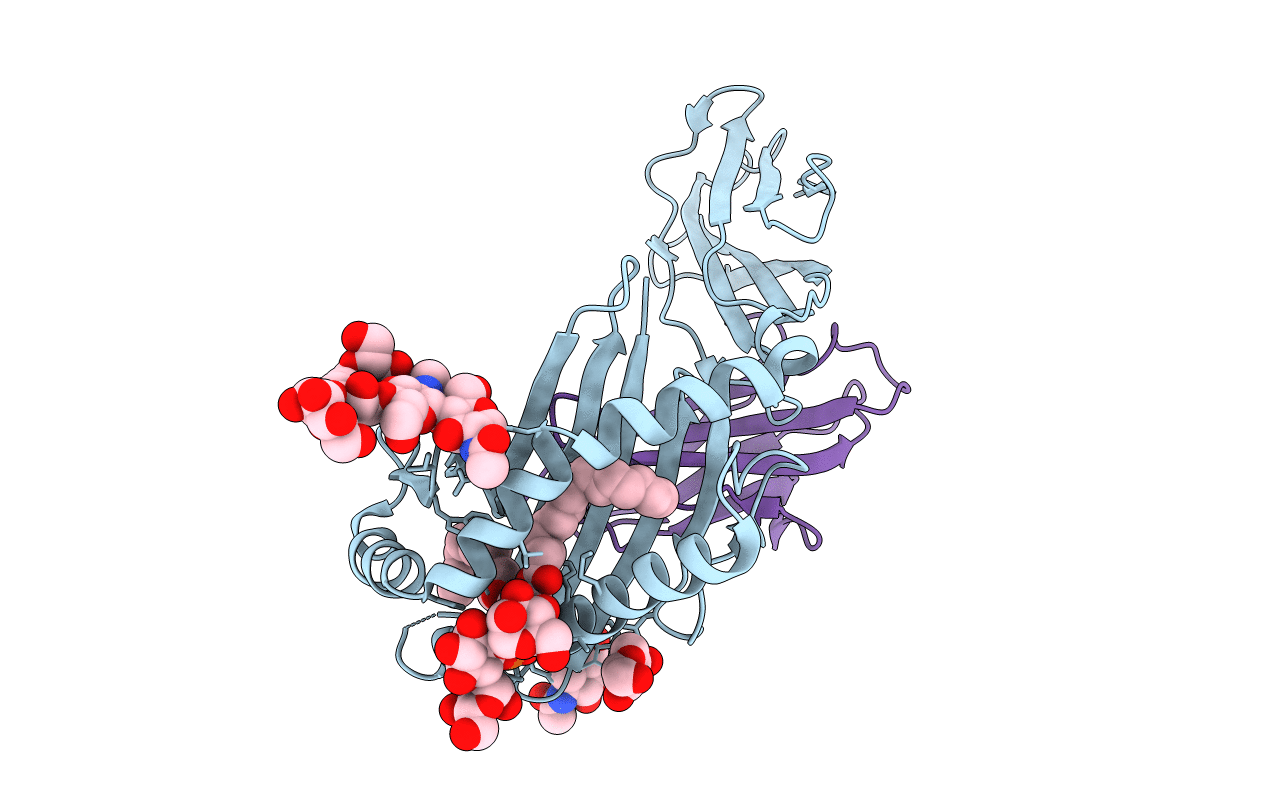
2GAZ image
Deposition Date 2006-03-09
Release Date 2006-09-26
Last Version Date 2024-10-30
Entry Detail
PDB ID:
2GAZ
Keywords:
Title:
Mycobacterial lipoglycan presentation by CD1d
Biological Source:
Source Organism(s):
Mus musculus (Taxon ID: 10090)
Expression System(s):
Method Details:
Experimental Method:
Resolution:
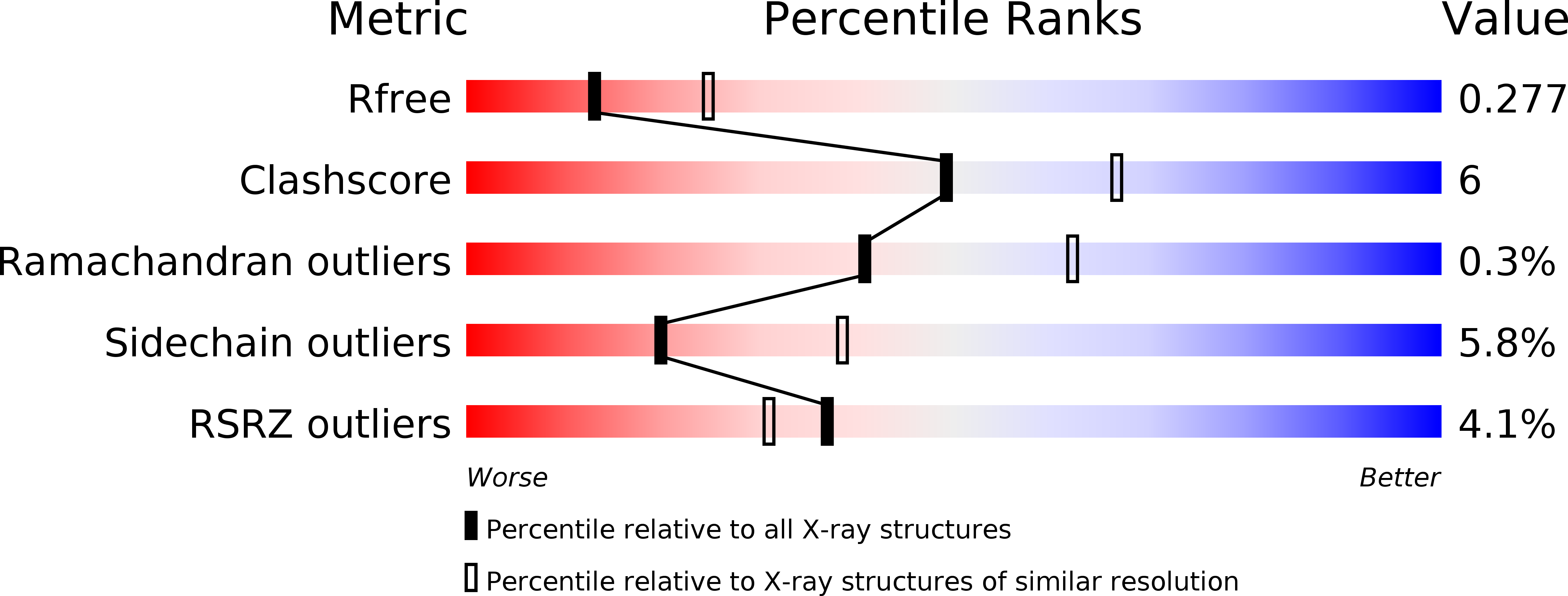
2.61 Å
R-Value Free:
0.28
R-Value Work:
0.21
R-Value Observed:
0.21
Space Group:
P 21 21 21
Macromolecular Entities
Structures with similar UniProt ID
Protein Blast
Polymer Type:polypeptide(L)
Molecule:T-cell surface glycoprotein C
Gene (Uniprot):Cd1d1
Chain IDs:A
Chain Length:285
Number of Molecules:1
Biological Source:Mus musculus
Structures with similar UniProt ID
Protein Blast
Polymer Type:polypeptide(L)
Molecule:beta-2-microglobulin
Chain IDs:B
Chain Length:99
Number of Molecules:1
Biological Source:Mus musculus
Modified Residue
Compound ID Chain ID Parent Comp ID Details 2D Image
ASN A ASN GLYCOSYLATION SITE
Primary Citation
Structural characterization of mycobacterial phosphatidylinositol mannoside binding to mouse CD1d.
J.Immunol. 177 4577 4583 (2006)
PMID: 16982895

Abstact

Mycobacterial phosphatidylinositol tetramannosides (PIM4) are agonists for a distinct population of invariant human (Valpha24) and mouse (Valpha14) NKT cells, when presented by CD1d. We determined the crystal structure at 2.6-A resolution of mouse CD1d bound to a synthetic dipalmitoyl-PIM2. Natural PIM2, which differs in its fatty acid composition is a biosynthetic precursor of PIM4, PIM6, lipomannan, and lipoarabinomannan. The PIM2 headgroup (inositol-dimannoside) is the most complex to date among all the crystallized CD1d ligands and is remarkably ordered in the CD1d binding groove. A specific hydrogen-bonding network between PIM2 and CD1d orients the headgroup in the center of the binding groove and above the A' pocket. A central cluster of hydrophilic CD1d residues (Asp(153), Thr(156), Ser(76), Arg(79)) interacts with the phosphate, inositol, and alpha1-alpha6-linked mannose of the headgroup, whereas additional specificity for the alpha1- and alpha2-linked mannose is conferred by Thr(159). The additional two mannoses in PIM4, relative to PIM2, are located at the distal 6' carbon of the alpha1-alpha6-linked mannose and would project away from the CD1d binding groove for interaction with the TCR. Compared with other CD1d-sphingolipid structures, PIM2 has an increased number of polar interactions between its headgroup and CD1, but reduced specificity for the diacylglycerol backbone. Thus, novel NKT cell agonists can be designed that focus on substitutions of the headgroup rather than on reducing lipid chain length, as in OCH and PBS-25, two potent variants of the highly stimulatory invariant NKT cell agonist alpha-galactosylceramide.

Legend

Protein

Chemical

Disease

Primary Citation of related structures
Feedback Form
Name
Email
Institute
Feedback